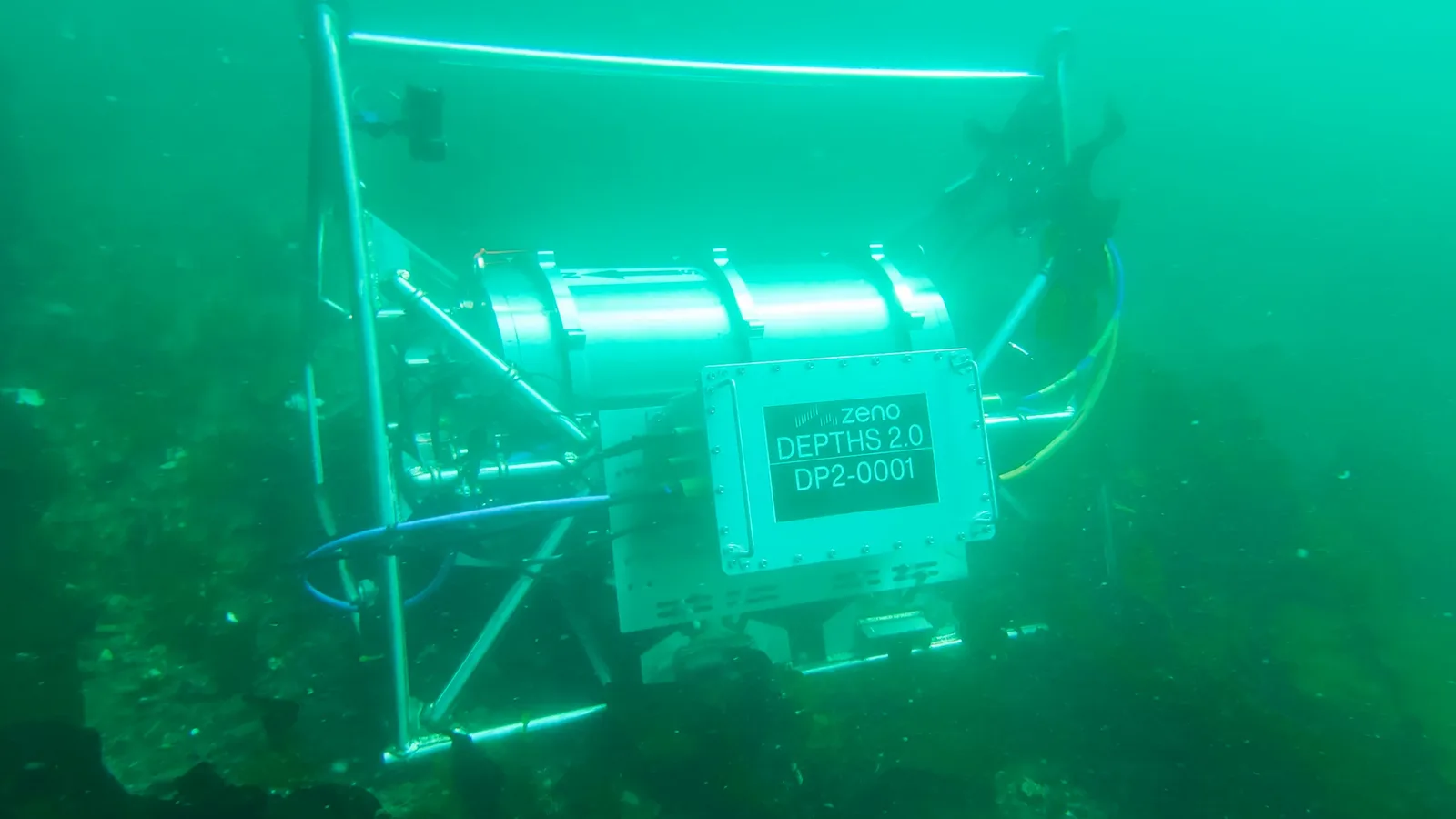
Zeno Power Ran a Nuclear Battery Prototype on the Seafloor for Two Weeks, and It Made Over 20 Watts
Seattle startup Zeno Power tested its Stirling generator on the seabed off Washington state for two weeks. This version used an electric heater instead of radioactive fuel, but it's the first time a generator like this has made power on the seafloor. A fueled version is planned for 2027.
So basically: Zeno Power, a Seattle startup building nuclear batteries, dropped a prototype power generator onto the seafloor off Washington state, left it there for two weeks, and it put out more than 20 watts the whole time. Then they pulled it back up. This version used an electric heater instead of radioactive fuel, so it’s a test of the hardware, not the nuclear part. But the company says it’s the first time a generator like this has ever made power on the seabed.
What a nuclear battery is
This isn’t a reactor. Nothing is splitting atoms.
A nuclear battery uses a chunk of radioactive material that gives off heat as it slowly decays. That heat gets turned into electricity. Because decay keeps going for years, the battery keeps making power for years without anyone touching it.
These have been around for a long time. They powered missions from the Apollo Moon landings to NASA’s Voyager probes and Mars rovers, according to GeekWire.
What makes Zeno’s version different
Most of those older space batteries use thermoelectric materials, which turn heat directly into electricity but waste a lot of it.
Zeno uses a Stirling engine instead. It’s a sealed cylinder with gas inside. One side gets heated, the other side stays cool, and the gas expands and shrinks over and over. That back and forth motion drives a generator.
Zeno’s chief product officer, Lindsey Boles, told GeekWire the company’s batteries should be at least four times more efficient than the traditional kind.
The fuel planned for the real thing is strontium-90, which can be pulled out of spent nuclear fuel, according to GeekWire.
How the test went
Per Zeno’s announcement on November 19:
- The generator sat in a controlled maritime setting in Washington state for two weeks.
- It made more than 20 watts of electricity.
- An electric heating element stood in for the radioactive heat source.
- The team got it down, ran it and recovered it without problems.
20 watts doesn’t sound like much. It’s about what a small light bulb uses. But Boles explained why that’s fine. Out at sea, she said, “we really don’t need a ton of it. But we need it to be really reliable.” She called the idea “a slow Tesla supercharger on the seabed.”
The company also says the prototype went from final design to open water testing in under 16 months.
What it’s for
The ocean floor is full of stuff that needs power: sensors, communication gear, monitoring equipment, and underwater drones that need recharging. Right now, powering that means long cables or sending a ship out to swap batteries, both of which are expensive.
A power source that sits on the bottom and runs for years fixes that. The military is clearly interested. Zeno’s work is backed by the Department of Defense, following a $7.5 million contract in 2023, and retired Navy Adm. John Richardson, a former chief of naval operations who sits on Zeno’s board, called the test a step “towards undersea superiority.”
What’s next
- A radiological test in a controlled tank, with real radioactive material
- The first fueled system deployed on the seabed in 2027
Zeno says it has raised more than $165 million, including $105 million from private investors and $60 million in contracts with the Pentagon and NASA, and it has more than 95 employees.
My take
The word nuclear scares a lot of people, but this is a pretty chill use of it. It’s a sealed heat source sitting on the ocean floor running a little engine. The 20 watts made me laugh at first, but the “slow supercharger” line actually makes sense. Underwater gear doesn’t need a lot of power, it needs power that doesn’t quit. The real test is next year when they put actual fuel in it. If it runs for years down there like they say, this could quietly become the way a lot of ocean equipment gets powered.
So basically — pass it on.
Daily Updates
Get new stories in your inbox
Near-future tech when it moves. Robots, space, EVs, AI. No spam.