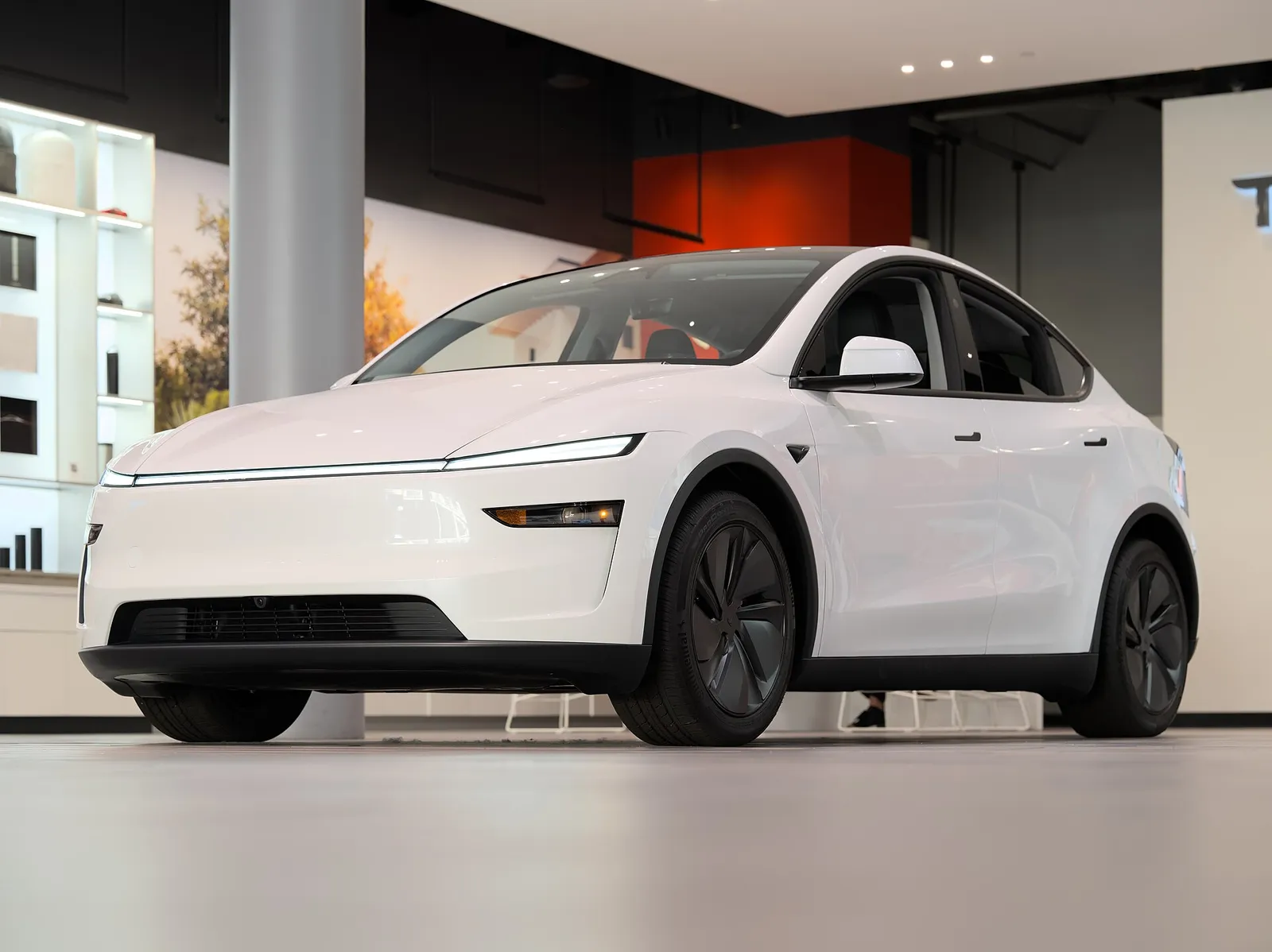
Tesla's Model 3 and Model Y Can Now Power Your House in an Outage
Tesla expanded Powershare Home Backup from the Cybertruck to the Model 3 and Model Y in the US. It needs a Powerwall 3 and can run a home for 2+ days.
So basically: Tesla just turned on Powershare Home Backup for the Model 3 and Model Y in the US. If the power goes out, the car’s battery can run your house. Until now only the Cybertruck could do that.
Tesla says it can keep a home going for more than two days. There are a few catches though, so let’s go through them.
How long it lasts
Tesla’s number is based on a house using 30 kWh a day. For the Premium and Performance versions of the Model 3 and Model Y, it says you get more than two days of backup.
The Standard versions get up to two days. That depends on how charged the car is and how much power your house is pulling.
For a normal house that’s not running the AC full blast, that’s a real cushion. Most outages are a few hours. Two days covers a lot of storms.
What you need
This is the big catch. You can’t just plug the car into the wall.
You need a Tesla Powerwall 3 home battery and a compatible Tesla Wall Connector. The system tops out at 11.5 kW of continuous power, which is enough to run a lot of a house at once.
If you already have that gear, you don’t need extra hardware. But you do have to contact Tesla support to get it turned on.
Tesla says support for the older Powerwall 2 and Powerwall+ is planned. It didn’t give a date.
So in real life, this is for people who already bought into Tesla’s whole home setup. If you just have a Model Y and a regular charger, this doesn’t do anything for you yet.
Which cars get it
Tesla only guarantees it on Model 3 and Model Y cars ordered in the US and Puerto Rico from Oct. 1, 2026 on.
Some older cars will work too, depending on their hardware. But Tesla isn’t promising that. So if you’ve had your car a while, you’ll need to check.
No word yet on other countries.
What it doesn’t do
It’s home backup only. The Model 3 and Model Y can’t use Powershare to send power back to the grid, the thing people call vehicle to grid or V2G. That’s a separate feature and it’s not on these two models right now.
The Cybertruck has been ahead here. In April, PG&E in California added it to a program that lets owners use Powershare to help support the grid.
How this fits with the other stuff
Back in August, Tesla put out a vehicle to load adapter for the Model Y Premium in the US. That one lets you plug regular devices into the car through a normal outlet, but it’s capped at 2.4 kW. Fine for a fridge or some tools. Not a house.
Home backup is a different level. The car basically becomes a giant extra Powerwall when the lights go out.
And think about the size difference. A Powerwall 3 holds 13.5 kWh. A Model Y battery is several times that. So the car is doing most of the heavy lifting here.
My take
This is the kind of update that doesn’t sound like much but actually matters. Millions of Model 3s and Model Ys are sitting in driveways with big batteries doing nothing most of the day. Letting them keep the lights on in a storm just makes sense.
The Powerwall 3 requirement is the part that keeps it small for now. That’s a pricey add on and most owners don’t have one. I’d like to see Tesla make this work with a cheaper box, or at least get the older Powerwalls on it soon.
But the direction is right. The Cybertruck had this first, and now it’s coming to the cars people actually buy. If V2G shows up next, your car could start paying you back while it’s parked.
So basically — pass it on.
Daily Updates
Get new stories in your inbox
Near-future tech when it moves. Robots, space, EVs, AI. No spam.