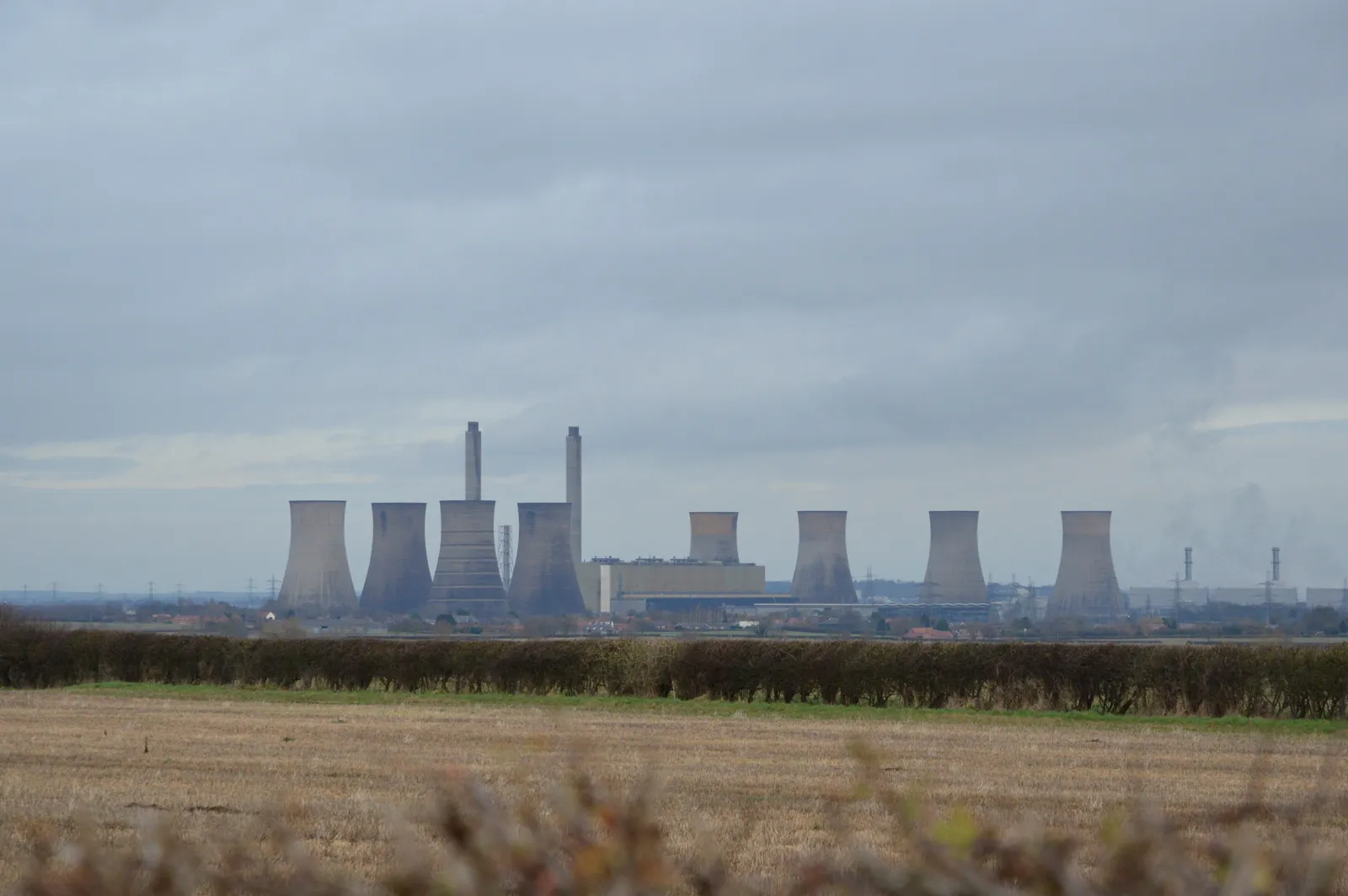
A 600 MW Solar and Battery Farm Is Replacing an Old Coal Town's Power Plant
The UK approved RES's Steeple Renewables Project in Nottinghamshire, right next to the old West Burton coal plant. It pairs solar and batteries with up to 600 MW of grid connection, enough for about 180,000 homes.
So basically: A part of England that powered the country with coal for decades is about to do it with sunlight and batteries. The UK government approved the Steeple Renewables Project near Sturton-le-Steeple in Nottinghamshire. It combines a big solar farm with battery storage and up to 600 MW of grid connection. The solar alone should power about 180,000 homes, which is roughly half the households in the whole county.
Where this is
Nottinghamshire is home to the West Burton power station site, which ran on coal and gas and fed Britain’s grid for generations. The UK shut down its last coal plant in 2024. So now there’s a big grid connection, and a lot of land around it, with nothing coal left to plug in.
That’s the clever part. The hardest thing about building new power right now isn’t the panels. It’s getting connected to the grid. Old power plant sites already have the wires.
The numbers
- Up to 600 MW total grid connection capacity
- Solar for about 180,000 homes a year
- About £224 million (around $296 million) of investment into the local economy
- Around 400 jobs during construction and operation
- A community benefits package worth about £13 million over the project’s life, which could include discounts on local electricity bills
Why the batteries matter
Solar has one obvious problem. The sun goes down. A solar farm by itself pumps out power at noon, when demand is often low, and nothing at 7 p.m. when everyone gets home and turns everything on.
The batteries fix that. They store extra power when the sun is strong and release it when demand jumps. That turns a solar farm from “power when it’s sunny” into something closer to a real power plant you can count on.
What it means for locals
It’s not just power. RES says the project will include biodiversity measures meant to leave the land richer in nature than it is today, with new hedges, habitats, and wildflower areas between the panels. The community money could also go toward RES’s Local Electricity Discounts Scheme, which knocks money off nearby homes’ power bills. That kind of perk matters, because big solar farms in the English countryside usually face loud local pushback over views and farmland.
How long it took
RES, which calls itself the world’s largest independent renewable energy company, has been working on Steeple since 2023. Because it’s so big, it counted as a “nationally significant” project. That meant a full review by the Planning Inspectorate, with almost 700 documents submitted. The Secretary of State for Energy granted consent on Oct. 9, and the order takes effect Oct. 31.
Next comes detailed design and prep for construction. No build date has been announced yet.
A pattern
This isn’t a one off. Batteries next to solar is turning into the default way to build power. Arizona just started building a 509 MW solar farm with 1.4 GWh of storage, and India laid the foundation for a 500 MWh battery project in Tamil Nadu this weekend. Everyone has figured out that solar plus storage is the combo.
My take
There’s something cool about a coal town getting the next version of its old job. The same land, the same grid wires, a totally different fuel. I also think this is the playbook more places should copy. Every old coal and gas plant has a grid connection that took decades to build. Putting solar and batteries right next to it skips the longest line in energy, which is waiting to get plugged in. Nottinghamshire kept the lights on for Britain before. Looks like it’s going to do it again.
So basically — pass it on.
Daily Updates
Get new stories in your inbox
Near-future tech when it moves. Robots, space, EVs, AI. No spam.