South Africa Has Too Much Solar at Noon. Now It Wants 4,600 MW of Batteries.
On Oct. 7 South Africa's electricity minister signed off on procuring 4,600 MW of battery storage and 5,000 MW of gas power. The goal is to stop wasting midday solar and keep the grid steady when the sun goes down.
So basically: South Africa now makes more electricity than it can use in the middle of the day, mostly thanks to solar. So on Wednesday, Oct. 7, the country’s electricity minister signed off on buying 4,600 MW of grid batteries and 5,000 MW of gas power. Batteries soak up the extra midday power. Gas plants cover the gaps.
The problem: too much power at the wrong time
For years, South Africa’s story was blackouts. Eskom, the state power company, could not keep the lights on.
Now there is a weird new problem. During the day, Eskom has between 5,000 and 7,000 MW of extra generating capacity, according to Moneyweb.
When supply is bigger than demand, the grid operator has to tell power producers to turn down. That is called curtailment.
The catch is that many of those solar and wind farms have contracts that pay them anyway. So South Africa is paying for clean power it throws away. Moneyweb notes that cost ends up on customers’ bills.
Then the sun sets, demand jumps in the evening, and the solar is gone.
The fix: a ministerial determination
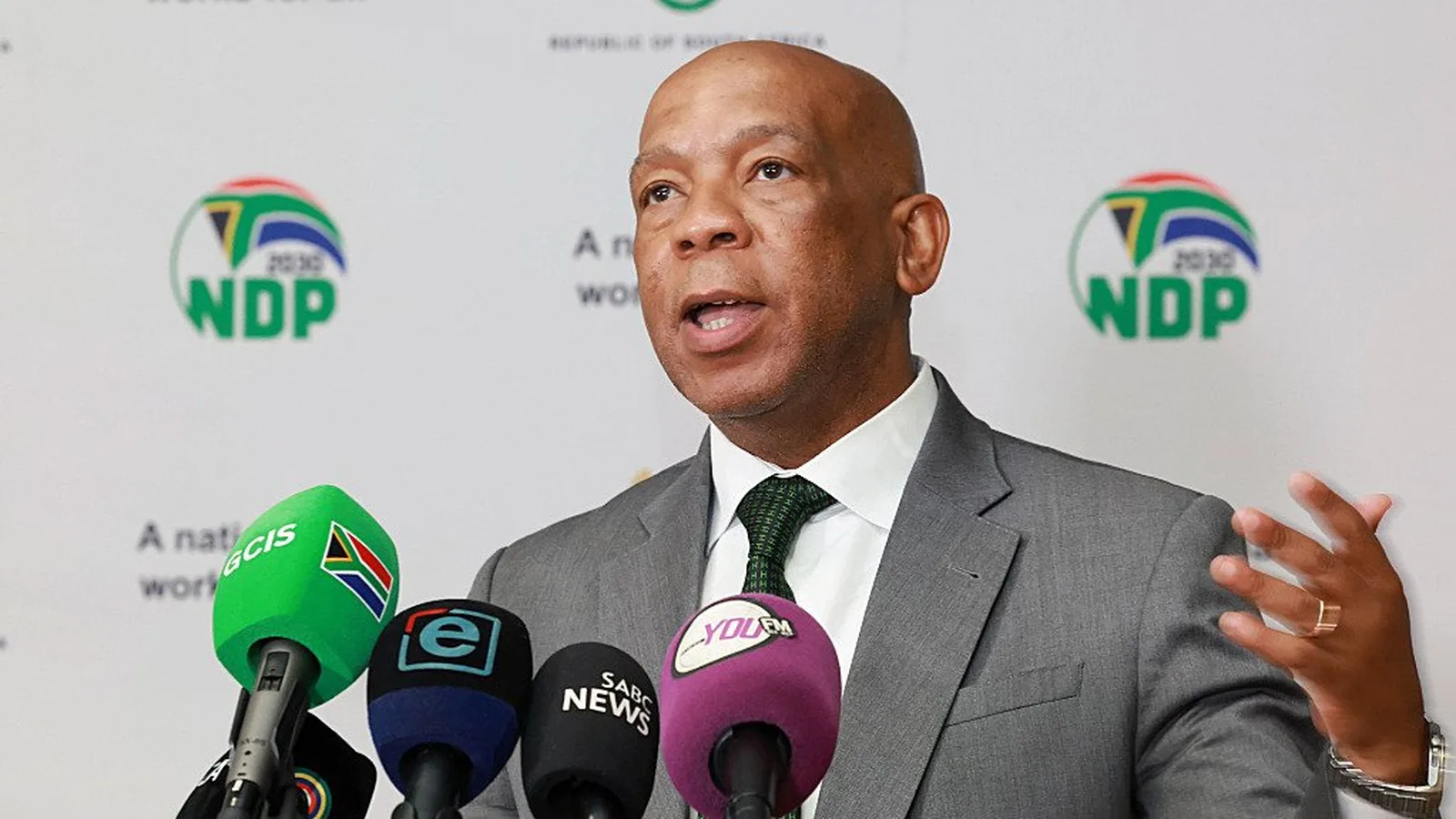
Minister Kgosientsho Ramokgopa announced what is called a Section 34 determination. In plain English, it is the legal green light the government needs before it can run auctions for new power.
It covers the 2026 to 2037 planning period. Two things are in it:
- 4,600 MW of battery energy storage
- 5,000 MW of gas-to-power plants
That is 9,600 MW total. The auctions will be run by the government’s Independent Power Producer Office.
One big change: Eskom itself is allowed to bid. Mining Weekly says Eskom had been shut out of these public rounds until now.
How batteries help
The idea is simple. Batteries charge with power that would have been curtailed, then sell it back in the evening peak.
Ramokgopa said South Africa has to learn from Spain and Portugal, where heavy reliance on solar and wind that cannot be dispatched on demand ended in complete blackouts.
The gas plants are the backup. They can ramp up fast when solar drops or demand spikes.
This is a big jump
South Africa already has a battery program. Across three earlier bidding rounds, it has bought 1,744 MW / 6,976 MWh of storage, according to Mining Weekly.
All five projects from the first round, 513 MW / 2,052 MWh, have closed financing and started construction. Together they brought in R15.4 billion of investment, according to the government.
The new 4,600 MW is more than 2.5 times everything procured so far.
One thing missing: the government did not say how many hours of storage it wants. That 4,600 MW could be two-hour batteries or four-hour batteries, and that changes the price a lot.
What is not in it
This determination includes zero new wind or solar.
Ramokgopa said a later determination will cover new renewables, hybrid solar plus storage projects, and pumped hydro.
He also floated another idea at the same briefing. Bitcoin miners could soak up 1,000 to 3,000 MW of Eskom’s daytime surplus, and the energy regulator is already taking public comment on a discounted pilot.
The industry reaction
The South African Energy Storage Association welcomed it fast.
”Storage is increasingly becoming the infrastructure that connects generation, transmission, distribution and demand into a modern electricity system,” chair Joanne Dean said, per Mining Weekly.
My take
This is what a solar boom actually looks like. First you celebrate the cheap power. Then you realize you have too much of it at noon and not enough at 7 p.m.
Batteries are the obvious fix, and 4,600 MW is a serious order. It also flips the old story. The country famous for load shedding is now dealing with a daytime surplus.
The gas half is the shakier part. It needs fuel imports, ports, and pipelines, and the first gas round is still being evaluated. I’d bet the batteries get built first.
Watch for the storage hours in the bid documents. That number tells you whether this is a real fix for the evening peak or a short-term patch.
So basically — pass it on.
Daily Updates
Get new stories in your inbox
Near-future tech when it moves. Robots, space, EVs, AI. No spam.