3D Printed Tungsten Tiles Survived 74 Plasma Blasts Inside a Real Fusion Reactor
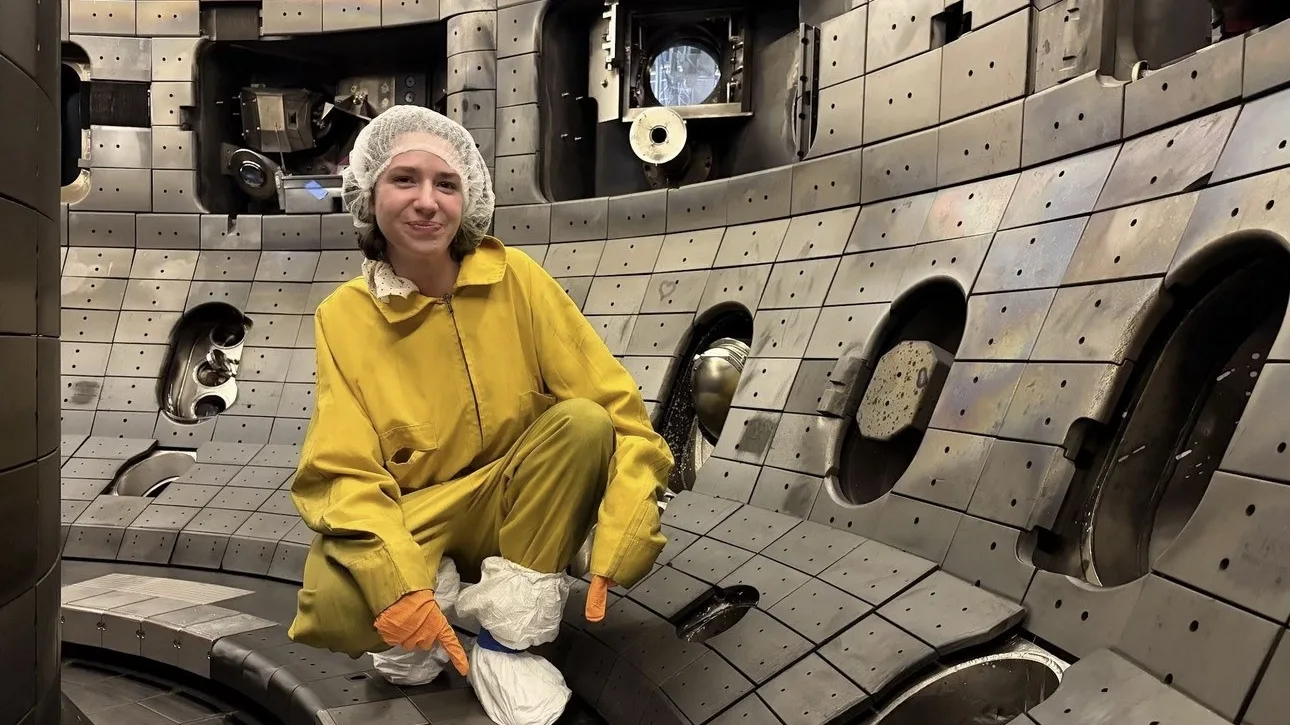
NC State, Oak Ridge National Laboratory and JEOL printed full-size tungsten wall tiles and tested them in the DIII-D fusion facility in San Diego. They took 74 high-power plasma shots, about four minutes of exposure, and came out intact.
So basically: A team from NC State, Oak Ridge National Laboratory and Japanese electron beam company JEOL 3D printed full-size tungsten tiles for the inside wall of a fusion reactor. Then they put them in the DIII-D fusion facility in San Diego and blasted them with 74 high power plasma shots. The tiles came out intact.
Why the wall is such a big deal
Fusion gets all the attention for the crazy plasma temperatures, well over 100 million °C in the core. But a lot of the hard engineering is about the wall that has to sit next to that plasma.
At the bottom of a tokamak is a section called the divertor. It catches a lot of the exhaust heat. In ITER and future power plants, those tiles have to handle 10 to 20 megawatts per square meter, more than 10,000 times the intensity of summer sunlight, plus brief bursts much higher.
Tungsten is the favorite for the job. It has the highest melting point of any metal, 3,422 °C (6,192 °F). It’s also stupid heavy. A bowling ball made of tungsten would weigh more than 225 pounds.
The problem with tungsten
Below roughly 200 to 600 °C, tungsten cracks instead of bending. The team compares it to glass. That makes it miserable to machine, and most attempts to 3D print it with lasers have come out porous and full of cracks.
The fix was an electron beam instead of a laser. The beam melts tungsten powder layer by layer in a vacuum, and it sweeps fast enough to keep the whole build above 1,400 °C (2,552 °F) the entire time. Keep it that hot and it never drops into the brittle zone while it’s being made.
From fingertip samples to full tiles
In 2025, NC State put small printed tungsten buttons into DIII-D. They took heat near 20 MW per square meter, with peaks above 35, and showed very little damage. That got them invited to try a full-size tile.
The full tile was about 140 by 130 millimeters. NC State had only printed tungsten parts about 50 mm across, so JEOL printed the tiles on its large machine in Japan. NC State finished them with a wire cutter and a CNC grinder until they had mirror smooth faces. They went into DIII-D in July 2026. The whole thing went from invite to installed hardware in about eight months.
The test
Over three days, the printed tiles took 74 high confinement plasma shots at medium to high power, for about four minutes of total plasma exposure.
There was also a surprise test nobody planned. A regular tile next to them was slightly out of line, melted along one edge, and sprayed liquid metal onto one of the printed tiles. The printed tiles still came through intact.
What’s next
The tiles are being removed, scanned and imaged now. After a radiation check, they’ll go back to NC State for a close look inside and out. So this is a “survived” result for now, not a full report card on wear and erosion.
My take
This is the kind of fusion news I actually like, because it’s about a real part, not a promise about 2035. You can’t build a fusion power plant if the walls crack, and tungsten has always been a pain to shape.
A process that prints full-size tiles without cracks, done in eight months, is a big step toward making reactor parts like regular factory parts. I’m also a fan that an undergrad helped finish the tiles and sat in the control room while they got blasted. That’s a pretty good semester.
So basically — pass it on.
Daily Updates
Get new stories in your inbox
Near-future tech when it moves. Robots, space, EVs, AI. No spam.