This Fusion Reactor Floats a Half-Ton Magnet in Midair, and Now It's Getting an Exhaust System
The U.S. Department of Energy picked OpenStar Technologies and Columbia University to design the first ever exhaust system, called a divertor, for a levitated dipole fusion reactor that floats its magnet inside a vacuum chamber.
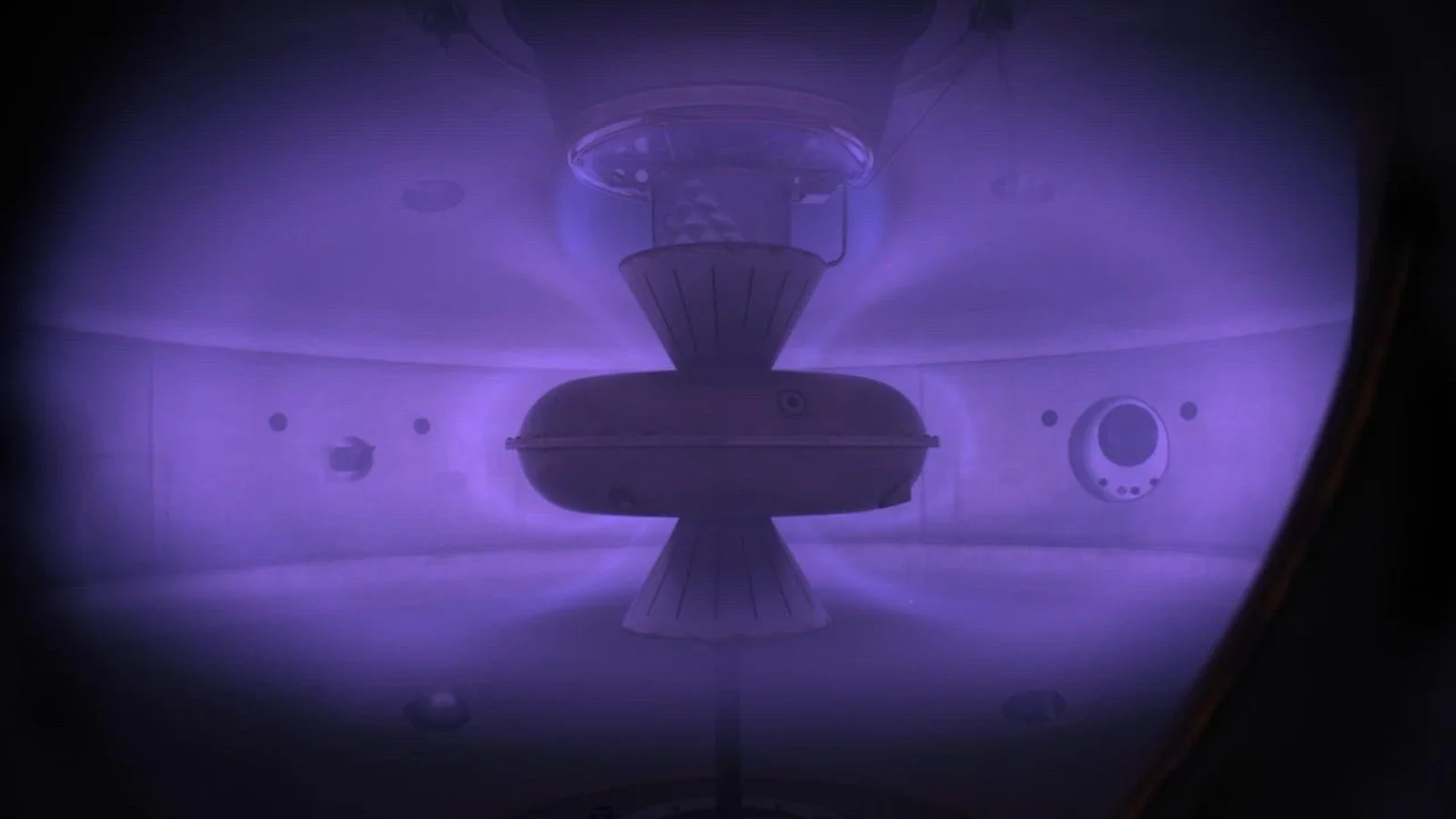
So basically: There’s a fusion company that floats a half-ton magnet in midair inside a vacuum chamber, and it actually works. Now the U.S. Department of Energy has picked that company, OpenStar Technologies from New Zealand, and Columbia University to design something nobody has ever built for this kind of reactor: an exhaust system.
The floating magnet thing
Most fusion reactors you’ve seen pictures of are shaped like a giant donut, called a tokamak. They wrap the super hot plasma in huge magnets on the outside.
OpenStar does it backwards. Its reactor is called a levitated dipole. It floats one superconducting magnet in the middle of a vacuum chamber, and the plasma forms around it. The idea copies the magnetic fields around planets like Earth and Jupiter.
Why float it? Because anything holding the magnet up, like a metal support, gives heat a path to leak out. No supports means fewer leaks and a more stable plasma.
This isn’t just a drawing. In February, OpenStar’s prototype, called Junior, floated a 0.5-ton magnet inside a 5-meter vacuum chamber and held plasma heated to over 1 million degrees Celsius. The whole machine cost about $10 million, which is cheap for fusion.
What a divertor does
Here’s the problem every fusion reactor has. The plasma is so hot that some heat and stray particles always escape. If they slam into the walls of the machine, they melt them.
The fix is called a divertor. It’s basically the reactor’s exhaust system. It steers the escaping plasma onto special cooled plates so the rest of the machine survives.
Tokamaks have had divertors for decades. But nobody has ever built one for a levitated dipole. The magnetic field around a floating magnet behaves differently at the edges, so the usual designs don’t just plug in.
The plan
Over the next 12 months, the team will figure out how heat and particles move at the edge of the dipole’s magnetic field. Columbia will use two computer tools, one called TokaMaker and an open-source one called Hermes-3. Then they’ll check those simulations against real data from Junior.
There’s a fun reunion angle here too. Columbia and MIT ran the original Levitated Dipole Experiment years ago. OpenStar’s chief science officer, Darren Garnier, was the chief experimentalist on that project. He’s leading this one with OpenStar scientist Jerome Guterl.
Columbia professor Ben Zhu said, “The magnetic dipole is an elegant and remarkably simple fusion concept that remains largely unexplored.”
Where it ends up
The finished divertor design goes on OpenStar’s next machine, called Tahi. Tahi is built to reach fusion-level conditions. Its first job will be making neutrons for medical isotopes, which is a real business people pay for today. Grid power comes after that.
The grant comes from a DOE program called INFUSE, which is handing out $8.5 million across 28 projects this year. OpenStar actually won two of them. The second one is with UC San Diego to build tools for measuring its plasma.
The money around fusion right now
The same day this came out, the International Atomic Energy Agency released its 2026 World Fusion Outlook. It said private fusion companies raised a record $4.5 billion in the 12 months before July 2026, and more than $14 billion total since 2021.
So there’s a lot of money chasing a lot of different reactor shapes right now. OpenStar’s floating magnet is one of the weirder ones, and that’s kind of why I like it.
My take
The INFUSE grants aren’t huge, and a divertor sounds boring. But this is the exact kind of boring that decides whether a fusion idea is real or not. A reactor that can’t handle its own exhaust heat is just a really expensive light show. A company floating a half-ton magnet for $10 million and now working on the plumbing is further along than most people would guess. I still wouldn’t bet on grid power from it anytime soon.
So basically — pass it on.
Daily Updates
Get new stories in your inbox
Near-future tech when it moves. Robots, space, EVs, AI. No spam.