Oklo Built a Nuclear Reactor on Private Land in Under a Year, and the DOE Just Cleared It to Run Freely
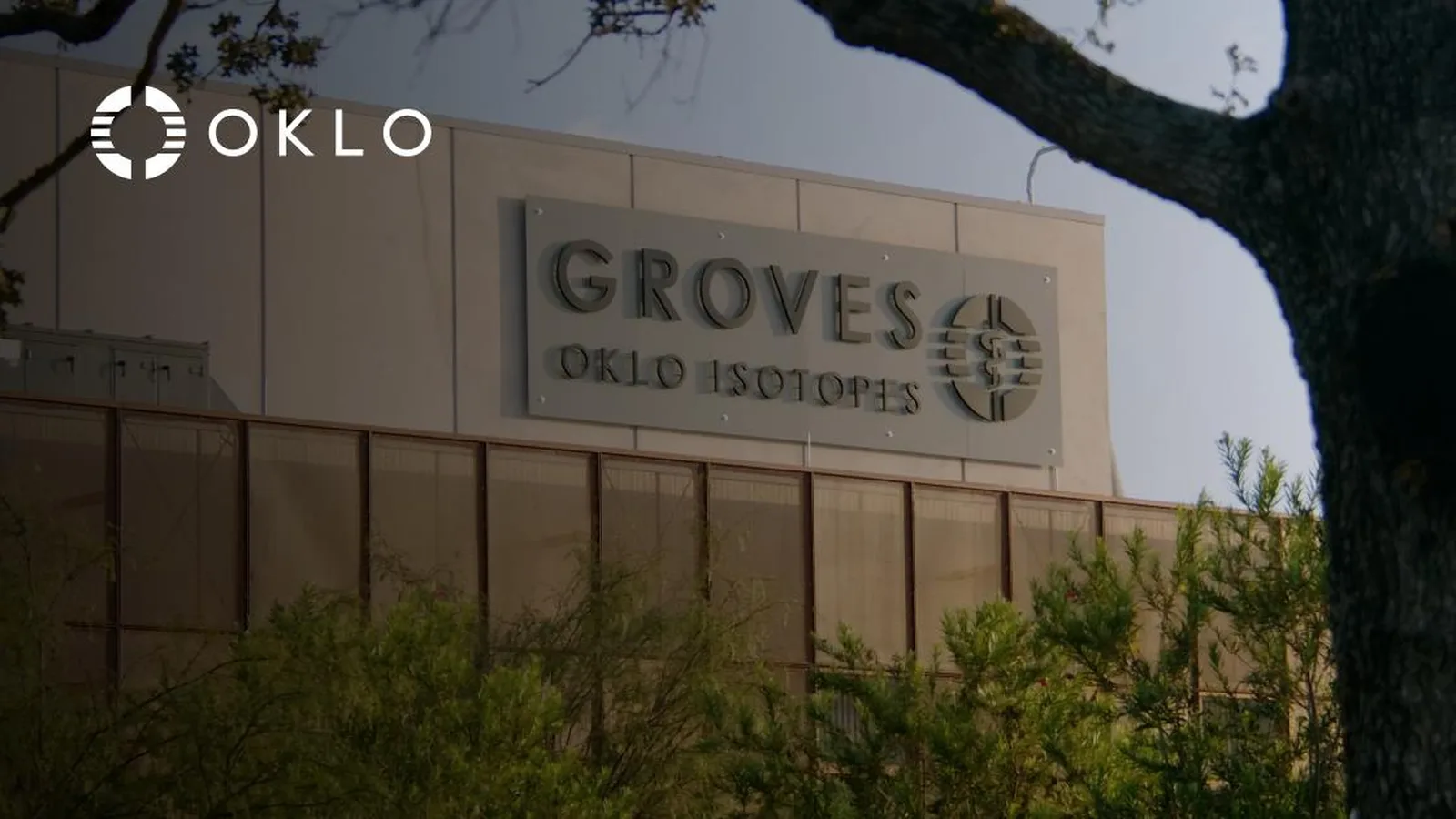
The Department of Energy cleared Oklo's Groves-1 test reactor in Lockhart, Texas, for unrestricted operations on Nov. 11. It went critical in August less than a year after groundbreaking, the first reactor in DOE's pilot program to do it on private land.
So basically: Nuclear plants in America usually take a decade or more to build. Oklo built a working reactor in Texas in less than a year. And on Nov. 11, the Department of Energy cleared it for unrestricted operations, meaning the company can now actually use it for research, testing and training instead of just proving it turns on.
What Groves-1 is
The reactor is called the Groves Isotope Test Reactor, or Groves-1, and it sits in Lockhart, Texas, about 30 miles south of Austin.
It’s small. It’s a low-power, water-cooled test reactor, not a power plant. It won’t put electricity on the grid, and Oklo says it won’t even make sellable isotopes itself. Its whole job is to be a practice reactor so Oklo learns how to design, build, license and run the real ones.
How fast it went
Here’s the timeline, pulled from Oklo and POWER magazine:
- Oklo broke ground on a bare piece of private land
- It finished building the reactor facility in 229 days
- DOE approved the final safety analysis on July 1
- DOE cleared fuel loading and startup on July 23
- The reactor went critical, meaning it ran a steady chain reaction, at 9:19 p.m. ET on Aug. 5
- DOE cleared its last hold point on Nov. 11
That made Groves-1 the fifth reactor to go critical under DOE’s Reactor Pilot Program this year, and the first one on private land. The other four ran at sites like Idaho National Laboratory or a Utah energy lab. Antares, Valar Atomics, Deployable Energy and Aalo Atomics all hit the milestone between June 4 and July 4, so this summer was a busy one for small reactors.
Why “private land” is a big deal
Oklo’s CEO Jacob DeWitte didn’t hold back on this point. “We’re the only company that did it on private land,” he told POWER. He said Oklo did full construction, not just “a flat slab” with a steel tent on top, and bought everything commercially, including the fuel. “We didn’t use government fuel like others,” he said.
He also said something pretty honest about how nuclear companies used to work. A year ago, he said, Oklo’s real “product” was basically licensing paperwork. “Now we’re actually building.”
What they’ll do with it now
Now that it’s cleared, Groves-1 turns into a training and testing site. A few things Oklo is already doing:
- Operators wore eye-tracking glasses during a recent startup, so engineers could see exactly where people looked and for how long. That data will help design better control rooms.
- It’ll train and qualify workers for future Oklo reactors.
- It’ll keep testing parts like the control rod drive mechanisms, which move the rods that slow down or stop the reaction.
- It’ll run measurements that could help regular light water reactors squeeze out more power.
Everything learned here feeds into Groves-2 Forge, Oklo’s planned isotope production facility, and into its bigger Aurora reactors. The first Aurora is under construction at Idaho National Laboratory and is a sodium-cooled reactor built to make electricity and heat for customers.
A DOE official, Chimi Zacot, said the pilot program “reset the nuclear industry’s expectations for how quickly we can move.”
My take
Less than a year from dirt to a working reactor is wild, especially for nuclear. Sure, this is a tiny test reactor and not something that powers a city. But the hard part of nuclear in America has never been the physics. It’s been the paperwork and the timelines. Oklo just showed it can be done faster when the government actually moves. If the same speed carries over to the Aurora plants, that’s when this gets really interesting.
So basically — pass it on.
Daily Updates
Get new stories in your inbox
Near-future tech when it moves. Robots, space, EVs, AI. No spam.