NASA Wants Companies to Build Its First Nuclear Reactor for the Moon
NASA opened bids for Lunar Reactor-1, a small fission power system that would make 20 kilowatts on the Moon. NASA wants it launch-ready by 2030 and running for at least five years. Proposals are due Dec. 21.
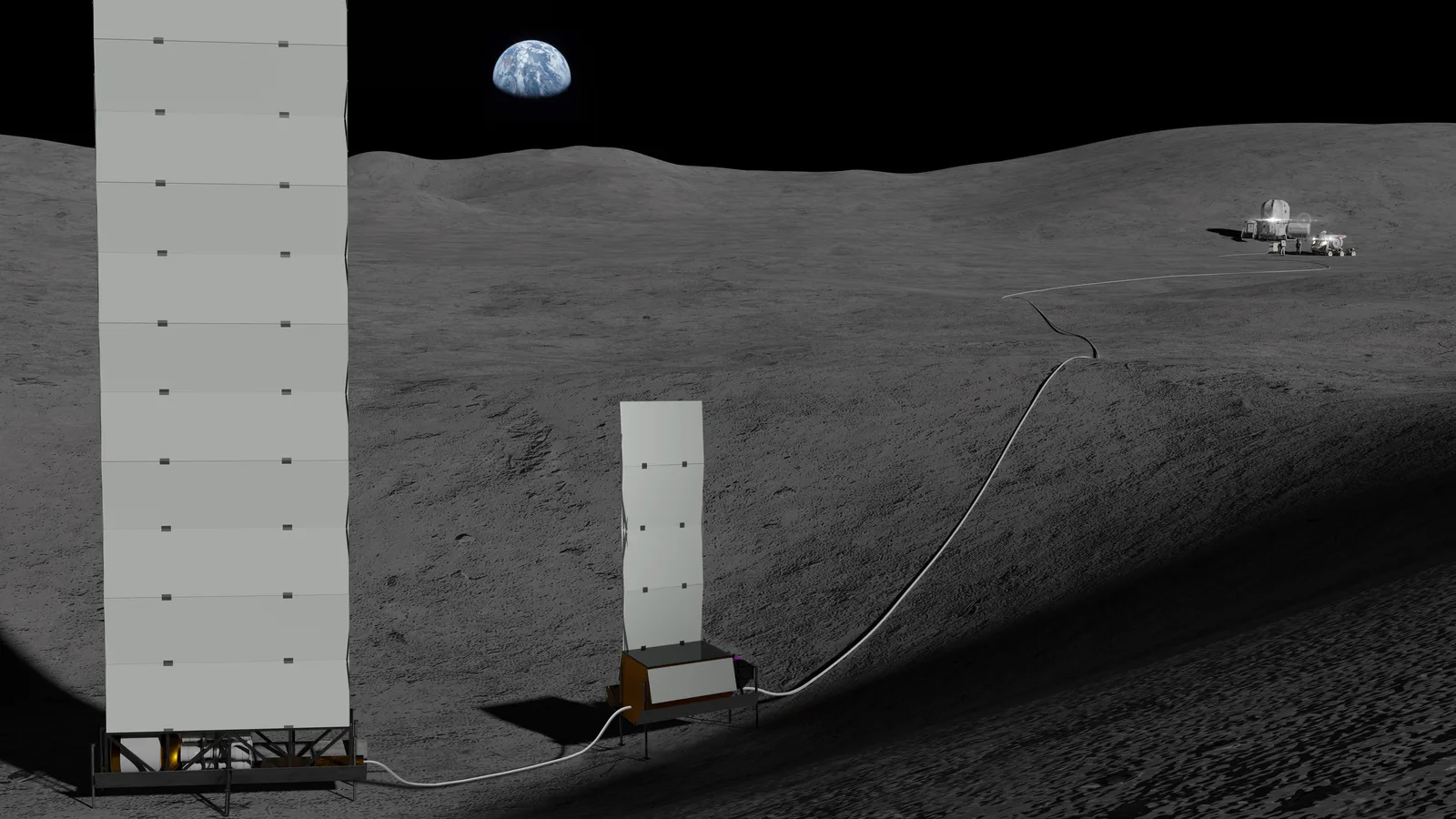
So basically: NASA is officially asking companies to design and build the first nuclear reactor meant to make electricity on the Moon. It’s called Lunar Reactor-1, or LR-1. It’s a small fission power system that would put out 20 kilowatts of power. NASA wants it ready to launch by 2030 and running on the Moon for at least five years. Companies have until Dec. 21 to send in proposals.
What LR-1 is
LR-1 is a fission reactor, the same basic idea as a nuclear power plant on Earth, just a lot smaller. NASA says 20 kilowatts is about enough to power 16 average U.S. homes for a year.
That doesn’t sound like much. But on the Moon, it could keep a lot going at once. NASA lists habitats, communication systems, rovers and science instruments as things it could power for a future Moon Base.
The request that went out on Nov. 23 is called the Space Power and Reactor Capabilities request for proposals. NASA put out a draft version in August, then held an industry day in September at the Ohio Aerospace Institute in Cleveland. The final version includes feedback from companies that showed up for that. One hard rule: the reactor has to meet Department of Energy safety standards for nuclear operations.
Why not just use solar panels
Night on the Moon lasts about 14 Earth days. Solar panels make nothing during that stretch, and batteries big enough to cover two straight weeks of darkness get heavy fast. Some of the most interesting spots near the lunar south pole also sit in long shadows where sunlight barely reaches.
A reactor doesn’t care about any of that. It makes power day and night.
NASA’s LR-1 program manager, Brian Giblin, put it this way: “A reliable source of safe and abundant energy will be vital to future exploration of the lunar and Martian surface.”
Mars has the same kind of problem. NASA points out that dust storms there can block sunlight for months. The farther you get from the Sun, the worse solar works in general.
It got smaller
Here’s the detail that jumped out at me. In August 2025, a NASA directive called for a lunar reactor that could make at least 100 kilowatts. LR-1 is sized at 20 kilowatts, one fifth of that.
NASA didn’t explain the change in its announcement. The likely reason is time. Building something smaller is a lot more realistic if you want it ready to launch in about four years. NASA also says it may issue more task orders under this same contract for other space nuclear power systems later, so bigger reactors aren’t off the table.
Part of a bigger nuclear push
LR-1 is run by NASA’s Space Reactors Division, working with the Department of Energy. That same division handles Space Reactor-1 Freedom, or SR-1 Freedom, which is scheduled to launch in 2028.
SR-1 Freedom is a nuclear powered spacecraft headed for Mars. It’s supposed to show off nuclear electric propulsion, where a reactor makes electricity to run the spacecraft’s thrusters. It’s also the ride for NASA’s three SkyFall helicopters, which we covered back when NASA announced them.
So NASA now has two reactor projects lined up: one to push a spacecraft to Mars, and one to sit on the Moon and keep the lights on.
What happens next
The timeline from here looks like this:
- Dec. 21, 2026: proposals due
- 2030: NASA wants a launch-ready reactor
- At least five years: how long it has to run on the Moon after it’s set up
NASA hasn’t said how many companies it plans to pick or how much money is behind LR-1.
My take
I like this one because it’s the boring part of space that actually decides if people can stay somewhere. You can land astronauts on the Moon all day, but if everything shuts down for two weeks every month, nobody is living there. A reactor fixes that. The size cut from 100 to 20 kilowatts tells me NASA is choosing to actually hit 2030 instead of chasing a bigger number and slipping. I think that’s the right call. Get one working first, then build bigger. The thing I’ll be watching is who bids and who wins, because whoever builds the first reactor on the Moon is going to have a big head start on everything after it.
So basically — pass it on.
Daily Updates
Get new stories in your inbox
Near-future tech when it moves. Robots, space, EVs, AI. No spam.