A $950 Million Desert Power Plant in California Just Switched On With 925,000 Solar Panels
Terra-Gen finished its $950 million Lockhart Solar and Storage project in San Bernardino County, California, with 365 MW of solar and 173.7 MW of batteries, enough for about 350,000 homes and businesses.
So basically: A giant solar and battery plant out in the Mojave Desert in California is now fully up and running. It’s called Lockhart Solar and Storage, it cost $950 million, and it has more than 925,000 solar panels. The company behind it says it can cover the yearly power needs of about 350,000 homes and businesses.
Who built it
The project was developed by Terra-Gen, a big US renewable energy company based in San Diego. Terra-Gen is owned by two investors. One is Masdar, the government backed clean energy company from Abu Dhabi. The other is an infrastructure investor called Igneo.
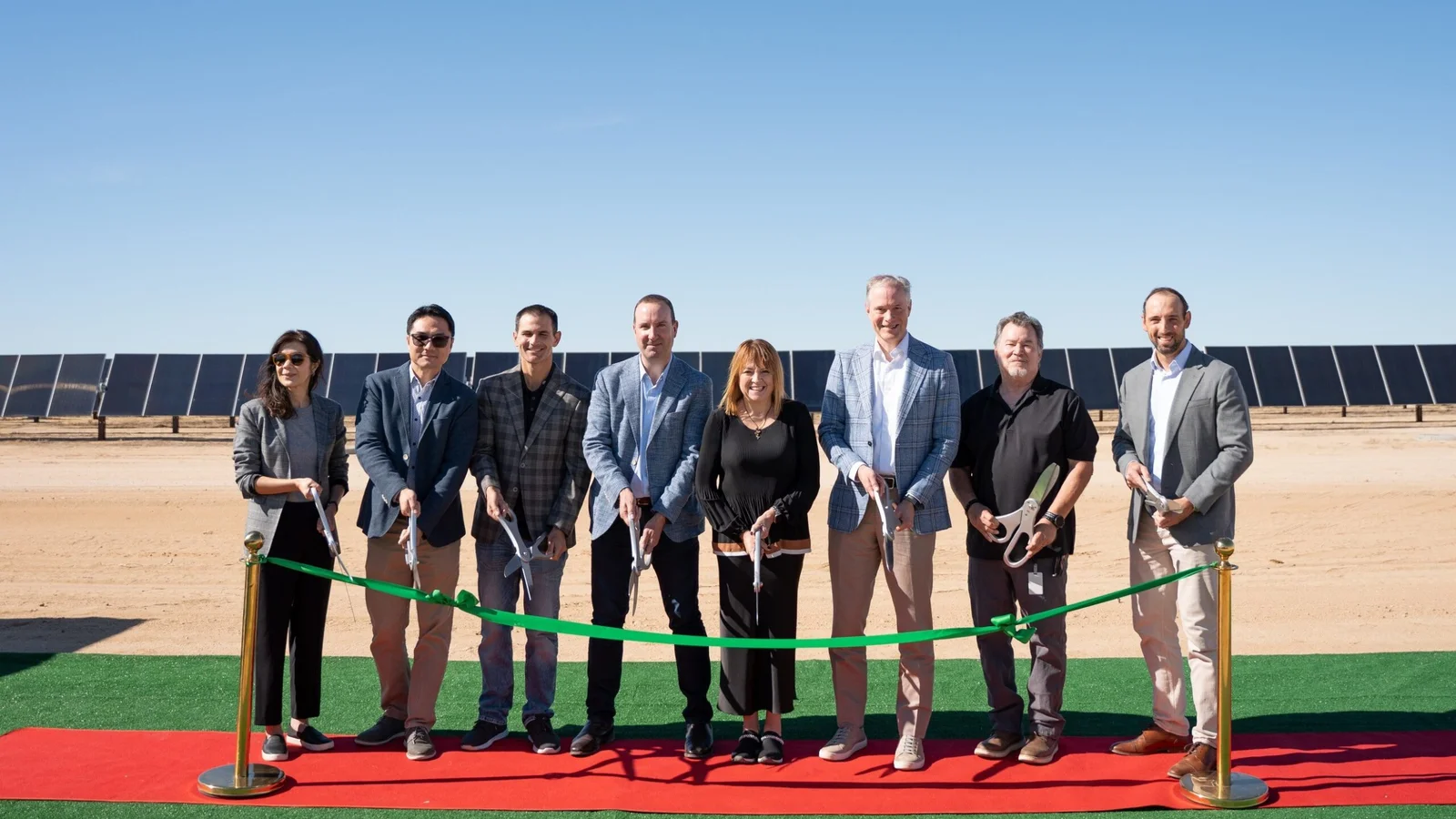
The plant sits near Hinkley in San Bernardino County. Terra-Gen held a ribbon cutting there this week to mark it being done. If you’ve never been out that way, it’s flat, dry, open desert that gets a ton of sun most of the year. That’s pretty much the perfect spot for this kind of thing, and there’s plenty of room to spread out close to a million panels.
The numbers
This thing is big. Here’s what’s out there in the desert:
- 365 megawatts of solar power
- 173.7 megawatts of battery storage
- 538.7 megawatts total
- More than 925,000 solar modules
- 248 battery enclosures
The panels came from First Solar, which makes its panels in the US. The trackers, the motorized racks that tilt the panels to follow the sun all day, came from a company called Nextpower.
Why the batteries matter
Solar has one obvious problem. The sun goes down. And in California, power demand usually peaks right around sunset, when people get home, turn on the AC, start cooking and plug in their cars.
That’s what the batteries are for. They soak up extra solar power in the middle of the day and push it back out in the evening when the grid needs it most.
Terra-Gen CEO John O’Connor put it this way: “Solar is one of the most economical sources of new electricity, and storage extends its value by making that energy available when it’s needed most.”
The jobs and the taxes
Building it was a four year job. Terra-Gen says construction created more than 1,000 on-site jobs and racked up about 880,000 hours of work. It also says the project was delivered on schedule and on budget, which is honestly rare for anything this size.
Over its lifetime, the plant is expected to pay more than $40 million in property taxes to the county.
The power is already sold, too. It’s split between big corporate buyers and long term contracts with California utilities and power providers.
The bigger picture
Masdar isn’t stopping here. It has already invested about $3 billion in the US and says it plans to put in another $20 billion over the next decade. It wants up to 25 gigawatts of US renewable power by 2030. A big reason is data centers. AI data centers, factories and electric cars are all pushing power demand up fast, and someone has to build the supply. Projects like Lockhart are the fastest way to add a lot of power without waiting a decade.
Terra-Gen itself now runs about 4.4 gigawatts of wind, solar and battery projects across 34 sites, mostly in California and Texas.
My take
Solar plus batteries on the same site is becoming the normal way to build in sunny places, and Lockhart is a good example of why. Panels alone help at noon. Panels plus batteries help at 7 p.m., which is when the grid actually sweats. What stood out to me is on time and on budget. With power demand climbing like it is, being able to actually finish big projects matters as much as the tech.
So basically — pass it on.
Daily Updates
Get new stories in your inbox
Near-future tech when it moves. Robots, space, EVs, AI. No spam.