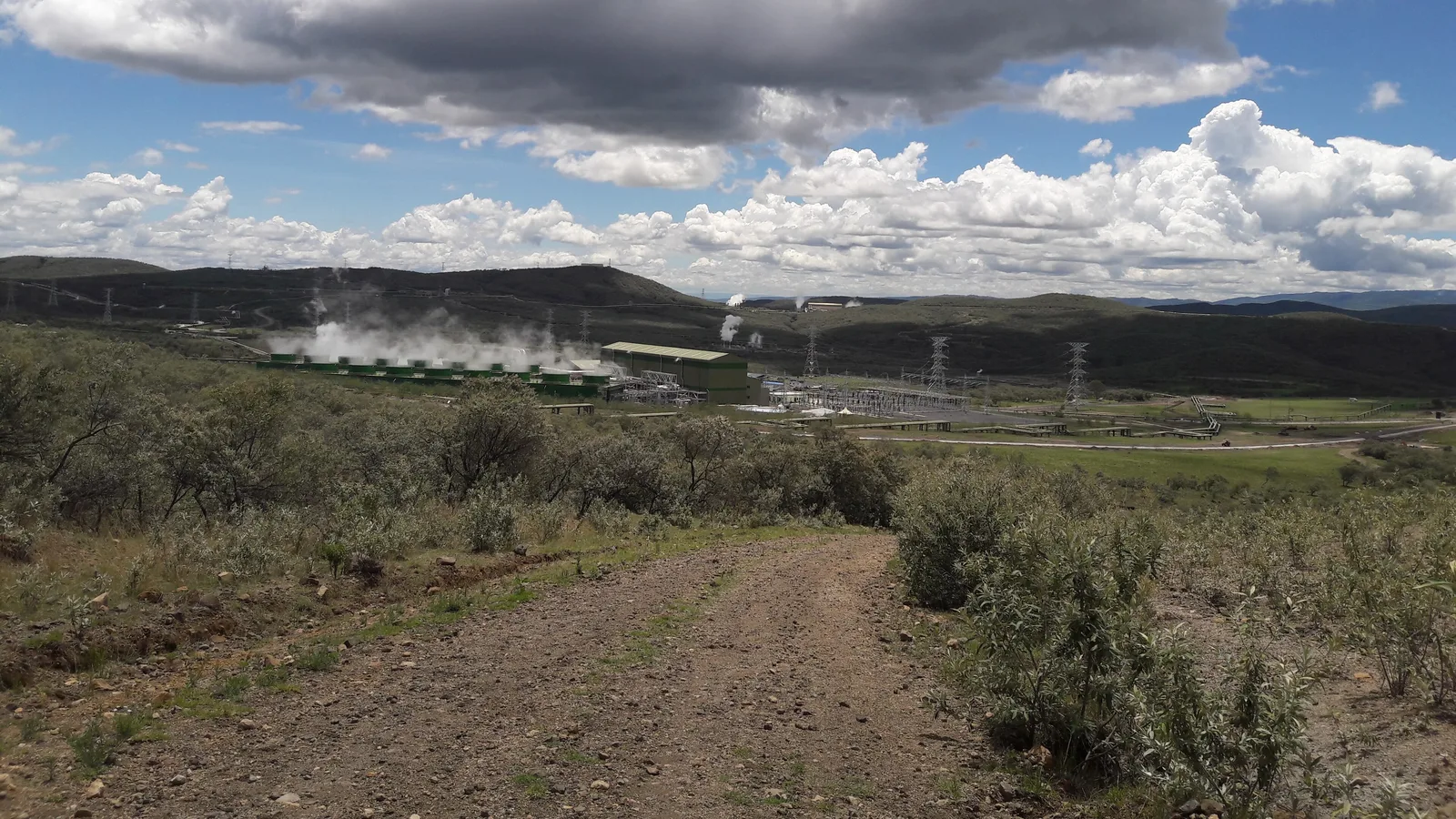
Kenya Rebuilt Its 45-Year-Old Geothermal Power Plant and Got 40% More Power Out of the Same Steam Field
KenGen finished a three-year rebuild of Olkaria I, Kenya's first geothermal power plant, raising it from about 45 megawatts to 63.3. President William Ruto is set to commission it on Dec. 7.
So basically: KenGen, Kenya’s main power company, just finished rebuilding the oldest geothermal power plant in the country. Olkaria I first came online in 1981. Before the work started it was putting out about 45 megawatts. After a three-year rebuild, it’s rated at 63.3 megawatts, about 40% more, using the same underground steam. It’s running tests now, and President William Ruto is set to officially commission it on Dec. 7.
What geothermal power is
Kenya sits on the Great Rift Valley, where the earth’s crust is thin and there’s a lot of heat close to the surface. Water underground gets superheated into steam. Power plants drill wells, pipe that steam up and use it to spin turbines.
The nice thing about it is that it never shuts off. Solar needs the sun, wind needs wind, and hydro needs rain. Geothermal runs day and night, all year, in any weather. That’s a big deal in Kenya, where droughts can drain the dams that make hydro power.
What they actually did
Olkaria I was built more than four decades ago, and the equipment was showing it. KenGen replaced the aging generating gear over three years, with more than 15 billion Kenyan shillings in funding from development partners. That’s somewhere over $100 million.
The point of a project like this is that the hardest and most expensive part of geothermal is finding the steam and drilling the wells. Olkaria I already had a proven steam field. Newer, more efficient turbines and equipment squeeze more electricity out of it. KenGen says the work should keep the plant running for another 25 years or more.
”We have completed the rehabilitation works on the oldest Olkaria I power plant, which will boost power generation from the initial 45 MW to 63 MW,” KenGen managing director Peter Njenga said.
A power plant inside a national park
Here’s the odd part. The Olkaria plants sit inside Hell’s Gate National Park, near Lake Naivasha. Tourists hike and bike through the gorges there while steam pipes run across the landscape and plumes rise from the plants. Olkaria I was the first commercial geothermal plant in Kenya and one of the first anywhere in Africa.
Kenya has gone all in on it since. KenGen’s total generating capacity is about 1,786 megawatts, and around 90% of that comes from green sources like geothermal, hydro and wind.
Why Kenya needs it
Demand keeps climbing. Kenya’s peak electricity demand hit 2,559 megawatts in November 2026, up from about 2,135 four years earlier. The country has also looked at importing power from Ethiopia during busy periods.
KenGen is also building something called a Green Energy Park at Olkaria, a special economic zone where factories plug straight into geothermal power. Njenga said five investors are already involved. One of them, Kaishan Group, plans a fertilizer plant that would need about 165 megawatts of geothermal energy by itself. Data centers, EV manufacturing and steel work have also been floated for the park.
The news came right before a three-day sustainable energy conference at Olkaria, where KenGen planned to pitch financiers on its next projects.
My take
I like stories like this because they’re the opposite of hype. Nobody invented anything here. They took a plant from 1981, put new equipment in it, and got 40% more clean power with no new land and no fuel bill.
We spend a lot of time talking about fusion and small reactors that are years away. Meanwhile there are old plants all over the world that could get the same kind of upgrade right now. It’s not flashy, but it’s cheap power that works today.
So basically — pass it on.
Daily Updates
Get new stories in your inbox
Near-future tech when it moves. Robots, space, EVs, AI. No spam.