Africa's Biggest Copper Mine Now Runs on Solar Day and Night, and It Cut 4 Million Liters of Diesel in a Month
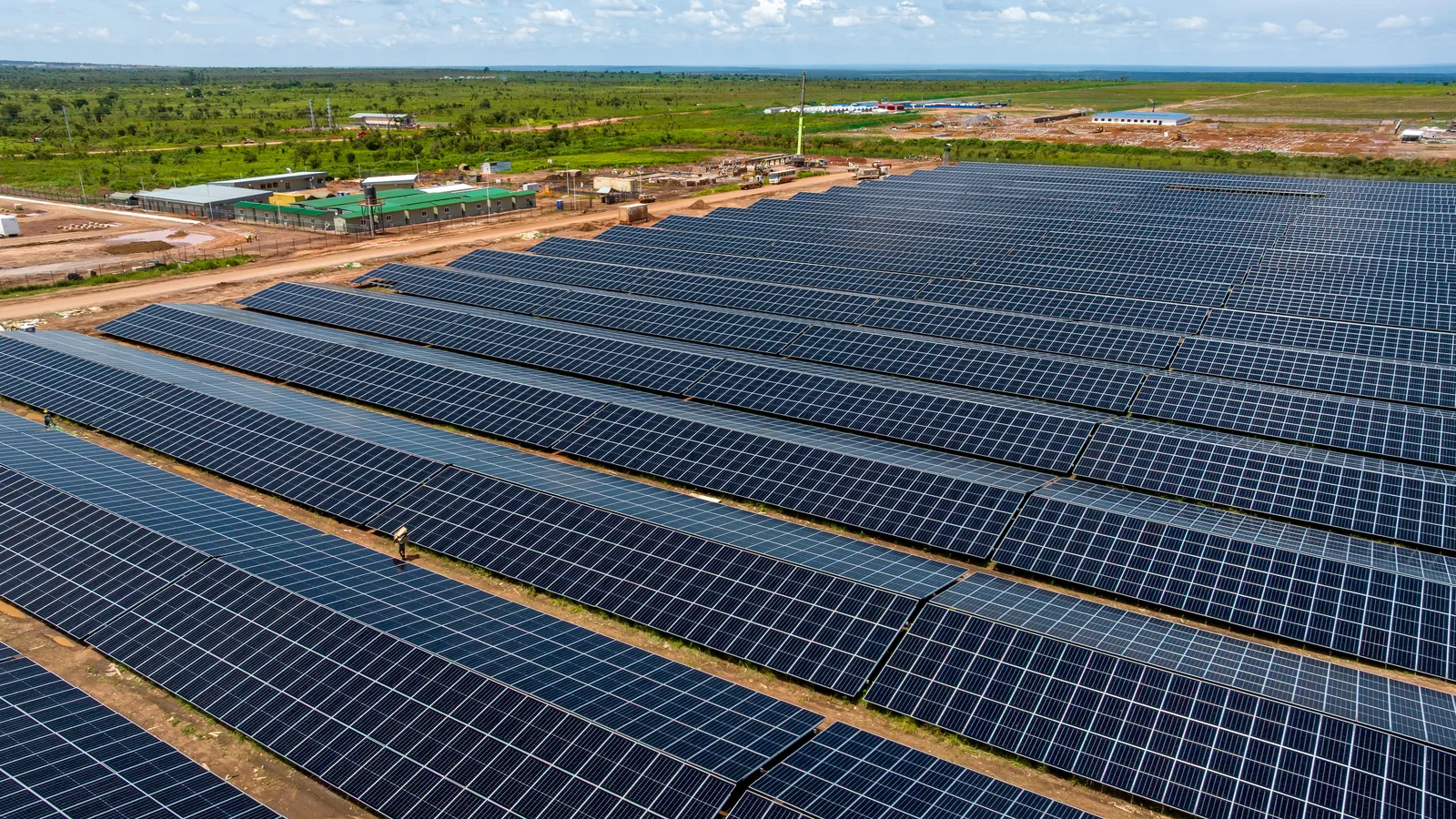
A 233 MW solar farm and 526 MWh battery at the Kamoa-Kakula copper complex in Congo now supply a steady 30 MW day and night. In its first month it replaced about 4 million liters of diesel worth roughly $11 million.
So basically: The biggest copper mining complex in Africa is now getting a steady 30 megawatts of power from the sun, day and night. It does that with a 233 MW solar farm and a 526 MWh battery. And in its first month, the system replaced about 4 million liters of diesel, worth roughly $11 million.
Where this is
The mine is called Kamoa-Kakula, in the Democratic Republic of the Congo, in the copper belt near the city of Kolwezi. It’s run by Kamoa Copper, which is a joint venture between Ivanhoe Mines, China’s Zijin Mining, and the Congolese government.
The power plant belongs to CrossBoundary Energy, a company that builds solar and battery systems for mines and factories in Africa. It owns and runs the plant and sells the power to the mine.
Why “around the clock” is the big deal
Solar is cheap, but it has an obvious problem. The sun goes down. A mine doesn’t stop at night, so it needs power it can count on 24 hours a day. That kind of steady, always-on supply is called baseload, and it’s usually come from things like diesel generators, coal, gas or big hydro dams.
This plant gets around that with a lot of batteries. During the day, the solar panels power the mine and fill up the battery. At night, the battery takes over. CrossBoundary says the setup guarantees at least 30 MW with 95% availability over a year. It calls this Africa’s first solar and battery baseload plant. Output has peaked at 55 MW.
The numbers
Here’s what’s out there, according to CrossBoundary and ESS News:
- 357,000+ solar panels from Aiko
- 233 MW of solar
- A 123 MVA / 526 MWh battery system
- About 300,000 MWh of clean power a year
- Around 78,750 metric tons of CO2 avoided each year
To put the battery in perspective, 526 MWh means it can push that 30 MW out for hours after sunset.
The brain running it
The control system comes from a German company called Dhybrid. It ties together more than 1,300 devices, including inverters, meters, weather sensors and cooling units.
Every day, its software forecasts what the plant can deliver for the next 24 hours. The operator picks a power level, and the system decides every second how to split up to 180 MW of solar between the mine and the batteries. It also decides how full to charge the battery for the night and how to keep the output steady when clouds roll over. Dhybrid’s statement sums it up: “The customer only sees constant power output.”
It got built fast
The deal between the mine and CrossBoundary was signed in April 2025. The plant sent its first power in June 2026 and was fully running by August 12, 2026. That’s 16 months from signing to full operation.
CrossBoundary says the average project like this in Africa takes about 29 months, so this one came in way ahead of normal.
And it’s getting bigger
Dhybrid has a contract to add another 35 MWh of batteries, bringing the total to 561 MWh, with that part targeted for January 2027. The mine also wants to raise its solar baseload to 120 MW within 18 months.
It’s already the largest working solar project in the whole country, according to the Africa Solar Industry Association’s database.
My take
This is the kind of energy story I wish got more attention. People always say solar can’t run heavy industry because of the night problem. Here’s a giant copper mine running 30 MW all night long off batteries, and it saved about $11 million in diesel in a single month. Copper is what goes into EVs, power lines and data centers, so it’s pretty fitting that the mine digging it up is now running on the sun. If a remote mine in Congo can do this in 16 months, the excuses elsewhere are getting thin.
So basically — pass it on.
Daily Updates
Get new stories in your inbox
Near-future tech when it moves. Robots, space, EVs, AI. No spam.