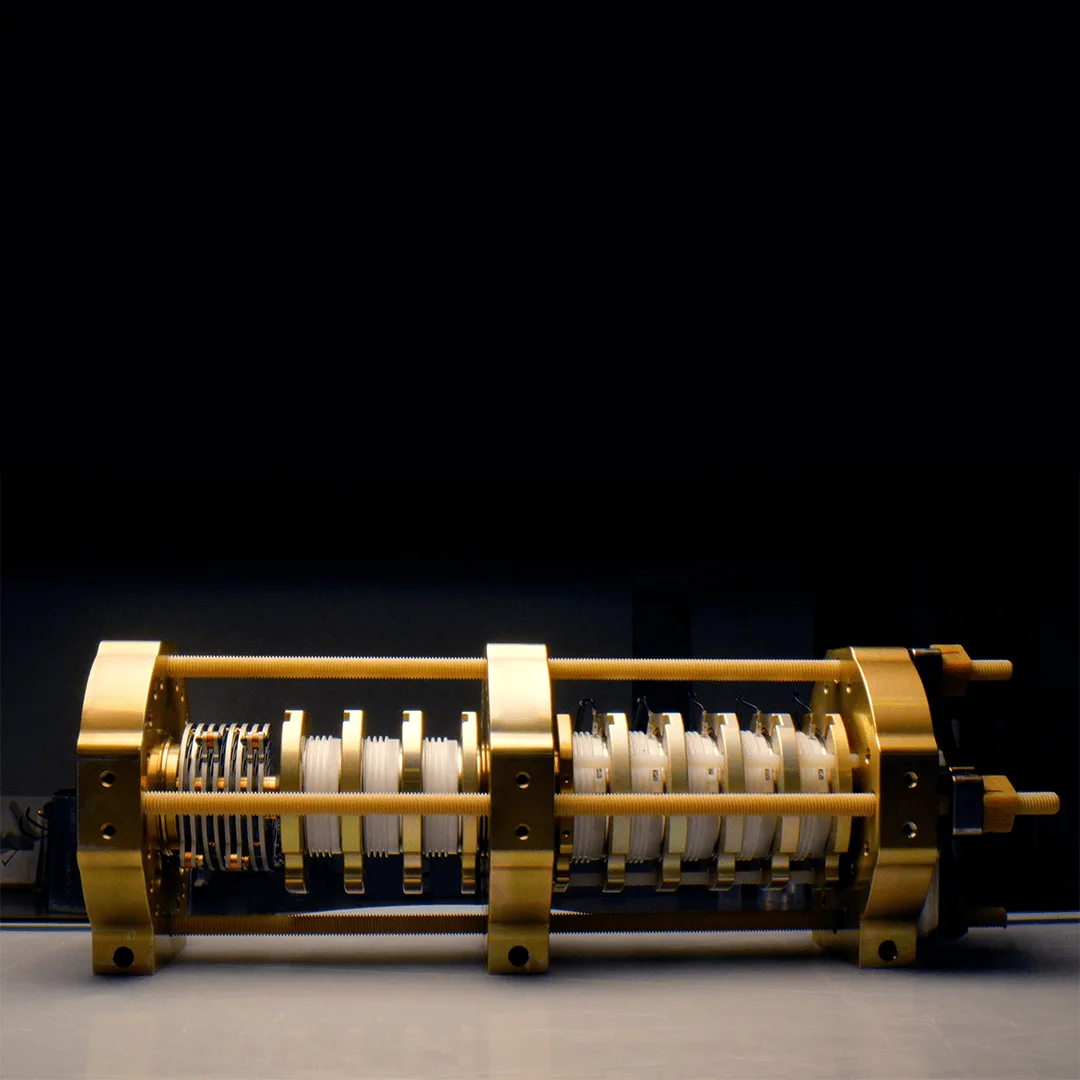
Helion Is Lining Up $175 Million to Build Its Own Fusion Chips, and It Says Better Ones Could Double Its Power
The fusion startup building a power plant for Microsoft signed a letter of intent for up to $175 million in CHIPS Act money to develop high-voltage semiconductors in the U.S. Its CEO says cutting the energy those parts waste in half could double what a fusion plant puts out.
So basically: Helion, the fusion company that’s promised to sell power to Microsoft by 2028, signed a letter of intent with the U.S. Commerce Department on Oct. 22 for up to $175 million in CHIPS Act funding. The money is for building special high-voltage computer chips and power parts in the U.S. that its fusion machines need. Helion is adding $50 million in private money on top, for $225 million total.
It’s a letter of intent, not a final deal yet. The final award still has to be signed.
Why a fusion company needs chips
Most power plants make heat, boil water and spin a turbine. Helion skips that. Its machine slams two balls of super hot plasma together, squeezes them with magnets, and when the fuel fuses, the plasma pushes back on the magnetic field. Helion grabs that push straight off as electricity. TechCrunch compared it to how an EV recharges its battery when you brake.
To pull that off over and over, Helion has to switch huge amounts of power on and off very fast. That’s the job of power semiconductors, and Helion says the ones good enough for this only come from overseas right now.
The “double the power” part
CEO David Kirtley told TechCrunch that today’s parts lose about 5% to 10% of the electricity that flows through them. That sounds small, but in a machine that cycles energy in and out constantly, the losses stack up.
”If we can cut that loss in half, that’s actually twice the power output of the fusion system,” he said.
Where the money goes
- Over $100 million for chip and packaging R&D in Everett, Washington, with Helion saying it’ll bring 100+ jobs and power module manufacturing there.
- About $80 million for chip tooling and process work in Burlington, Vermont. TechCrunch reports the partner there is GlobalFoundries.
- The rest goes to packaging upgrades and factory automation.
There’s a catch for Helion, too. Once the deal is final, the government gets a $175 million non-voting stake in the company, priced off Helion’s last funding round.
Don’t expect it in the first plant
Kirtley admitted the new chips won’t be ready in time for Orion, the plant Helion is building now for Microsoft. They’re meant to make the plants after that cheaper and more efficient.
What these chips actually are
GeekWire explains that high-voltage semiconductors are built to control electricity at very high voltages without breaking down. In Helion’s machine, powerful electrical pulses form and squeeze the plasma. As the plasma expands back against the magnetic field, it pushes current into the coils around it, and the chips have to catch that energy and send it back efficiently, again and again.
Helion’s newsroom says it wants its next-generation chips to be more efficient, last longer and be easier to cool. The company also says building them here would cut costs and get rid of the supply chain risk of depending on overseas suppliers.
Who gets hired
Kirtley told GeekWire the Everett work should create more than 100 jobs. Helion already has a small team of semiconductor experts, and it plans to hire materials scientists, semiconductor engineers, technicians and assemblers.
Where Orion stands
Orion is going up in Malaga, Washington, near the Columbia River, and Helion is still aiming to start operations in 2028. “So that’s still the plan,” Kirtley told GeekWire.
One heads-up is that reports don’t fully agree on the details. TechCrunch says the new chips won’t make it into Orion in time. GeekWire quotes Kirtley saying some of them could end up in Orion late in construction, with the rest of its chips mostly coming from overseas vendors. The funding totals differ too. TechCrunch says Helion has raised more than $3.2 billion, and GeekWire says more than $1.5 billion.
It’s also worth remembering that no fusion company has shown yet that it can get more energy out of fusion than it takes to make it happen, as GeekWire points out. Helion still has to prove that part.
Why regular people should care
Microsoft wants Orion’s power for its data centers, and AI is driving a huge jump in electricity demand. If fusion ever works at scale, it would be power that runs all the time without burning fuel. The same kind of chips also show up in EVs, the power grid and defense, so building them in the U.S. matters beyond fusion.
My take
This one is kind of sneaky important. Everybody talks about fusion like it’s all about getting the plasma hot enough, but Helion’s basically saying the boring electrical parts could be the difference between a plant that pays off and one that doesn’t. Doubling output just by wasting less sounds almost too good, so I’ll believe it when I see numbers from a real plant. Still, I’d rather they build those parts here than wait on overseas suppliers.
So basically — pass it on.
Daily Updates
Get new stories in your inbox
Near-future tech when it moves. Robots, space, EVs, AI. No spam.