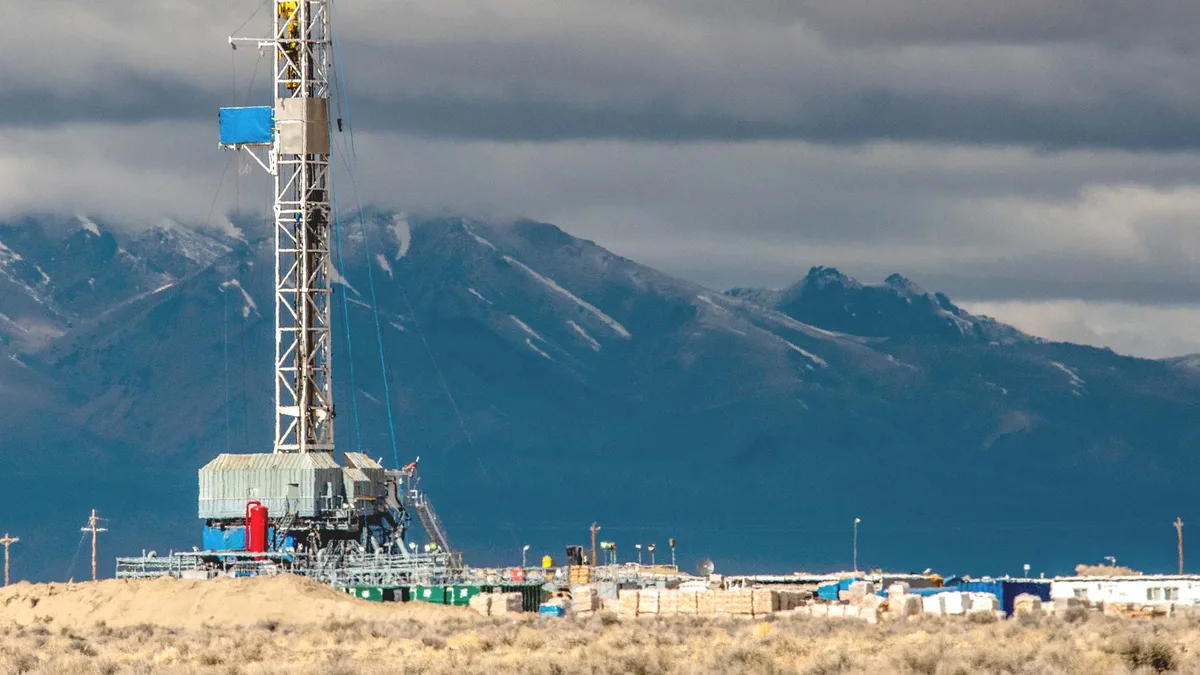
Fervo's Utah Geothermal Site Could Make Twice as Much Power as Anyone Thought
Fervo Energy says its Cape Station site in Utah could support about 8.4 gigawatts, nearly double the old estimate. It also now has $11.9 billion in signed power contracts, including the biggest enhanced geothermal deal ever with Google.
So basically: Fervo Energy, a Houston company that drills deep wells to pull power out of hot rock, just said its Cape Station site in Utah could support about 8.4 gigawatts of power. The old estimate was 4.3 gigawatts, so that’s nearly double. Fervo also now has about $11.9 billion in signed power contracts, up from $7.2 billion just one quarter ago.
What Fervo actually does
Regular geothermal only works in a few lucky spots where hot water naturally bubbles up near the surface. Fervo borrows tricks from the oil and gas industry instead. It drills deep, turns sideways, and cracks open hot rock so water can flow through it, heat up, and come back up to spin turbines.
The big selling point is that it runs all day and all night. No waiting on sun or wind. That’s exactly what power hungry data centers want right now.
The numbers from this week
Fervo shared all of this in its third quarter report on November 9. Here are the parts that jumped out at me:
- Its first power block, called GeoBlock 1, started commercial operation on September 30, ahead of its deadline. It makes 33 megawatts.
- GeoBlock 2 is already sending test power to the grid, and GeoBlock 3 is close behind. Both should be running by January 1, 2027, which would finish the first phase at about 100 megawatts.
- Fervo signed what it believes is the largest enhanced geothermal deal ever with Google. It’s a 15 year contract for 396 megawatts, with first power expected in mid 2028.
- Google also has an option to add about 600 more megawatts, which would bring the deal close to 1 gigawatt.
All told, Fervo now has 1,054 megawatts under binding contracts.
Why the site got bigger
Nobody found a new pile of hot rock. Fervo’s newer wells just go deeper and hotter. An independent firm called DeGolyer and MacNaughton redid the math with that deeper drilling plus some extra land Fervo leased, and came up with the 8.4 gigawatt number.
Each new well can make about 15 megawatts, according to TechCrunch. The first GeoBlock made 33 megawatts, while the newer ones are built around 50 megawatt turbines. Fervo says those blocks are sized to match a typical data center hall, so a company like Google can turn them on one at a time as they finish.
The cost is dropping too
This is the part that matters most long term. The first phase cost about $7,000 per kilowatt to build. The Google project is targeting $5,500 per kilowatt. Fervo’s long term goal is $3,000.
TechCrunch pointed out that if Fervo actually hits that $3,000 mark, it could undercut new natural gas plants even at today’s gas prices. That’s a big if, but the trend is going the right way.
Fervo isn’t making real money yet. It had an operating loss of $43.7 million for the quarter. It is sitting on about $1.9 billion in cash, though, so it has room to keep building.
Google can sell the power too
One smart detail: the Google deal is connected to the regular grid. CEO Tim Latimer said that means Google can take the power for its own data center or sell it to other customers if it isn’t ready yet.
”Google can develop a potential data center on their schedule, and neither party is waiting on the other,” Latimer said on the earnings call.
My take
Everybody talks about nuclear when it comes to powering AI, and it’ll get there. But big nuclear plants take forever. Fervo is doing something you can actually build in chunks, finish on time and plug in piece by piece.
The part I keep coming back to is that the same patch of desert just got rated for twice the power, only because Fervo learned to drill deeper. If the costs keep falling like this, geothermal could quietly become one of the cheapest round the clock power sources out there. And almost nobody’s watching it.
So basically — pass it on.
Daily Updates
Get new stories in your inbox
Near-future tech when it moves. Robots, space, EVs, AI. No spam.