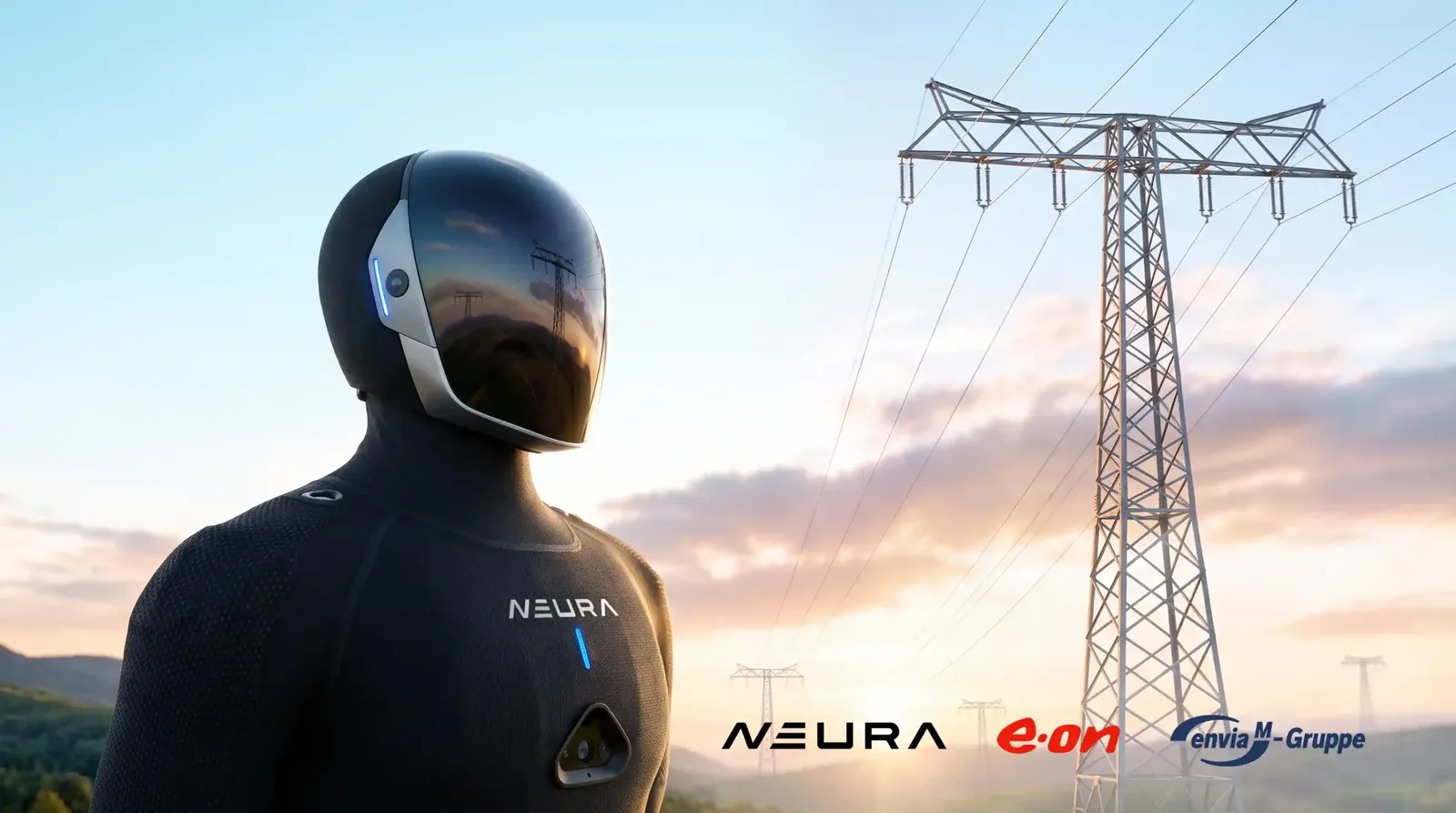
E.ON and NEURA Want Humanoid Robots Inspecting German Power Substations by 2027
On Nov. 5, 2026, E.ON, enviaM and NEURA Robotics said they will train humanoid robots for grid inspection and monitoring. Skills start at TUM RoboGym in Munich, with first field trials on MITNETZ STROM's network expected in 2027.
So basically: Germany’s big utility E.ON, regional partner enviaM, and robot maker NEURA Robotics said on Nov. 5, 2026, that they will teach humanoid robots to help inspect power grids. First real trials on the network are expected in 2027.
The plan
Training starts at TUM RoboGym powered by NEURA, a robotics training center at Munich Airport’s LabCampus that opened in October 2026 and covers more than 2,300 square meters. Grid specialists will demonstrate jobs while wearing sensor suits, motion capture gear, or teleoperation controls.
Those demos get mixed with real robot data and simulations. NEURA’s platform, Neuraverse, is supposed to store and redeploy the skills. Pilot partner MITNETZ STROM, enviaM’s grid subsidiary, will then try the robots in the field.
Early tasks on the list: inspections, monitoring sites like substations, and help with site security. Work in more hazardous spots is on the “we will look at it” list.
Why a humanoid, not a robot dog
Robot dogs and wheeled bots already walk substations. They read gauges, take thermal photos, and flag damage. Drones do recurring scans too.
NEURA’s bet is that a humanoid can do what those machines struggle with: open cabinet doors, handle tools, climb human sized layouts, and catch faults by sound and touch, not only by camera. Its Neuron AI model is built to combine 3D vision, touch, hearing, the robot’s own body state, language, and memory. Partial discharge, the tiny sparks that show insulation is failing, makes ultrasonic noise. Catching that early is the kind of job the partners highlight.
The robot they point to is NEURA’s 4NE1 humanoid. Grid sites were built for people, so the pitch is that you should not have to rebuild a substation for a wheeled cart.
What they did not say
No robot count. No list of substations. No budget. No pass mark for what counts as success. MITNETZ STROM runs about 71,000 kilometers of distribution lines. E.ON’s wider networks cover about 1.6 million kilometers and serve roughly 47 million customers. How a pilot jumps from a few sites to that footprint is still a blank page.
E.ON and enviaM say they keep control of their training data and decide whether to share skills. The EU’s updated Machinery Regulation starts applying on Jan. 20, 2027, the same year as the planned field work. The press release does not spell out how certification for live substations will work.
The labor problem behind the robots
European utilities are staring at two pressures at once: grids that need more inspections because of solar, wind, and electrification, and a skilled workforce that is aging out. enviaM CEO Stephan Lowis said humanoids could take physically hard or hazardous rounds so specialists focus on judgment calls.
That framing matters more than the robot brand. If the pilot only replaces a camera on wheels, it fails. If it lets a smaller crew cover more substations without sending people into the worst jobs first, utilities will keep funding it even when the demos look slow.
NEURA founder David Reger talked about building a scalable Physical AI base in Europe, not a one robot stunt. E.ON’s Stefan Padberg tied it to the energy transition needing stronger, smarter grids. The 2027 MITNETZ trials are where those speeches meet mud, rain, and live equipment.
My take
Putting humanoids on the grid only makes sense if they find problems a cheaper wheeled robot would miss. If they mostly take the same thermal pictures a Spot already takes, that is an expensive rerun.
I like that they are starting in a gym with real grid techs teaching the motions. 2027 field trials will be the test. Hear a fault a camera cannot see, open a cabinet a drone cannot open, and do it without a babysitter, or this stays a press release.
So basically — pass it on.
Daily Updates
Get new stories in your inbox
Near-future tech when it moves. Robots, space, EVs, AI. No spam.