A Giant Data Center in China Is Now Running on 800-Volt DC Power, and That's a Bigger Deal Than It Sounds
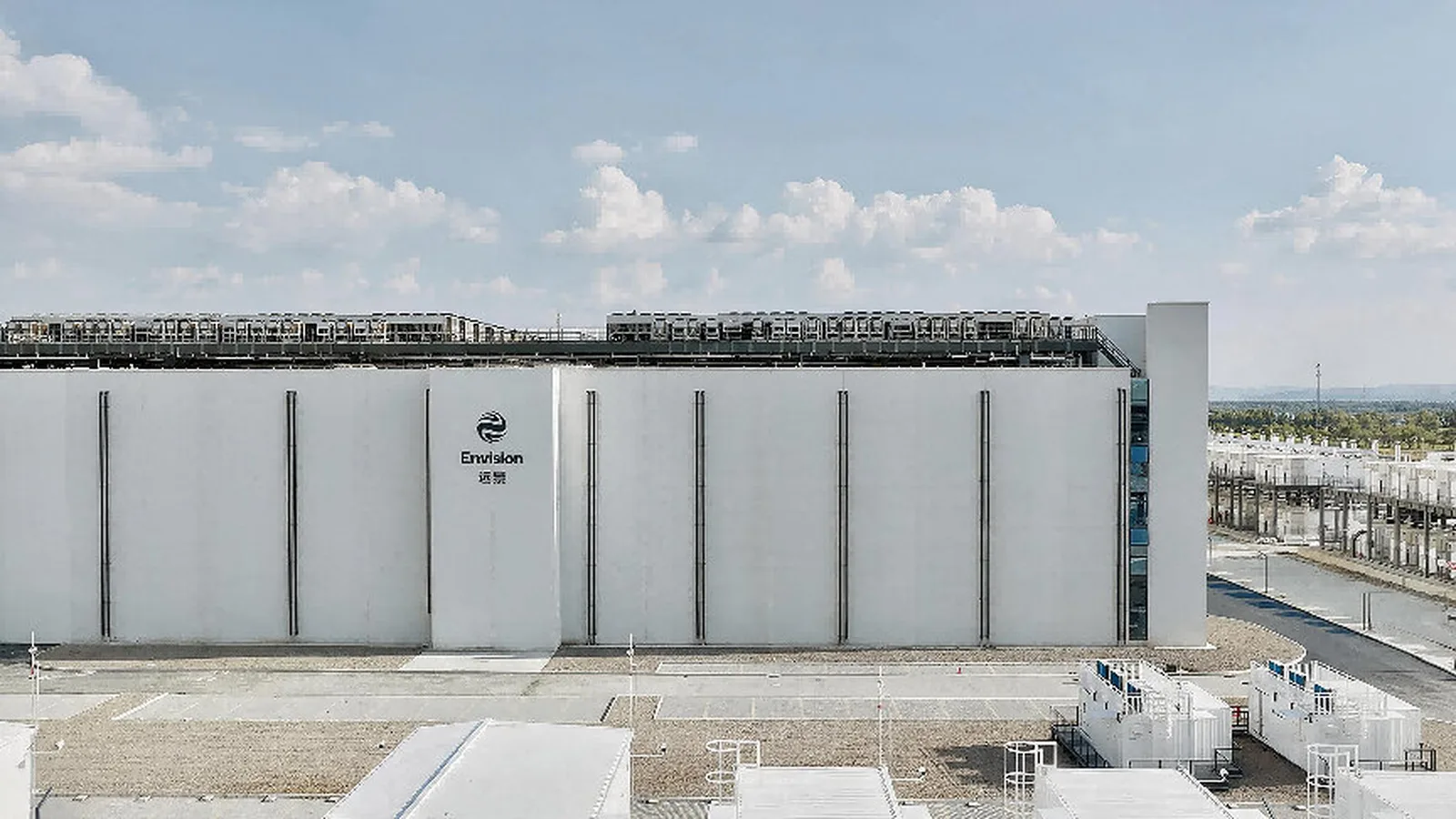
On Nov. 2, 2026, Envision said its Galaxy campus in Ulanqab, China, is the first large data center running live computing on an integrated 800-volt DC power system, using solid-state transformers and batteries to handle sudden power swings.
So basically: The computers inside giant data centers are so power hungry now that the way electricity gets to them is starting to change. Envision, a big Chinese wind turbine and battery company, says it’s the first to run a large data center on a new setup called 800-volt DC, and it’s already powering real work.
Envision announced it on Nov. 2, 2026.
Where this is
It’s at Envision’s Galaxy campus in Ulanqab, a city in Inner Mongolia in northern China. Here’s how big the place is meant to get, according to Envision:
- It opened in August 2026
- It’s planned to reach 3 gigawatts of power, which is about the output of three big nuclear reactors
- At full size it’s designed for up to one million computer chips working at once
- More than 80% of its power is supposed to come straight from renewable energy
AC vs. DC, the simple version
Your house runs on AC power, the kind that comes out of the wall. But computer chips actually run on DC power. So somewhere between the power line and the chip, it has to get converted.
In a normal data center, AC power runs all the way through the building to the edge of each rack of servers, and then gets converted to DC there. That means lots of conversion boxes, lots of thick copper cable and lots of little energy losses along the way.
Envision’s system flips that around. It converts power once, early, and sends 800-volt DC through the building to the racks.
How Envision’s system works
There are three main pieces:
- Solid-state transformers, which take power coming in at 10,000 volts and turn it straight into 800-volt DC
- Batteries, which back up the power for a few seconds or a few minutes if something hiccups
- A controller called Dubhe that coordinates the transformers and batteries in real time
That last part matters because these computer chips are moody. Their power use can jump up and down really fast, like thousands of people flipping their lights on and off at the same moment. Envision says its system balances those swings within milliseconds, right there in the building, so the grid doesn’t feel the jolt.
Envision showed a model of one of these transformers at a trade show in Munich in July. pv magazine says the spec sheet listed it at 2.5 megawatts with 98.5% conversion efficiency.
Why everyone cares
Higher-voltage DC means you can fit more computing power in the same space. Fewer conversion steps, less copper, smaller equipment.
According to pv magazine, data center builders and some of the world’s biggest tech companies are already chasing higher-voltage DC setups for their new buildings. Envision is claiming it got there first with a working, paying setup.
What’s missing
Envision didn’t say how much power this particular system is handling, or give any real efficiency numbers from the Galaxy site itself. And “world’s first” is Envision’s own claim. Nobody outside the company has checked it yet.
It’s also worth knowing that Envision is not a tiny startup. It’s one of the biggest wind turbine makers in the world, and it plans to use this same approach for a project it calls Mission Gobi, aiming for 5 gigawatts of green data center capacity in desert regions around the world by 2030.
My take
This is the plumbing side of the computer boom, and I think it’s way more interesting than people give it credit for. Everybody talks about chips. Hardly anybody talks about how you even get enough electricity into a building to run a million of them. A wind and battery company figuring that out first kind of makes sense, since it already lives between the power grid and the stuff that uses it. If the numbers hold up, expect “800-volt DC” to be a phrase you hear a lot more.
So basically — pass it on.
Daily Updates
Get new stories in your inbox
Near-future tech when it moves. Robots, space, EVs, AI. No spam.