A Seattle Startup Put a Power Plant on an Underwater Volcano and Made Power for 8.7 Seconds
Endurance Energy drilled what it calls the world's first subsea geothermal well nearly a mile under the Pacific, ran a 3-ton power plant from Seattle, and got more electricity out than it put in for 8.7 seconds. Its first commercial project in Tonga is aiming for 2027.
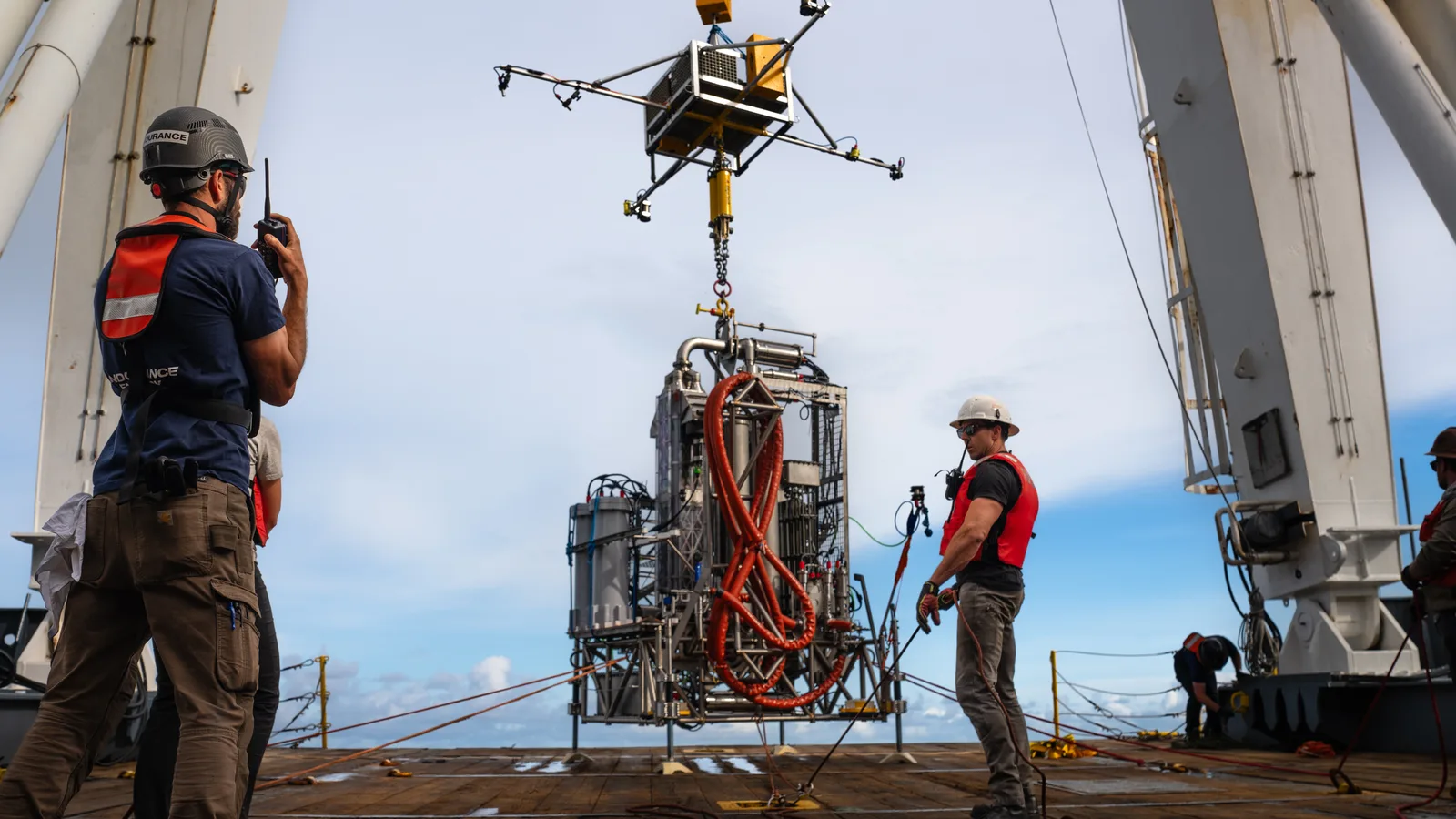
So basically: Endurance Energy, a Seattle startup, lowered a 3-ton power plant onto an active underwater volcano almost a mile below the Pacific Ocean and got it to make electricity. It only ran in the positive for 8.7 seconds. But the company says that’s the first time anyone has made net power from geothermal heat on the seafloor.
The test happened on Sept. 27, and Endurance announced it on Oct. 19.
Where they did it
The spot is called Axial Seamount. It’s an active underwater volcano about 300 miles off the coast of Oregon, and the crater floor sits about 5,000 feet down. Scientists already study it closely, and there’s a fiber optic cable network on the seafloor there run by the University of Washington for the National Science Foundation.
That cable is a big part of this story. Endurance plugged its plant into it and controlled the whole thing in real time from an office in Seattle.
What they actually pulled off
Endurance calls the test unit Adélie, and it was trying to prove four things at once.
First, drilling a well on the seafloor. Its robotic drill bored two holes less than two feet apart, and both hit hot volcanic fluid. The team cased and cemented the second one and capped it with a valve. That made a 52 foot well that flowed at about 500°F. Endurance says it’s the first geothermal well ever completed under the ocean.
Second, landing a power plant on target down there. Third, running it from shore. And fourth, getting more electricity out than the machine uses to run itself.
That last one is the big deal, and it didn’t come from the new well. The well turned out to be too narrow to feed the plant enough fluid. So the team hooked Adélie up to a natural hydrothermal vent nearby that was pushing out water at about 538°F. The turbine spun up to about 26,000 rpm, and for 8.7 seconds the plant made more than it used. Most of that time it netted around 2 kilowatts, and it peaked at 16.5 kilowatts.
Then it broke
Endurance was pretty upfront about this. The run stopped when the battery’s overcurrent protection kicked in. About ten minutes later, while they were trying to restart it, a power cable feeding a pump failed, and that ended the dive.
The CEO, Andrew Redd, compared it to Robert Goddard’s first liquid-fueled rocket, which flew for two and a half seconds. “Our first net-positive run lasted about nine,” he said. “Our approach is to make it exist, then make it good.”
Why bother going underwater
Geothermal power is great because it runs all day and night no matter the weather. The problem on land is that you have to drill deep to find heat that hot. Along underwater volcanic ridges, that heat is sitting right at the seafloor.
Endurance also says it tried to keep the impact small. Its well is only about 2 inches wide, compared to the 20 to 36 inch casings oil and gas wells usually start with. It drilled with filtered seawater instead of drilling mud and stayed away from the vent chimneys where tubeworms, crabs and snails live. The company says monitoring found no unusual seismic or volcanic activity and no big change to the sea life.
What’s next
This winter, Endurance plans to send down an upgraded version called Gentoo that’s built to make more power for longer. Its drill can already reach about 260 feet, so deeper wells should give more flow. It’s also building a 2 megawatt commercial unit called Leopard.
The first real project is planned for the Pacific island nation of Tonga, with first power targeted for 2027. Tonga’s grid runs mostly on imported diesel right now. Endurance has raised $63 million so far, including a $54 million round led by Founders Fund.
My take
Nine seconds of power sounds like nothing, and honestly, it kind of is. But I like that they told everybody what broke instead of just posting a cool video. Running a power plant a mile underwater from an office in Seattle is wild by itself. If they can get that to run for days instead of seconds, places like Tonga that burn shipped-in diesel for everything could get cheap power that never shuts off. I’ll be watching for the Gentoo test this winter.
So basically — pass it on.
Daily Updates
Get new stories in your inbox
Near-future tech when it moves. Robots, space, EVs, AI. No spam.