China Plugged In the World's Biggest Liquid Air Battery, and It Stores Power by Turning Air Into a Liquid
A 60 MW, 600 MWh liquid air energy storage plant in Golmud, Qinghai started feeding the grid on Oct. 30, 2026. It chills air to about minus 194 C, stores it in tanks, and can run for 10 hours.
So basically: China just hooked up what its developer calls the largest liquid air energy storage plant in the world. When there’s extra power, it freezes ordinary air into a liquid and stores it in big tanks. When the grid needs power, it lets the liquid turn back into gas to spin a turbine. The plant started feeding electricity into the grid on Oct. 30, 2026.
The numbers
The plant is in Golmud, in Qinghai province. It’s rated at 60 megawatts and can hold 600 megawatt hours, which means it can put out full power for about 10 hours.
The developer, state owned China Green Development Investment Group, says it could soak up around 600 MWh of extra renewable power a day. It estimates the plant will send about 180 GWh a year to the grid, which it says is about what 30,000 households use.
Construction started in July 2023. The company built it with the Chinese Academy of Sciences’ Technical Institute of Physics and Chemistry, which had previously shown this idea at a tiny 100 kilowatt size.
How it works
It’s kind of wild how simple the idea is.
- Charging: Extra electricity runs a big compressor that squeezes purified air to about 7 megapascals. The heat from that squeezing is saved in hot water at up to 195 C.
- Freezing: The air is cooled in several steps until it turns into a liquid at about minus 194 C. It goes into insulated tanks at close to normal pressure.
- Discharging: The liquid air is pumped up in pressure, warmed back up and turned into gas. That expanding gas spins turbines connected to generators. The cold released along the way is saved and reused the next time it charges.
The only thing it uses is air. No lithium, no big batteries, and no underground caves.
Why that matters
Other kinds of compressed air storage need the right geology, like salt caverns, to hold the air underground. Liquid air goes in tanks, so you can in theory build it almost anywhere.
The spinning machinery in the plant can also help keep the grid steady, according to the developer.
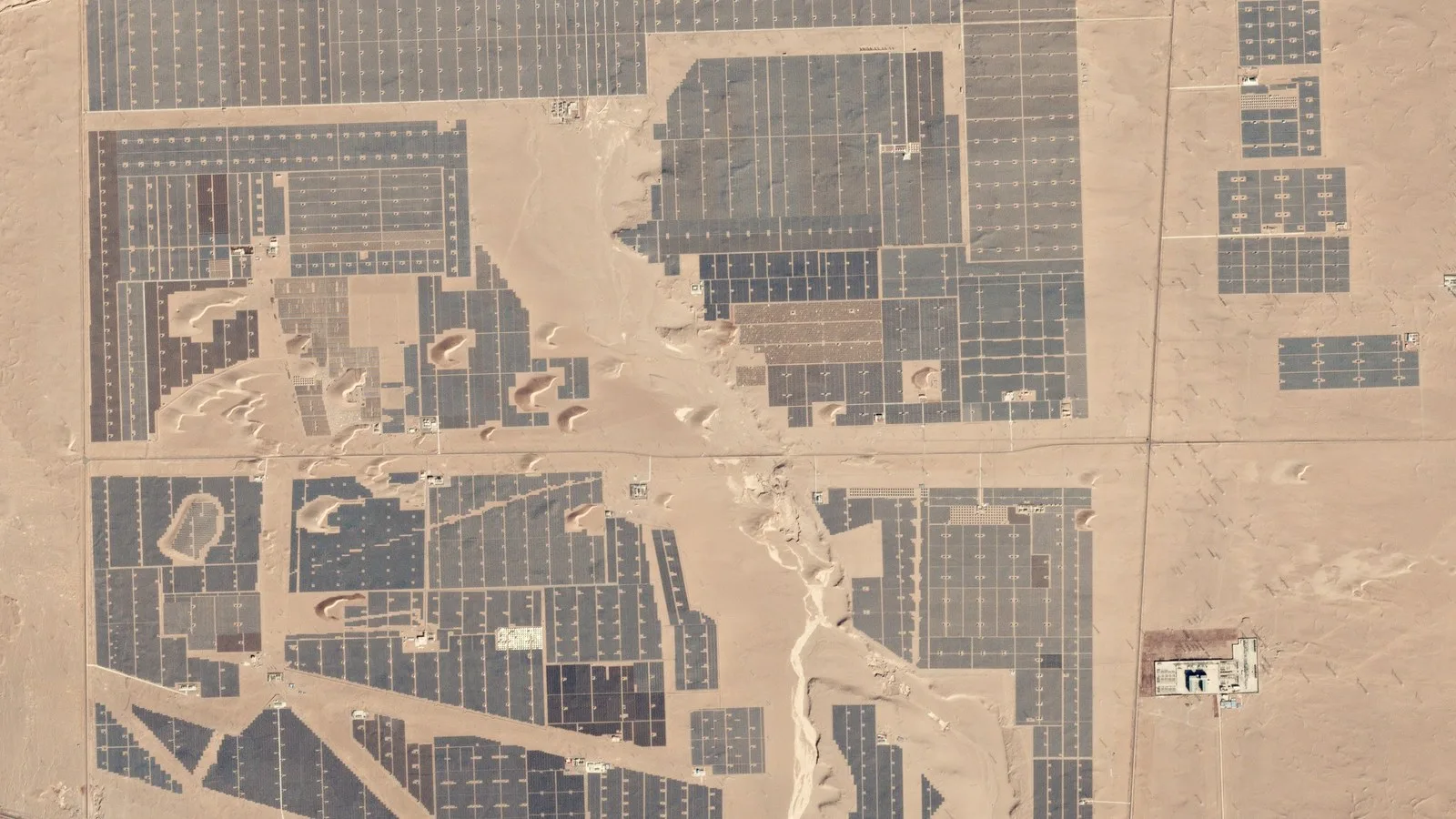
Golmud sits in the Qaidam Basin, a place with a lot of sun and wind. Solar farms there make more power than the grid can use in the middle of the day, so storage that can hold it for 10 hours is exactly what’s missing.
The developer also says all the major equipment was made in China, with 100 percent local parts, including the big compressors, expanders and heat exchangers.
What to keep in mind
This is a demonstration plant. It’s the first one at this size, and the reports so far are mostly from the developer. I couldn’t find numbers yet on how much of the electricity it gets back after going through the freeze and thaw cycle, and that matters a lot for cost.
China is also trying other long duration storage like vanadium flow batteries, sodium ion batteries, and heat storage. So this is one of several bets.
Who built it
The engineering design came from Hualu Engineering and Technology, and China National Chemical Engineering Third Construction worked on the build. The project was picked for China’s national program for new energy storage demonstrations. It’s also on the National Energy Administration’s list of major first of a kind energy technologies.
That list matters because it tells you the government wants to see if this works. It’s not a random side project.
My take
I love when a big energy answer is just physics we already know. Air gets cold, becomes a liquid, then turns back into gas and spins something. There’s no rare metal in it.
What I want to see is how efficient it is and what it costs compared to regular batteries. If those numbers look good, the idea of building a power bank anywhere out of tanks and air could get really popular really fast.
So basically — pass it on.
Daily Updates
Get new stories in your inbox
Near-future tech when it moves. Robots, space, EVs, AI. No spam.