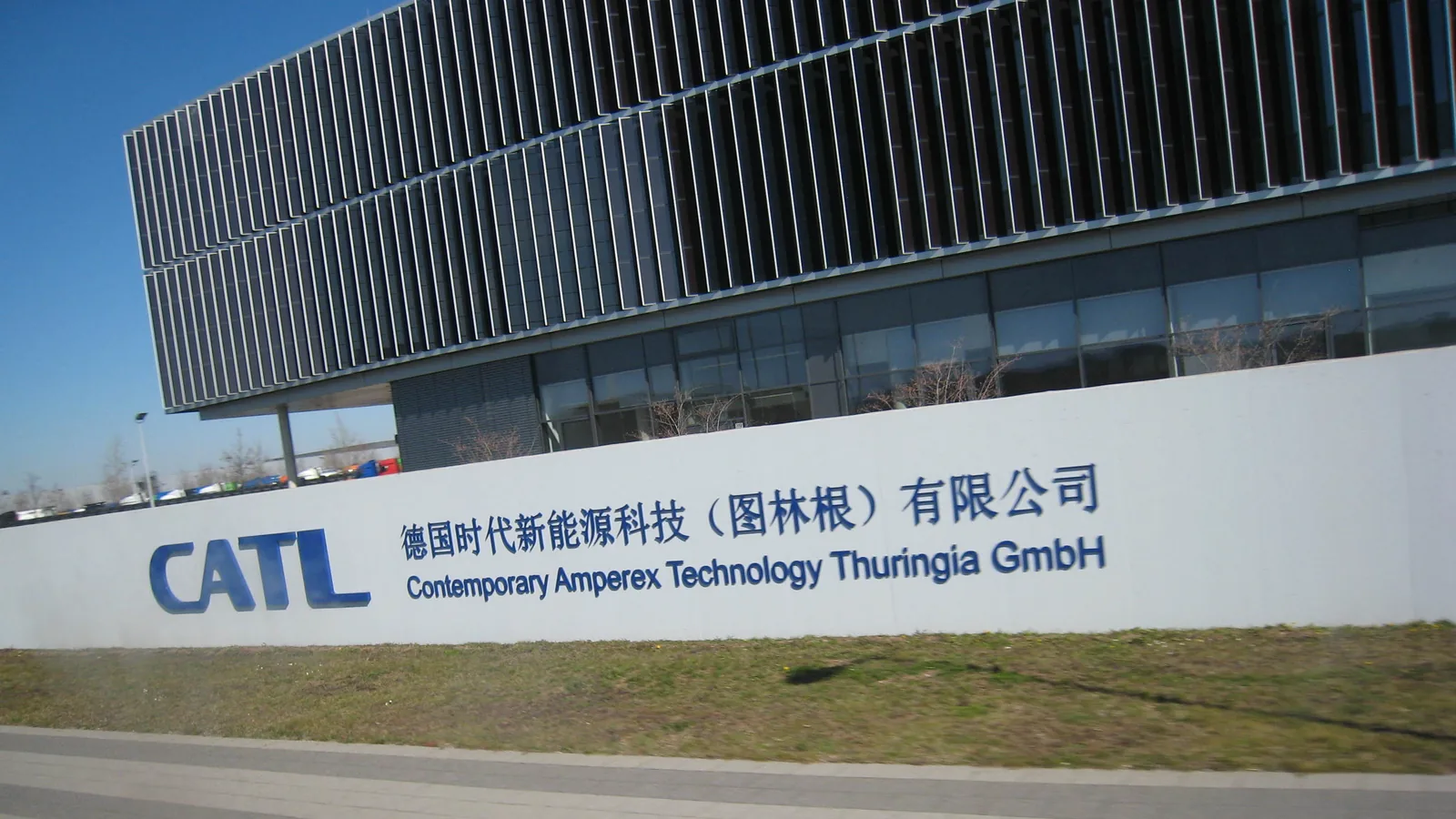
CATL Just Showed Off a 9 MWh Grid Battery and a Sodium Battery Built for 131 Degree Heat
At All-Energy Australia in Melbourne on Oct. 28, 2026, CATL gave its 9 MWh Tener+ grid battery its global debut and showed its Tener Sodium system, a sodium-ion battery rated to run at up to 55 C (131 F) and last more than 10,000 cycles at 45 C.
So basically: CATL, the Chinese company that makes more batteries than anyone on Earth, just showed off two new giant batteries for the power grid at a big energy show in Melbourne, Australia. One stores 9 megawatt hours in a single unit. The other one doesn’t use lithium at all. It runs on sodium, the same stuff in table salt, and it’s built to keep working at 55 C, which is 131 F.
First, what a grid battery even is
These aren’t batteries for your phone or your car. They’re huge battery units that sit in big fenced off lots next to power lines. They soak up electricity when there’s extra, like when solar panels are cranking at noon, and push it back out when people need it, like at dinnertime after the sun goes down.
As more countries add solar and wind and shut down old coal plants, they need a ton of these. Australia is one of the biggest markets for them in the world.
The 9 MWh Tener+
The first new product is called Tener+, and this was its global debut. The big selling point is that it packs a lot of storage into less space:
- 9 MWh in a single unit
- 40 percent fewer containers needed for the same project
- 35 percent less land for the whole site
- Designed to last 25 years
For a sense of scale, 9 MWh is about what a typical American home uses in ten months. That’s one box.
CATL also says it runs quieter than 65 decibels, roughly as loud as a normal conversation, so it can go closer to neighborhoods. It’s liquid cooled, built to handle humid, salty coastal air, and you can switch on a bunch of them at once with a single click.
The sodium battery is the interesting one
The second product is called Tener Sodium, and CATL calls it one of the world’s first mass produced, field tested sodium-ion grid battery systems.
Why that matters: almost every big battery right now uses lithium. Lithium works great, but it comes from a handful of places and the price can swing wildly. Sodium is way more common and found all over the world, so it’s a backup path if lithium gets scarce or expensive.
Here’s what CATL says Tener Sodium can do:
- More than 30 MWh per setup, built from modular cabinets
- Runs in heat up to 55 C (131 F)
- More than 10,000 charge cycles at 45 C (113 F)
- 95 percent round trip efficiency, meaning only about 5 percent of the power is lost going in and out
- More than 20 years of life
- Over 10 percent cheaper to build and install than a regular lithium iron phosphate setup
The heat rating is the big one for Australia, where summers can get brutal. Heat is usually what wears batteries out fastest.
CATL is already deep in Australia
CATL says it already has more than 17 GWh of storage projects installed in Australia and more than 3,000 projects worldwide. It had 30.4 percent of the global energy storage battery market in 2025, according to the research firm SNE Research.
An Australian investor, Birdwood Energy, also just picked CATL to supply the batteries for a 400 MW, 1,860 MWh battery project near Wodonga in Victoria. And CATL signed deals with Hitachi Energy, engineering firm EPEC Group and UNSW Sydney to help connect, test and train people for big battery projects there.
My take
The 9 MWh box is nice, but it’s the kind of upgrade every battery company announces every year: more storage, less space. The sodium battery is the one I’d keep an eye on. If a battery made from something as cheap and common as salt can really handle 131 degree heat for 20 years, it takes a lot of pressure off lithium. That’s good news for places that get hot, and honestly it’s good news for electric car prices too, since cars and grid batteries are fighting over the same lithium right now.
So basically — pass it on.
Daily Updates
Get new stories in your inbox
Near-future tech when it moves. Robots, space, EVs, AI. No spam.