The Company Building a Supersonic Jet Is Now Making Jet Engine Power Plants for AI, and It Just Opened a $150 Million Factory
Boom Supersonic unveiled its first turbine core and a $150 million Colorado factory that will build 42 megawatt natural gas turbines for AI data centers, up to 50 a year by 2029. The supersonic airliner is now second in line.
So basically: Boom Supersonic, the Colorado company trying to bring back supersonic passenger flights, is building power plants first. On Oct. 22 it showed off its first finished turbine core and a new $150 million factory near Denver that will build 42 megawatt natural gas turbines for AI data centers. The turbines come from the same engine tech Boom is developing for its supersonic jet, and the company says the factory will hire up to 500 people.
Wait, a jet company making power plants?
Yep. Boom’s plane is called Overture, and it’s supposed to fly passengers at faster than the speed of sound. The engine for it is called Symphony. Boom says the heart of that engine, the part with the compressor, combustor and hot turbine, will also power a ground turbine it calls Superpower.
The pitch is simple. AI data centers need a ton of electricity, and getting hooked up to the power grid can take years. CEO Blake Scholl told reporters the wait for grid power is five to 10 years, and the backlog for new turbines is about five years. So Boom wants data centers to make their own power on site.
”This is a 42-megawatt natural gas turbine that runs on that same supersonic technology, which means it’s used to being hot and it doesn’t need cooling water. Not a drop,” Scholl said, according to The Colorado Sun.
The factory
The Superpower Superfactory is in Centennial, Colorado, south of Denver. It’s nearly 200,000 square feet across two buildings, and Boom says it’s already making parts while construction keeps going. It should be fully running by early 2027.
Boom says it’ll make about 85% of each turbine by weight in house, starting from raw metal. That includes blades, shafts and cases, with more than 75 big computer-controlled machines. The plan is 25 turbines in 2028 and 50 a year by 2029. That adds up to about 2 gigawatts a year, which is a lot of power. First deliveries to customers are aimed for mid 2027.
Boom also wants to build a digital foundry to cast the toughest turbine blades without the usual molds and tooling. The company says the whole setup could switch over to defense work quickly if needed.
The first core
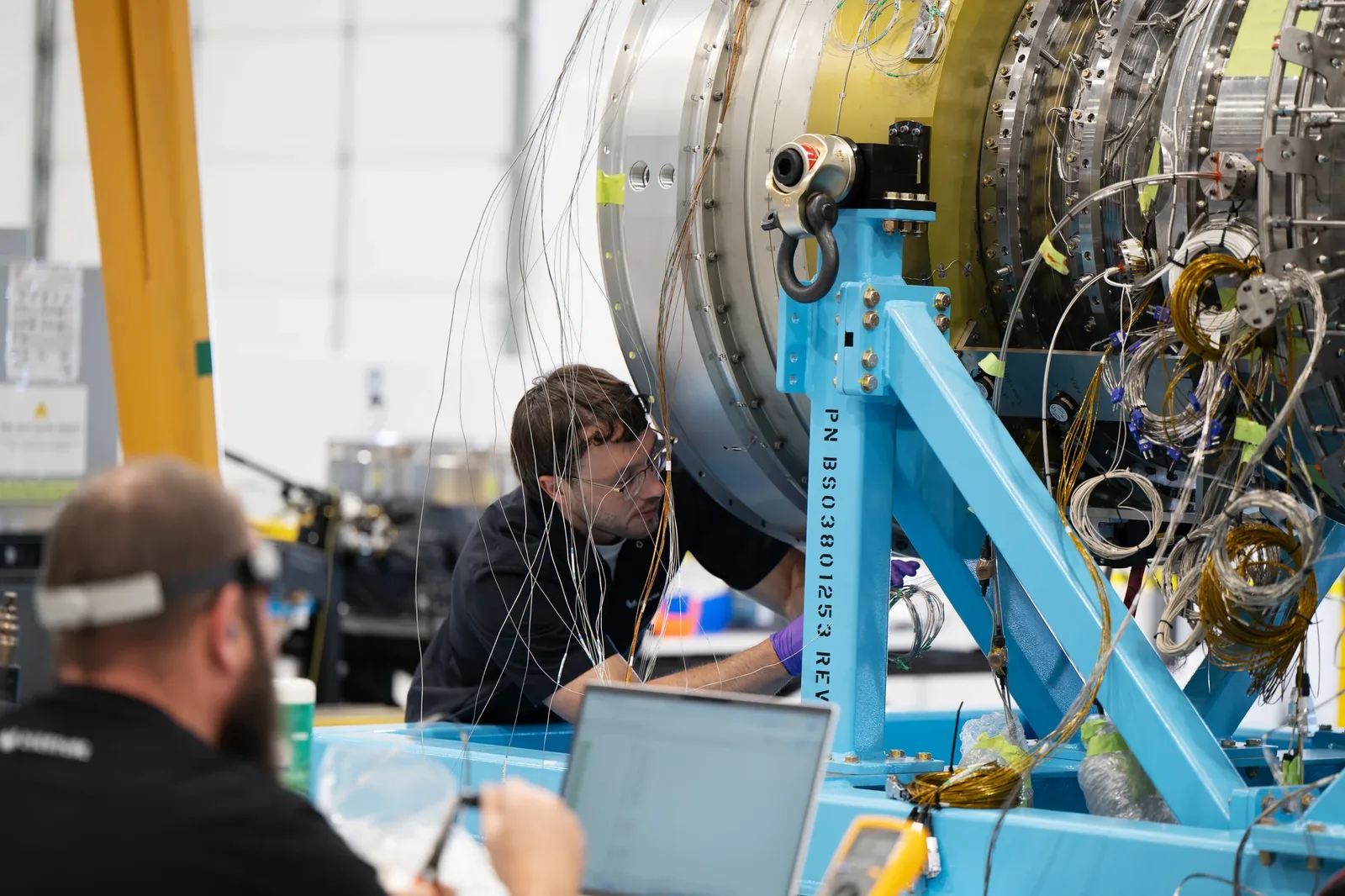
The first prototype core, nicknamed Sprint Core, is covered in more than 1,000 sensors measuring heat, pressure and vibration. It’s heading to Boom’s test site at the Colorado Air and Space Port east of Denver, and the company expects to fire it up for the first time before Thanksgiving. Energy Secretary Chris Wright was there for the reveal, and Governor Jared Polis showed up for the jobs announcement.
The Sam Altman text
Here’s the odd part. Scholl said the idea came after reading about the data center power crunch. Sam Altman, the head of OpenAI, was one of Boom’s first investors, so Scholl texted him to ask if a power turbine would actually help AI. Scholl says Altman wrote back, “Yes, please, as many as you can make, as fast as you can make them.” Altman didn’t respond to The Colorado Sun’s request to confirm that.
Scholl also says demand is about 10 times what Boom can build. Not every customer stuck around, though. Crusoe, an AI data center company in Denver, was supposed to be a launch customer and has since backed out, saying it still plans to use turbines, just not Boom’s.
What about the plane?
Scholl was pretty upfront that the company is “not exactly where we thought we would be by now.” His order is “ground power first, airplane second.” Boom’s test jet, XB-1, broke the sound barrier in January 2025, and the company still hopes to start Overture passenger flights in 2030. Its separate plane factory in North Carolina has reportedly been sitting mostly idle.
My take
This is a smart move, even if it’s not the one I wanted. Everybody wants a three hour flight to London, but nobody’s paying for that yet. AI companies are paying for power right now. If selling turbines keeps the lights on and pays for the jet later, I’m fine with it. I’ll believe it when that first core actually fires, though. Before Thanksgiving is a pretty tight deadline.
So basically — pass it on.
Daily Updates
Get new stories in your inbox
Near-future tech when it moves. Robots, space, EVs, AI. No spam.