Boom Just Fired Up the Core of Its Supersonic Jet Engine for the First Time
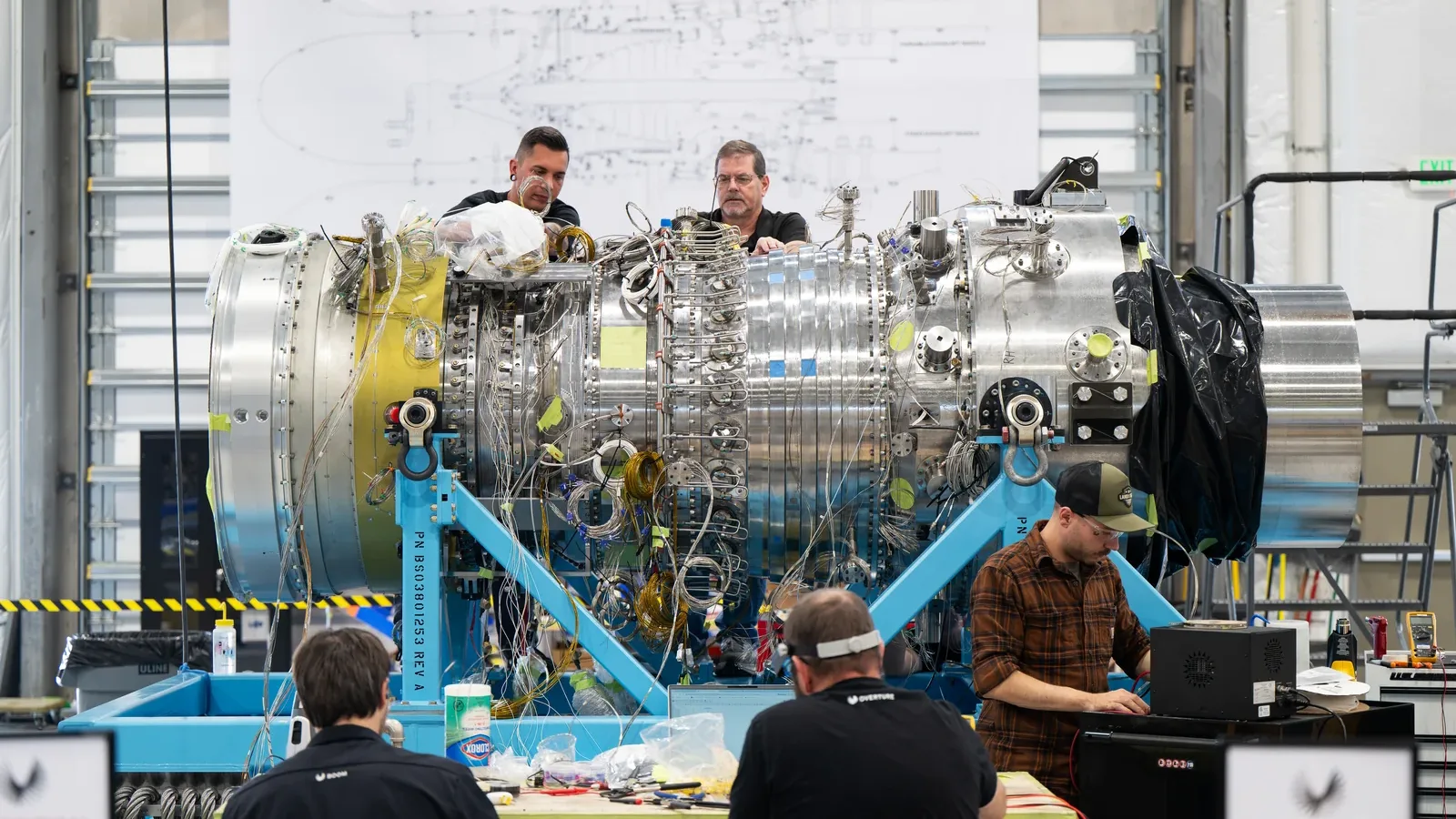
Boom Supersonic ran its Sprint Core prototype in Colorado on Nov. 21. The shared engine core lit on the second try and hit 6,500 rpm. It will power Boom's 42 MW Superpower turbine first, then the Symphony engine for its Mach 1.7 Overture airliner.
So basically: Boom Supersonic, the Denver company building a supersonic airliner, just ran the heart of its own jet engine for the first time. It’s called the Sprint Core, and on Nov. 21 it lit up on a test stand in Colorado and spun up to 6,500 rpm. The same core is going to power two very different things: a gas turbine for AI data centers first, and later the engine for Boom’s Mach 1.7 passenger jet.
What actually ran
A jet engine core is the hot middle part. It has three main pieces:
- The compressor, which squeezes air
- The combustor, where fuel burns
- The high pressure turbine, which spins from the hot gas and turns the compressor
Boom fired a prototype combustor by itself back in October 2025. This time all three pieces ran together for the first time, according to Aerospace Global News.
Boom’s design uses a six stage high pressure compressor and a single stage high pressure turbine. Founder Blake Scholl told Aviation Week the core lit on the second attempt and reached 6,500 rpm. They kept the first run short on purpose to collect data, and plan to push it through more conditions over the next couple of months.
The test happened at Boom’s site at the Colorado Air and Space Port in Watkins, east of Denver.
A lot of sensors
Boom said in October that the core has more than 1,000 sensors on it. Count the fuel and oil systems too and it’s about 2,000. They measure temperature, pressure, strain and vibration so engineers can check the real engine against their computer models.
Scholl posted video of the run on X. He wrote that “extremely few companies have made both an engine and an airplane,” and that none had made a supersonic airplane and a supersonic engine “until today.” His last line: “Today a new engine company was born.”
Power plant first, airplane later
Here’s the twist. The first job for this core isn’t flying anything.
Boom is using it in Superpower, a 42 megawatt natural gas turbine meant to sit on site at AI data centers and make electricity. Boom announced Superpower in December 2025 along with a $300 million funding round. Scholl told Aviation Week they’re aiming to test a full Superpower unit around mid 2027, and Boom has said it wants first customer deliveries around then too.
Boom already opened a $150 million turbine factory in Centennial, Colorado, which we covered in October. The plan there is 25 turbines a year by 2028 and 50 a year by 2029.
For Superpower, Boom adds a separate power turbine that drives a generator. For the airplane engine, called Symphony, it adds a big fan up front that pushes air around the core to make thrust. Boom still has to build and test those fan and low pressure parts before a full Symphony exists.
The airplane
Symphony is meant for Overture, Boom’s planned supersonic airliner. Based on what Boom has shared, as reported by Aerospace Global News:
- Speed: Mach 1.7
- Seats: 60 to 80
- Range: 4,250 nautical miles
- Engine thrust: around 40,000 pounds each
Boom’s test jet, XB-1, already broke the sound barrier in January 2025, hitting Mach 1.122 over Mojave, California. But XB-1 used three old GE J85 engines. Overture needs an engine that doesn’t exist yet, and that’s why Boom decided to build its own.
My take
The smart part is the order Boom is doing this in. A supersonic airliner is years and billions of dollars away. A gas turbine for data centers can start making money a lot sooner, and every hour that core runs for Superpower teaches them something about the airplane engine. Lighting a brand new engine core on only the second try is a solid start. The hard stuff is still ahead though. They need to run it hot and long, add the fan, and then fly it. I’d watch the mid 2027 Superpower test as the next real checkpoint.
So basically — pass it on.
Daily Updates
Get new stories in your inbox
Near-future tech when it moves. Robots, space, EVs, AI. No spam.