This Robot Dog Is Built So It Can't Set Off an Explosion, and It's Already Shipping to Oil Rigs
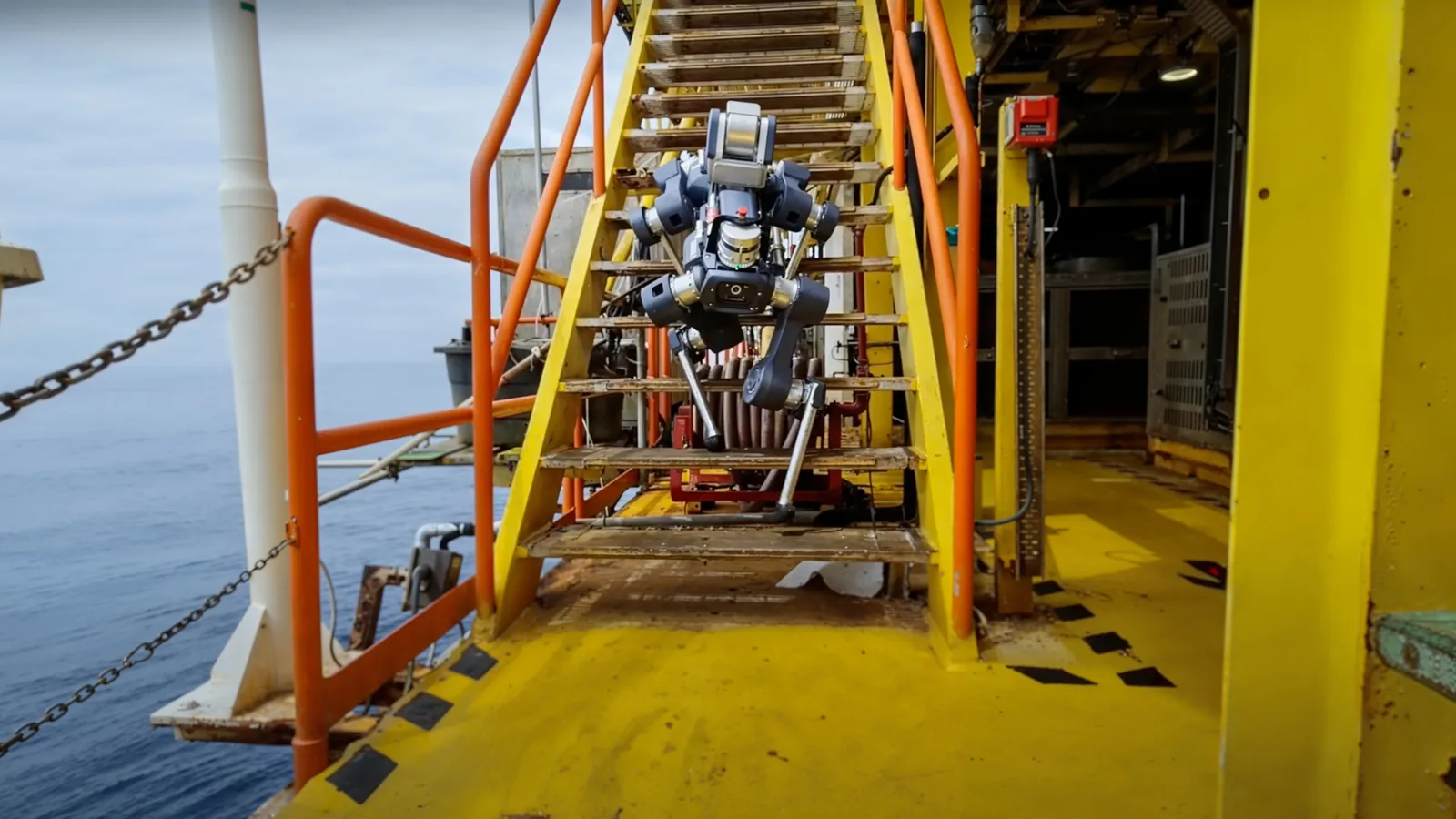
Swiss company ANYbotics launched ANYmal X this week (late October 2026), calling it the first legged inspection robot built for explosive atmospheres. It's shipping to customers including Equinor and DSM-Firmenich after four years of engineering and more than ten patents.
So basically: A Swiss company called ANYbotics just started shipping a four legged robot that can walk around inside oil refineries, chemical plants and offshore rigs where the air itself could catch fire. It’s called ANYmal X, and the company says it’s the first legged inspection robot built for explosive atmospheres. Some of the first ones are going to Equinor, the big Norwegian energy company, and DSM-Firmenich.
Why this is harder than it sounds
In parts of an oil or chemical plant, there can be flammable gas floating around. In those areas, everything has to be “ex-proof,” which means it’s been tested and certified so it can’t spark an explosion, even if something breaks. That goes for every radio and every flashlight.
Normal equipment gets there by being wrapped in a heavy metal box, or by keeping its power really low. A walking robot can’t do either one. It needs strong motors, a big battery, cameras out in the open so it can see, and it has to be light enough to climb stairs.
ANYbotics’ CEO, Péter Fankhauser, said “Many experts thought a legged robot could never be made safe for explosive atmospheres.” It took the company four years and more than ten patents to pull it off.
How they made a robot that can’t start a fire
The company’s CTO, Andrea Corda, said they kept asking one question over and over: “which credible event in the life of a walking robot could create an ignition source, and how do we make sure it never does?” Then they answered it one part at a time.
Here’s some of what they came up with. The robot’s computer and its inspection gear sit inside sealed chambers filled with nitrogen, so there’s no oxygen in there for anything to burn. All twelve of the motors in its legs, plus the battery, are inside flameproof casings. Metal parts are covered in non-metal shells. Its feet are conductive, so the robot stays grounded. And it has automatic shutoffs that watch the temperature.
It’s built to meet both of the big safety standards for this stuff, ATEX in Europe and IECEx around the world.
What it actually does all day
It walks inspection rounds that people normally have to walk. It’s got thermal cameras, regular cameras, microphones and gas sensors, so it can catch things like a pump running hot, a leak, a weird noise or parts wearing out. Every reading gets logged to the exact piece of equipment it came from, so engineers can see if something is slowly getting worse.
Before this, a worker had to suit up in protective gear, carry a handheld gas detector and get a permit just to go check those areas on foot.
The numbers behind it
Since 2023, companies including BP, Shell, Equinor, Petrobras, BASF and SLB have been testing it across hundreds of missions on land and offshore.
ANYbotics says unplanned downtime can cost an oil and gas operation up to $500,000 an hour, citing Siemens. It also points to government safety data showing U.S. oil and gas extraction workers die on the job at seven times the national average.
Its regular ANYmal robots are already used by more than 50 customers in power, metals and materials, running over 120,000 inspections a month. ANYmal X will make its public debut at ADIPEC, a big energy conference in Abu Dhabi.
My take
I work in a jail, so I know what it’s like to walk rounds in a place where something can go wrong fast. Rounds are boring right up until they aren’t. That’s exactly the kind of job I’d hand to a robot first, especially when the danger is something you can’t even see, like gas in the air. What I like here is that it’s not a flashy humanoid doing backflips. It’s a robot dog that climbs stairs on an oil rig, sniffs for leaks, and sends the results to whoever fixes things. That’s the kind of robot that actually gets bought.
So basically — pass it on.
Daily Updates
Get new stories in your inbox
Near-future tech when it moves. Robots, space, EVs, AI. No spam.