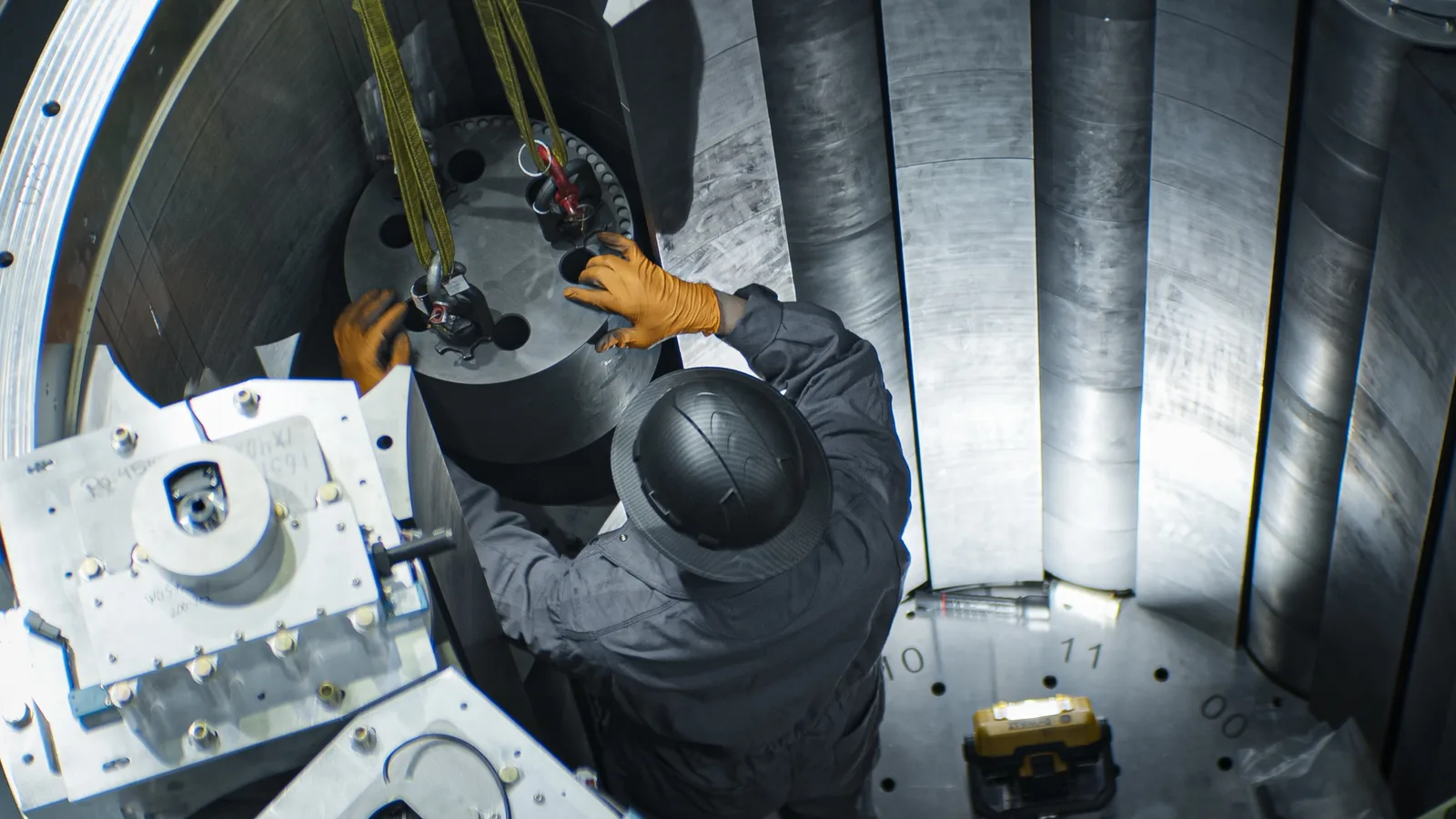
A 3 Year Old Startup Just Got the Government OK to Build a Nuclear Reactor That Makes Real Power Next Year, and the Army Already Wants Three
The Department of Energy approved the safety design agreement for Antares Nuclear's Mark-1 microreactor, which is set to make electricity at Idaho National Laboratory in 2027. Antares plans to put R1 reactors at Fort Bragg starting in 2028.
So basically: A California nuclear startup called Antares just cleared its first government checkpoint to build a small reactor that actually makes electricity. On Oct. 23, the company said the Department of Energy approved the safety design agreement for its Mark-1 reactor. The plan is to run it at full power for about six months at Idaho National Laboratory in 2027, and then start putting the real version on Army bases in 2028, starting with Fort Bragg in North Carolina.
Wait, a startup is building nuclear reactors?
Yep. Antares was only founded in 2023, and it’s based in Torrance, California, just outside Los Angeles. It builds microreactors, which are tiny compared to the big nuclear plants most of us picture. Instead of a huge power station with cooling towers, think of something that can be built in a factory and hauled to a base on a truck.
This past summer, Antares pulled off something nobody had done in a long time. On June 4, its first test reactor, Mark-0, reached criticality at Idaho National Laboratory. That’s the point where the nuclear chain reaction keeps itself going. The Energy Department said it was the first time in more than 40 years that a new privately built reactor that isn’t the standard water cooled type had done that in the US.
Mark-0 didn’t make any electricity, though. It was a zero power test. It was there to prove the reactor core and fuel work the way they’re supposed to.
What Mark-1 is
Mark-1 is the next step. It uses the same full size core and fuel as Mark-0 and sits in the same test facility, but this time it’s hooked up to a system that turns the heat into electricity. That system runs on nitrogen gas instead of water and steam.
The fuel is called TRISO. It’s made of tiny uranium kernels each wrapped in layers of carbon and ceramic, and those layers are built to hold in the radioactive stuff even at really high temperatures.
The CEO, Jordan Bramble, said Mark-1 “isn’t a scaled-down, stand-in test rig.” He says it’s built like the plant they’ll actually deploy, and that it will be the first full scale microreactor test in the US that makes electricity.
The approval it just got is only the first gate. Mark-0 went through the same steps last year, from this exact approval in October 2025 to a working reactor in about eight months. If Mark-1 moves that fast, it’ll be running before next summer.
Why the Army wants these
Military bases run on the regular power grid, and if the grid goes down in a storm or an attack, bases are stuck with diesel generators. A reactor sitting on base could keep the lights on for years without refueling.
In August, the Army picked five companies for a program called Janus to put more than 20 microreactors on five bases, with up to $2.2 billion in funding through 2031. Antares got Fort Bragg. It plans to build three of its R1 reactors there, and each one makes between 100 kilowatts and 1 megawatt. One megawatt is enough to power several hundred homes.
Antares also has an Air Force deal for Joint Base San Antonio and a separate $161 million Air Force award to build a version of the reactor for space. Bramble has talked about putting one on the Moon as soon as 2030.
My take
I’m not scared of nuclear, but I’ll admit hearing “startup” and “nuclear reactor” in the same sentence made me look twice. What makes me feel better is that this isn’t some guy in a garage. It’s going through the Energy Department step by step at a national lab. And Fort Bragg is about a five hour drive from me. If these little reactors work on Army bases, I could see them powering hospitals or small towns that lose power every time a storm rolls through. Around here that’s a real problem.
So basically — pass it on.
Daily Updates
Get new stories in your inbox
Near-future tech when it moves. Robots, space, EVs, AI. No spam.