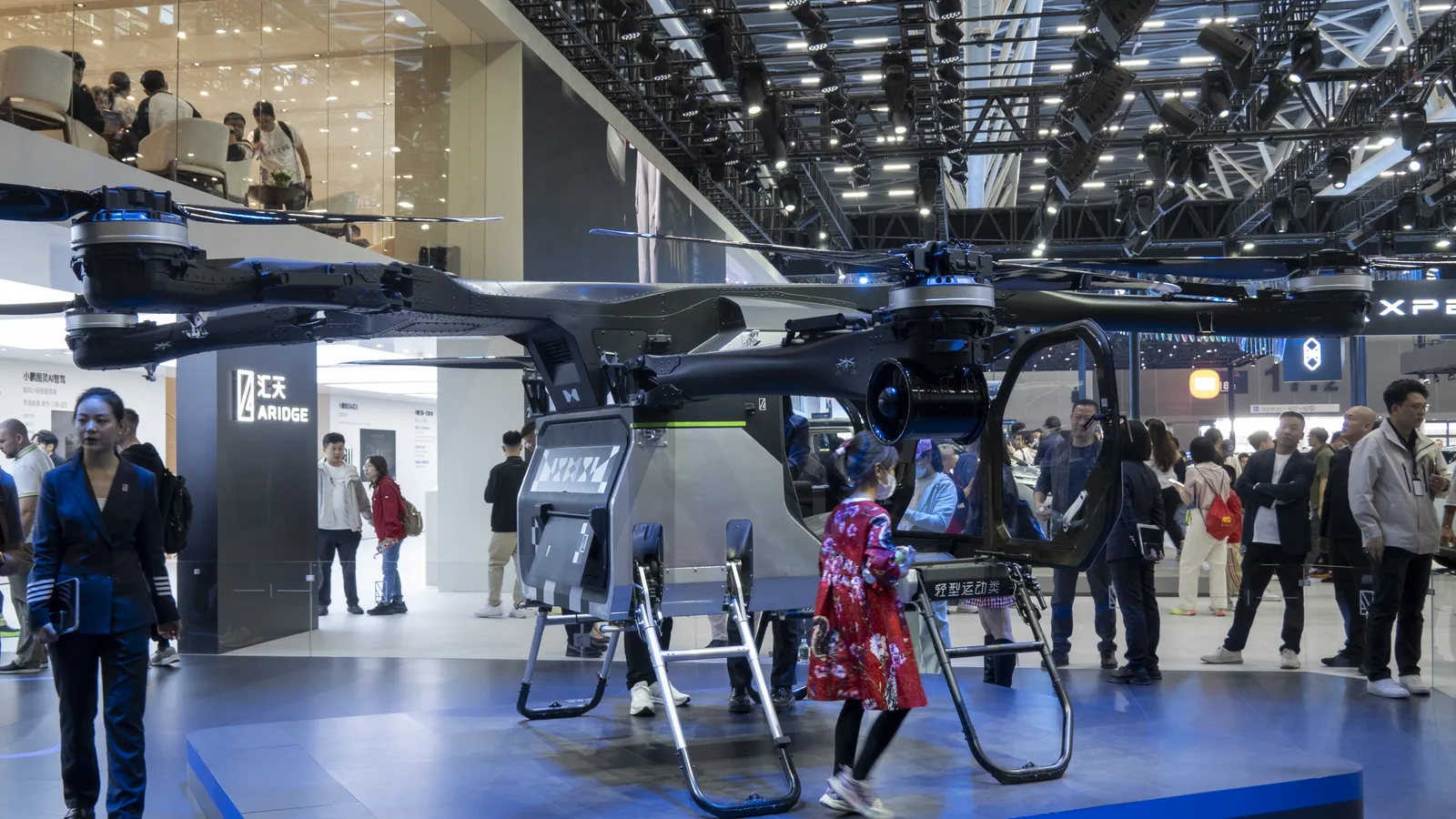
XPeng's About $300,000 Flying Car Has 7,000 Preorders, and People Could Be Riding It by Summer 2027
XPeng's flying car company Aridge says its two-seat electric aircraft could start carrying people in China as soon as summer 2027, with limited deliveries to partners within months and more than 7,000 preorders worldwide.
So basically: XPeng says regular people could be flying around in its flying car in China as soon as summer 2027. The two-seat electric aircraft costs about $300,000, and XPeng’s flying car company, Aridge, already has more than 7,000 preorders. The company says limited deliveries to partners in China could start within months.
Who said it
This came from Michael Du, CFO and vice president of Aridge, XPeng’s flying-car unit, at the Web Summit tech conference in Lisbon. He told Euronews, “It’s no longer science fiction or just a single demo aircraft. It’s really a commercial model.”
That’s a big claim, but XPeng has some paperwork to back it up.
How close it really is
Here’s where things stand, according to Euronews:
- China’s aviation regulator, the CAAC, issued a type inspection authorization
- The regulator’s own test pilots finished every inspection item
- Final type certification is still underway, so this is not approval for regular passenger flights yet
Du said the aircraft has been tested at sea level, high up in the mountains, in the cold, in the heat, in heavy wind and in the rain. “A lot of extreme cases, so it’s safe,” he said.
XPeng has spent about 10 years building this tech, and it builds the aircraft in its own factory in Guangzhou.
What you actually get
The aircraft itself is a two-seater with a cockpit about the size of a small car. It’s fully electric and flies on autopilot. If you’ve seen pictures of the setup XPeng calls the Land Aircraft Carrier, the aircraft rides in the back of a big six-wheel van, so you drive somewhere open and then take off from there.
At about $300,000 — the official wording is under 2 million yuan — this isn’t something most people are buying. Du said the buyers so far are a mix of rich folks who want to fly for fun, air tourism companies, and operators doing emergency rescue and public services. Most of the 7,000 preorders are in China, with some from the Middle East.
Where it goes after China
XPeng’s next targets are the Middle East and Southeast Asia. Europe is “definitely a very attractive market,” Du said, but there are hurdles first, like getting the price down and having good places to actually fly.
As for the U.S., Du said XPeng would be happy to come here “if regulations allow.” He also pointed out that China, the U.S. and Europe only make up about half the world’s aircraft market, so missing one of them for now still leaves plenty of room to grow.
He thinks it will start small. “Starting from outside the city, starting with some cargo, some passenger carrying, gradually into larger ones, entering into cities,” he said.
Meanwhile, in America
Here’s the part that stings a little. The two big U.S. air taxi companies, Joby and Archer, both just pushed their first passenger flights to 2027, according to Aviation International News. Both had originally aimed for 2025.
Joby is waiting on FAA test pilots to start flying its aircraft for certification. Archer still has to pull off its first piloted switch from hovering to flying on its wings with its Midnight aircraft.
So if XPeng hits summer 2027, China and the U.S. could end up starting passenger flying cars around the same time. China’s version would be one you can actually buy, though.
My take
A flying car that rides around in the back of a van sounds made up, but this thing is real and the regulators are already testing it. About $300,000 is a lot, but the first cars cost a fortune too. What gets me is that China’s regulator let its own test pilots run the full test list. That’s the boring step that actually matters. I’d still want to see a lot of hours flown by regular owners before I believe the “it’s safe” part, but this is closer than I thought it’d be.
So basically — pass it on.
Daily Updates
Get new stories in your inbox
Near-future tech when it moves. Robots, space, EVs, AI. No spam.