Half of Jay Chou's $6,600 Unitree Robot Dogs Were Spoken For Before It Launched
UNI-DOGGIE, a $6,600 collectible robot dog from Unitree and the company behind Jay Chou's cartoon brand, is limited to 2,000 units. A Taiwanese distributor locked in 1,000 of them a year before it launched.
So basically: Unitree, the Chinese robot dog company, teamed up with the company that runs Jay Chou’s cartoon brand to make a collectible robot dog called UNI-DOGGIE. It costs 43,900 yuan, about $6,600, and only 2,000 will ever be made. A year before it launched, one distributor locked in 1,000 of them.
Wait, Jay Chou?
If you don’t know the name, Jay Chou is one of the biggest pop stars in the Chinese speaking world. A Hong Kong company called Star Plus Legend runs an official cartoon character based on him called “Chou Chou,” and it’s been pushing a plan it calls “IP times AI.” Basically, take a famous brand fans already love and put it inside robots.
Investors in China even call Star Plus Legend the “Jay Chou concept stock.”
UNI-DOGGIE is the first big product from that plan. It showed up on November 6 at the China International Import Expo in Shanghai, with a cyberpunk street art look that’s more designer toy than lab robot.
Half spoken for a year early
Here’s the part that got my attention. ADATA Technology, a Taiwanese memory chip company, signed on as a distributor and locked in 1,000 units on November 3, 2025, a year before UNI-DOGGIE even showed up. The deal was worth more than 20 million yuan. That’s half of the entire worldwide run, already spoken for long before most people even knew the thing existed.
To be fair, that’s a distributor buying stock to resell, not 1,000 random people lining up. It works more like a limited sneaker drop than a normal gadget launch.
What it can actually do
Unitree built the hardware, and the specs line up with a real robot dog, not a toy:
- About 72 by 37 by 71 centimeters, roughly 28 inches tall
- Weighs about 19 kilograms, around 42 pounds
- 12 aluminum joint motors
- Top speed of 2 meters per second, about 4.5 mph
- Climbs steps up to 16 centimeters and slopes up to 40 degrees
- Walks on tile, wood floors, carpet and short grass
It also does tricks. It can jump, dance, walk on its front legs, do a lion dance move, shake hands and give a high five. It has five facial expressions and reacts when you pat its head.
There’s a camera in the nose that takes photos and video while it follows you around on its own. You can also drive it remotely over 4G through an app, and it gets software updates over the air.
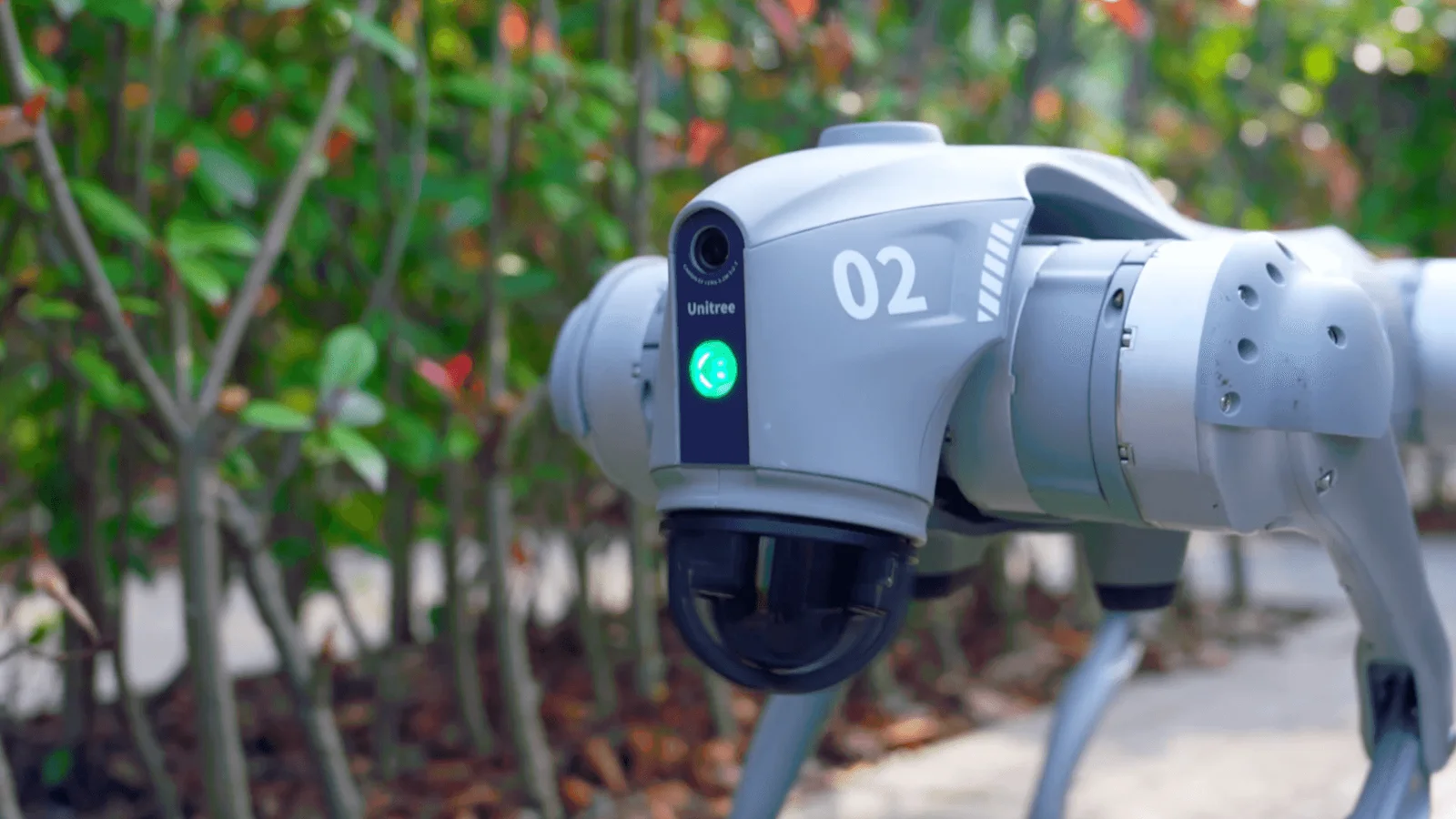
The photo up top is Unitree’s regular Go2 robot dog, which UNI-DOGGIE is related to. Unitree’s Go2 line has pushed basic robot dog prices down to around $1,600, which tells you a lot of that $6,600 price tag is paying for the brand and the limited run.
A robot coffee shop too
Star Plus Legend also showed off Pandabot Cafe, a robot coffee shop with a robotic arm barista, a humanoid robot “store manager” and an AI order taker. The first one is set to open in Hong Kong’s Tsim Sha Tsui area on November 11, and UNI-DOGGIE will hang out there as a regular attraction.
Why Unitree is doing this
For Unitree, this is a new way to sell robots. Instead of only selling to factories, power companies and researchers, it can hand its platform to a famous brand and let that brand’s fans do the buying. Star Plus Legend takes on the risk of a small, pricey run, and Unitree gets its hardware into stores it couldn’t reach alone.
My take
I’ll be honest, a $6,600 robot dog with a pop star’s cartoon brand on it sounds silly at first. But this might be how robots actually end up in regular homes. Not because people need one, but because they want one, the same way people pay crazy money for collectible toys and sneakers.
The bigger signal is Unitree. It’s turning into the company everyone builds on top of. Whether it’s a factory robot, a research robot or a celebrity collectible, a lot of it now walks on Unitree legs.
Correction, Nov 9, 2026: An earlier version said ADATA bought its 1,000 units on launch day. The order was signed in November 2025.
So basically — pass it on.
Daily Updates
Get new stories in your inbox
Near-future tech when it moves. Robots, space, EVs, AI. No spam.