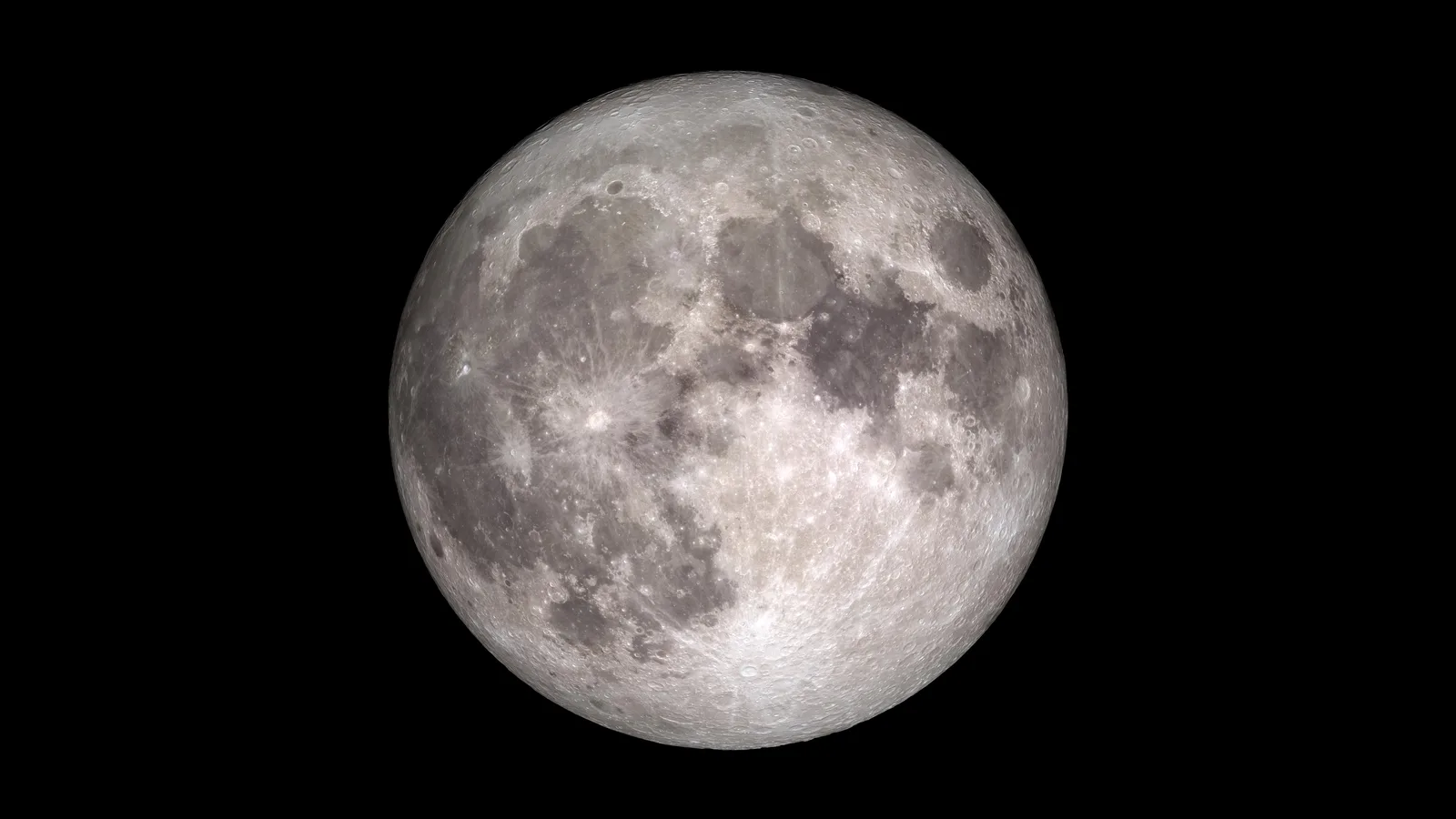
Turkey Is Sending Its First Spacecraft to the Moon Next Year on a SpaceX Rocket
Turkey's first lunar mission, TLM-1, is a roughly 3.6 ton orbiter set to launch on a SpaceX Falcon 9 between April and June 2027. Over 80 percent of its equipment is made in Turkey, and when it's done it will crash itself on purpose as practice for a future lander.
So basically: Turkey is going to the Moon. Its first lunar spacecraft, called TLM-1, is booked to launch on a SpaceX Falcon 9 sometime between April and June 2027, and the team is aiming for April.
If it works, Turkey becomes the ninth to put a spacecraft at the Moon. The others so far are China, the European Space Agency, India, Israel, Japan, Russia, South Korea and the United States.
The flag thing
The project manager, Dr. Burak Yağlioğlu, explained it at the International Astronautical Congress, which Turkey hosted this October. He said: “As a nation with a moon on its flag, going to the Moon is a very, very, very long dream for us.”
Honestly that’s a pretty good reason. If I had a moon on my flag, I’d want to go too.
What TLM-1 is
TLM-1 stands for the Turkish Lunar Mission 1. It’s an orbiter, so it won’t land. It’ll circle the Moon instead.
Here’s the basic rundown:
- It weighs about 3.6 tons
- It was built by Tübitak Uzay, a Turkish space research group, with help from the Turkish Space Agency
- It’s built to last at least five months at the Moon
- It’ll fly in a 100 kilometer circular orbit that passes over the Moon’s poles
- 56 of its 65 pieces of equipment, more than 80 percent, were made in Turkey
That last one is the point Turkey seems proudest of. Plenty of countries could buy their way to the Moon. Turkey wants to say it built most of the thing itself.
The weird engine
This part surprised me. TLM-1’s main engine is a hybrid rocket engine made by a Turkish company called DeltaV. It burns a solid plastic type fuel with nitrous oxide, the same stuff in whipped cream cans and race car boosts.
That engine fires twice. First it fires in Earth orbit to push the spacecraft toward the Moon. Then it fires again to slow down and get captured into lunar orbit. A separate set of smaller thrusters handles steering.
Most spacecraft don’t use hybrid engines for big burns like that, so this is a real test of new tech, not just a copy of someone else’s design.
What it’ll study
TLM-1 carries seven instruments. Four are for science:
- A Lunar Neutrals Telescope
- A Lunar Narrow Field of View Radiometer, which measures heat
- A Radiation Calorimeter
- A Radiation Dosimeter
The other three are cameras and navigation gear: a high resolution camera, a wide angle video camera and a vision based navigation system.
Together they’ll look at radiation around the Moon, how solar wind and tiny meteoroids hit it, odd magnetic spots on the surface, and surface temperatures. Yağlioğlu said they might even catch some meteorite impacts on camera.
It’s going to crash on purpose
Here’s my favorite detail. When TLM-1’s mission is over, the team doesn’t want to just let it drift. With whatever fuel is left, they plan to steer it into a controlled impact on a chosen spot on the Moon.
Why? Practice. The second mission, TLM-2, is supposed to be a lander that drops off a rover. Hitting a target on purpose with TLM-1 is a rehearsal for the guidance that TLM-2 will need to land without crashing. TLM-2 doesn’t have a launch date or a rocket picked yet.
Where it stands now
The spacecraft has finished being put together. This week it started its first round of environmental testing, beginning with a thermal vacuum chamber, which basically fakes the cold and empty conditions of space to make sure nothing breaks.
My take
The Moon is getting crowded, and I mean that in a good way. A few years ago only a handful of countries could pull this off, and now Turkey is lining up with a spacecraft it mostly built itself. The intentional crash at the end is smart too. Instead of wasting the leftover fuel, they’re turning the ending into a free test for the lander. If April 2027 holds, that’s only about five months away.
So basically — pass it on.
Daily Updates
Get new stories in your inbox
Near-future tech when it moves. Robots, space, EVs, AI. No spam.