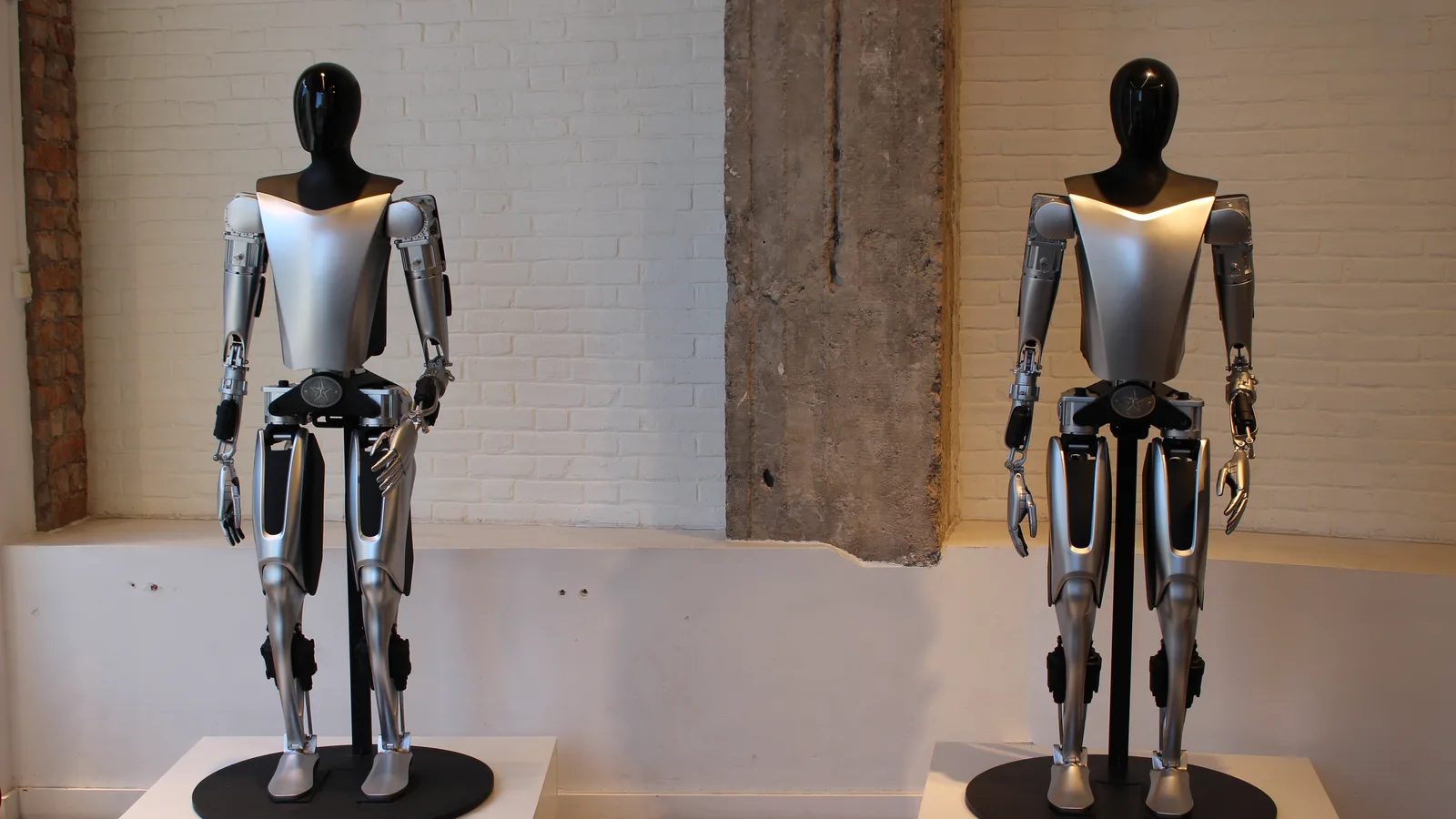
Tesla Has Started Building Optimus Robots in Fremont, and the Line Is Meant to Hit 20,000 a Week
Tesla says Optimus production has begun on its high-volume line in Fremont. Elon Musk says the line is built for about 20,000 robots a week, but it will take at least a year to get there, with outside deliveries around the end of 2027.
So basically: Tesla has started building Optimus humanoid robots on its high-volume production line in Fremont, California. Elon Musk says that line is set up to eventually make about 20,000 robots a week, which works out to roughly a million a year. He also says getting there will take at least a year, and maybe longer.
This came out of Tesla’s third quarter earnings report and call on Wednesday, Oct. 21.
What Tesla actually said
In its quarterly update, Tesla wrote that Optimus production “began in Fremont on our high-volume lines.” It called the robots coming off that line “the first production-quality bots that we have manufactured.” Up until now, every Optimus you’ve seen was basically a hand-built prototype.
Tesla also said it has “proven that the current manufacturing process for Optimus is suitable for a commercial product,” while admitting it’ll keep changing the hardware and the process as it goes. A second, bigger Optimus factory is under construction in Texas.
On the call, Musk said most of the equipment for a million-robot-a-year line has already landed in Fremont. He called this stage “early production” and said the start of the ramp will be slow and bumpy because the robot is such a new kind of product.
His way of putting it: there are 10,000 things that have to go right to build the robot, and production “will move as fast as the slowest, least lucky of the 10,000.”
When can anybody actually get one
Not soon. Musk said Tesla expects to start delivering Optimus robots to outside companies around the end of next year, so late 2027. The first jobs would be industrial work, stuff that’s dangerous or boring, or jobs that need someone working around the clock.
He was also pretty upfront that the robot isn’t done. He said there’s “still quite a lot of work to do” on the AI and the robot before it’s truly useful for open-ended tasks. The hands and fingers are one of the hardest parts. He expects the problems with design, reliability, how long it can run, and the AI to be “solved around the end of next year.”
The money side
All of this is getting expensive. Tesla brought in about $28.05 billion in revenue for the quarter, which was about flat from a year ago. Profit dropped 29% to $787 million, and CNBC reported a big reason was a surge in spending on Optimus and other AI projects.
So Tesla is spending real money on robots before it’s selling any.
Meanwhile, the Cybercabs
The robot news wasn’t the only thing on the call. Musk said the Cybercab fleet in Austin has grown about 10 times since it launched roughly a month ago. Tesla’s Robotaxi service hit nearly 2 million total unsupervised miles by the end of September, and Tesla says it plans to launch Cybercab rides in Dallas next month.
Musk said the Robotaxi business won’t move the needle this quarter, but he thinks it starts showing up in Tesla’s numbers around the middle of 2027.
Some quick math
A line making 20,000 robots a week would be cranking out about 119 robots an hour if it ran nonstop, or about two every minute. For comparison, Figure said back in July that it had built its 1,000th Figure 03. At full speed, Tesla’s line would build that many in under 9 hours.
That’s a big if, though. Musk has missed Optimus timelines before, and he said himself that the start of this ramp will be slow.
My take
I’m glad Tesla finally put it in writing that real production has started, because for a while it felt like Optimus was just a stage prop. But I’m not getting too excited about the 20,000 a week number yet. Building a robot is one thing. Building one that can do a full shift of real work without a person babysitting it is the hard part, and Musk basically admitted that’s still a year out. What I’ll be watching for is the first outside company that actually puts these to work and says how it went. That’s when we’ll know if this is real.
So basically — pass it on.
Daily Updates
Get new stories in your inbox
Near-future tech when it moves. Robots, space, EVs, AI. No spam.