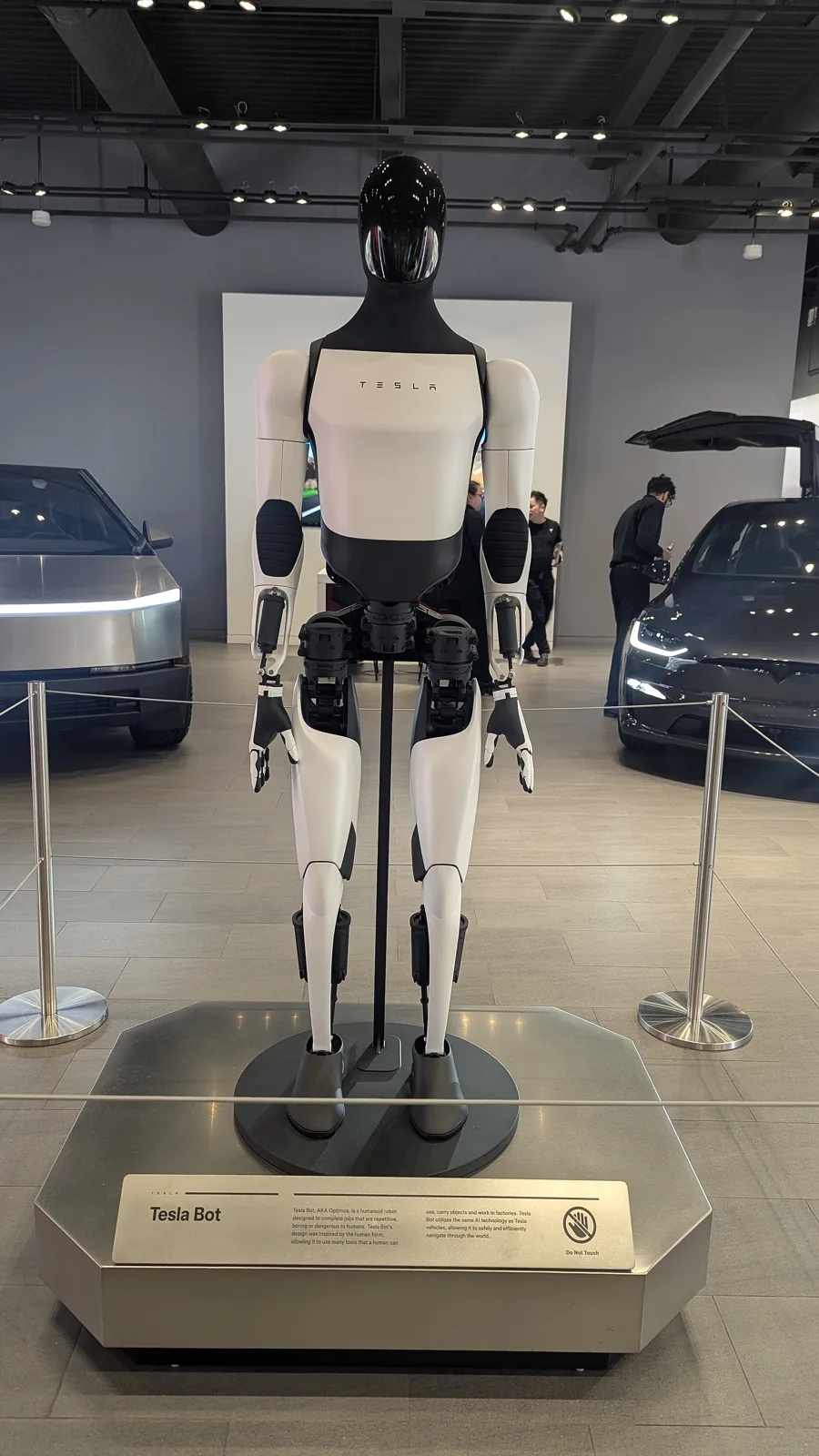
Musk Says China's Magnet Limits Left Tesla With Optimus Robots That Had No Arms
At Giga Texas, Elon Musk said China's magnet export curbs cost Optimus two to three months, and that the robot's hands are still the hardest part.
So basically: Elon Musk says China’s limits on exporting magnets set Tesla’s Optimus robot back two to three months. At one point, he said, “We had robots with no arms.”
He said it Saturday during a live interview with Tesla Owners Silicon Valley at the X Takeover event at Giga Texas, in front of about 2,000 people. Teslarati pointed out the Optimus part starts around the 49 minute mark of the stream.
Why magnets
The motors that move a humanoid’s arms use permanent magnets. Those motors have to be as small as possible to fit in the arm, and China makes most of those magnets.
Musk said China “prevented the export of magnets for use in electric motors” and that it “set back the Optimus program by like two or three months.”
He first brought up the magnet problem back in 2025. This is the first time he’s put a number on how much it cost.
His fix is to stop depending on it. “You’ve got to be able to make all the parts domestically,” he said.
The hands are the hardest part
Musk didn’t sugarcoat the hands. He said a general purpose robot needs fine motor skills that are “incredibly difficult to get right. Shockingly difficult.”
His example was doing precision and force at the same time. Like driving a small screw into wood. You have to push hard but also keep it lined up perfectly. He said nobody has shown a robot doing that yet.
Touch sensors are another problem. He said it’s “actually kind of hard to get touch sensors that elastically deform and can handle high cycle life and it won’t just break after a few thousand cycles.”
Think about how many times a day you grab something. A robot hand has to do that for years without the skin wearing out.
He also took a shot at other robot companies
”Any complicated looking robot demo, it’s a canned demo. It’s not real,” Musk said.
His point was that real AI means showing a robot something it’s never seen and having it figure it out, the way FSD drives in a city it’s never been in.
That’s a bold thing to say when plenty of people have said the same about some Optimus demos.
Slow start
Musk said the Optimus ramp will be slower than a new car ramp. “The initial part of that S curve of production ramp is going to be very slow at the beginning,” he said.
A big reason is there’s no supply chain for robot parts yet. With cars, the suppliers already exist. With humanoids, a lot of the parts are brand new.
That lines up with what he posted on X in July, that production “will be extremely slow at first, as everything is new.”
Teslarati says there’s a reported internal goal of more than 1,000 Optimus a week by the end of 2026. Musk has also said he wants Optimus available to the public by late 2027. Tesla hasn’t confirmed either one or put out real production numbers.
How this fits with the China audits
Last month there were reports of Tesla checking out Chinese suppliers for Optimus parts. Teslarati also says Tesla is certifying supply partners in China.
So it’s both at once. Tesla is still buying parts from China while saying it needs to make everything at home. That’s not really a contradiction. You use what works now and build the backup at the same time.
My take
”Robots with no arms” is a funny line, but it shows how fragile this whole thing is. One country tightens up on one part and your robot is stuck.
The hands stuff is the part I’d pay attention to. Walking robots are everywhere now. A hand that can drive a screw and not wear out after a few thousand grabs is the thing that makes a robot actually useful.
And the 1,000 a week number and late 2027 date are still just goals. Musk’s timelines slip, he’s said so himself. I’d wait for real numbers on the earnings call next week before buying any of it.
So basically — pass it on.
Daily Updates
Get new stories in your inbox
Near-future tech when it moves. Robots, space, EVs, AI. No spam.