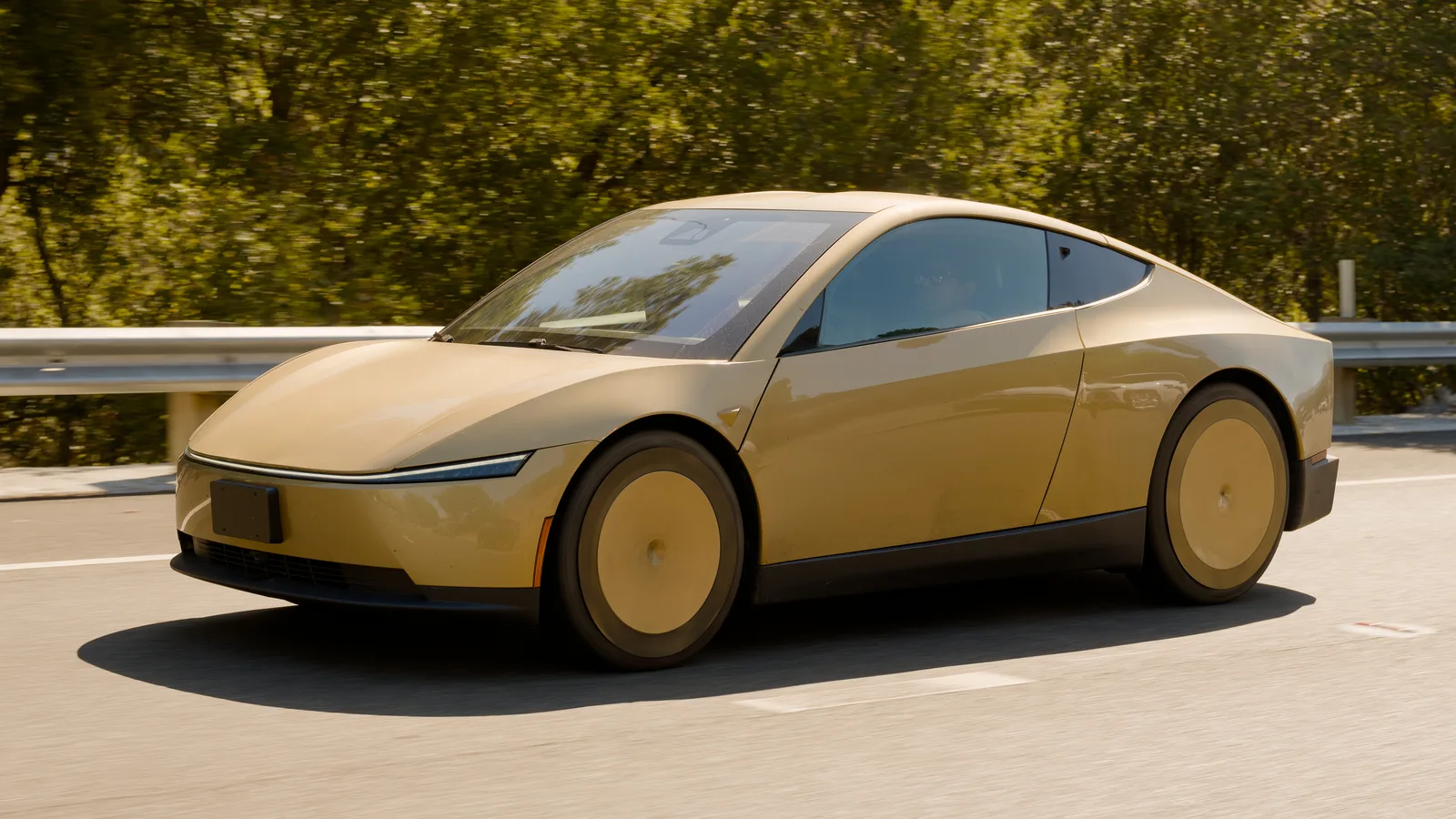
Tesla's Cybercab Factory Line Is So Fast It Doesn't Even Run Every Day
In a Munro Live deep dive published Oct. 26, 2026, Tesla's Lars Moravy said the Cybercab line in Texas is outpacing robotaxi deployments. The car has no paint shop, takes 25 automated final assembly stations, and is built to last at least 500,000 miles.
So basically: Tesla’s factory line for the Cybercab, its two seat robotaxi with no steering wheel, can now build cars faster than Tesla can put them on the road. So some days, they just don’t run it. That came straight from Lars Moravy, Tesla’s vice president of vehicle engineering, in a nearly 90 minute factory tour that the YouTube channel Munro Live posted on Monday, Oct. 26.
What Moravy actually said
Here’s the quote: “We don’t run every day because the line can run so fast. It’s currently outpacing our deployments.”
He called it “a bit of a race right now” between the factory and the robotaxi rollout, and said that “right now the, you know, the manufacturing lines ahead.”
Think about that for a second. Most car companies are fighting to build cars fast enough. Tesla’s problem here is the opposite.
Why the line is so quick
Tesla builds the Cybercab in a way it calls unboxed. Instead of building the whole car down one long line, it splits it into a front, a rear, the sides and a center section. Each piece gets built and tested on its own, and then they all come together at the end.
Because each chunk shows up already tested, the final assembly only takes 25 stations, and all of them are automated. Tesla’s team said a normal Model Y line needs five to ten times that many. The whole Cybercab line is about 78 percent automated right now, and it uses about half the floor space per car.
The goal is a 10 second cycle time. That means one finished Cybercab coming off the line about every 10 seconds. Moravy said the idea came together five or six years ago, when they hit a wall and realized “the problem wasn’t the automation, the problem was the design.”
No paint shop at all
This was my favorite part. There’s no paint shop. The plastic body panels get their color right inside the mold, so nobody ever sprays them. One engineer put it like this: “Rule number one of Tesla, question the requirements. Why do you need paint?”
Some other details from the tour:
The car is built to last at least 500,000 miles. The battery is made of Tesla’s 4680 cells in a steel case, and it’s split into modules, so if one goes bad you swap that module instead of the whole pack. Tesla’s battery director said a single module is worth about $1,500. He also graded his own team’s older packs. The Model Y structural pack got a D for how hard it was to build, the Cybertruck got a B minus, and the Cybercab pack got an A minus.
The drive unit uses an 11 to 1 gear ratio instead of the roughly 9 to 1 on most Teslas, because a robotaxi doesn’t need a high top speed. And when Munro asked when they could get a Cybercab to tear apart, Tesla’s answer was “Not yet.”
And Optimus might plug them in
The Cybercab can drive itself to a charger, but somebody still has to plug it in. Moravy said Tesla’s Optimus robot is meant to handle that job for now, until Tesla gets a fully automatic charging setup going. He didn’t give a timeline.
The other side of the race
Deployment is picking up too. Tesla’s Cybercab registrations in Texas reached 465 over the weekend. Tesla said on its third quarter earnings call that Cybercab rides launch in Dallas next month. And in Houston, Tesla just grew its robotaxi area to cover much of the 610 Loop. The new map happens to be shaped like a rocket, and Tesla announced it with “Houston, we have liftoff.” Elon Musk joked on X, “I swear it’s just a coincidence.”
My take
I’ve watched a lot of factory videos, and the paint part is what stuck with me. Every car I’ve ever owned had paint chipping somewhere by year three. If the color goes all the way through the panel, a door ding is just a door ding. The line being too fast is a good problem, but it’s still a problem. A car sitting in a lot isn’t making anybody money. So the real test isn’t how fast Tesla can build them. It’s how fast it can get permission to put them in more cities. If Dallas goes smooth next month, I think that gap closes quick.
So basically — pass it on.
Daily Updates
Get new stories in your inbox
Near-future tech when it moves. Robots, space, EVs, AI. No spam.