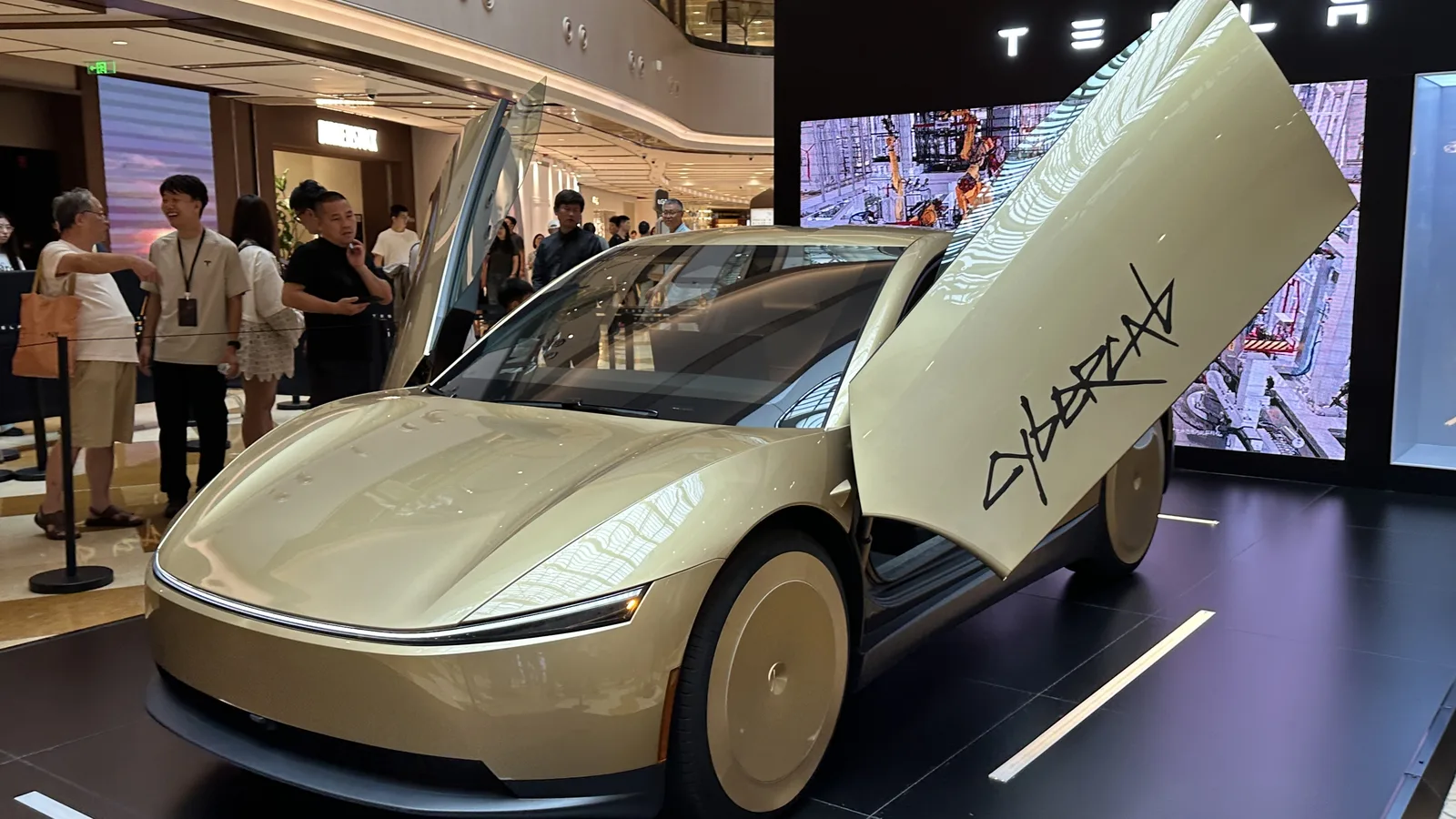
Tesla's Cybercab Just Started Giving Public Rides in Dallas, With About 192 of Them Listed There
Tesla opened public Cybercab rides in Dallas on Nov. 19, 2026, its second Cybercab city after Austin. The two-seat cars with no steering wheel run inside Tesla's 81.1-square-mile Dallas Robotaxi zone, and Tesla's own lookup lists 192 Cybercabs there.
So basically: As of Nov. 19, anybody in Dallas can open the Tesla Robotaxi app and get picked up by a Cybercab, the little two-seater with no steering wheel and no pedals. Dallas is the second city to get it, after Austin. Tesla hasn’t announced a fleet size, but its own vehicle lookup listed 192 Cybercabs under Dallas on launch day.
What happened
Tesla’s Robotaxi account kept it short: “Howdy Dallas. Cybercab has arrived in your city.” Riders book it through the same Robotaxi app Tesla already uses there.
This wasn’t a surprise. On Tesla’s Oct. 21 earnings call, its AI software chief Ashok Elluswamy said Dallas would be next. Tesla teased it the day before launch, and then it went live.
Where you can ride
Cybercabs run inside Tesla’s existing Dallas service area, which covers about 81.1 square miles. That includes the urban core and the Park Cities, and it stretches west toward Irving. Tesla has been running driverless Model Y robotaxis in that same zone since April 18, so the Cybercab is basically joining a network that’s already up and running.
Tesla’s separate Fort Worth zone, about 19 miles west, wasn’t part of this launch.
Where the 192 number comes from
Tesla keeps a lookup tool so police and firefighters can identify its robotaxis. On Nov. 19 it listed 192 Cybercabs under Dallas, according to Robotaxi Tracker. All of them came from a batch of 200 Cybercabs Tesla registered in Texas just two days earlier, on Nov. 17. That’s not an official fleet number from Tesla, but it’s a decent sign of scale on day one.
What the Cybercab is
It’s Tesla’s purpose built robotaxi. Two seats, butterfly doors and no way for a person to drive it. It’s built at Giga Texas and runs entirely on Tesla’s unsupervised Full Self-Driving software.
Rides started in Austin in early September, first with an invite only event on Sept. 3 and then for the public. Musk later said the Austin fleet grew roughly tenfold in its first few weeks.
Tesla has also started letting some customers buy one for themselves. It costs $29,990 before taxes, but you have to pay $299 a month for the autonomy subscription to use it at all, and it only works inside Tesla’s Robotaxi zones. Deliveries are targeted for December, with Austin first. Tesla says most Cybercabs will stay in its own fleet.
And a bigger one is coming
The Cybercab only carries two people. At the New York Times DealBook Summit on Nov. 18, Musk said Tesla plans to build a version of the Model Y with no steering wheel and no pedals, for groups of 6 or 7. “If you’ve got a whole family in the car, you still need autonomous vehicles for that,” he said. He didn’t give a timeline, a price or say where it would be built.
Not everybody’s sold on cars with no controls. Cox Automotive’s 2026 study found only 10% of U.S. buyers picked a fully driverless car as the most appealing option for a car they’d own, down from 17% in 2016. But for a robotaxi you just ride in, that matters a lot less.
My take
Going from one city to two sounds small, but it’s the part I was waiting for. Running a brand new kind of car in the city where it’s built is one thing. Dropping almost 200 of them into a second city on day one, inside a zone that’s over 80 square miles, is the real test of whether this scales. Waymo still has more cars in more places, so Tesla is chasing here. The next thing I want to see is Fort Worth getting added, plus real ride numbers. If Dallas goes as fast as Austin did, the list of cities is going to get long quick.
So basically — pass it on.
Daily Updates
Get new stories in your inbox
Near-future tech when it moves. Robots, space, EVs, AI. No spam.