SpaceX Just Caught a Starship Coming Back From Orbit, Something No One Has Ever Done
On Starship Flight 15, Ship 42 spent about 22.5 hours in space, dropped off 26 Starlink V3 satellites, then flew back to Starbase and got caught by the tower's chopstick arms. The booster didn't make it back.
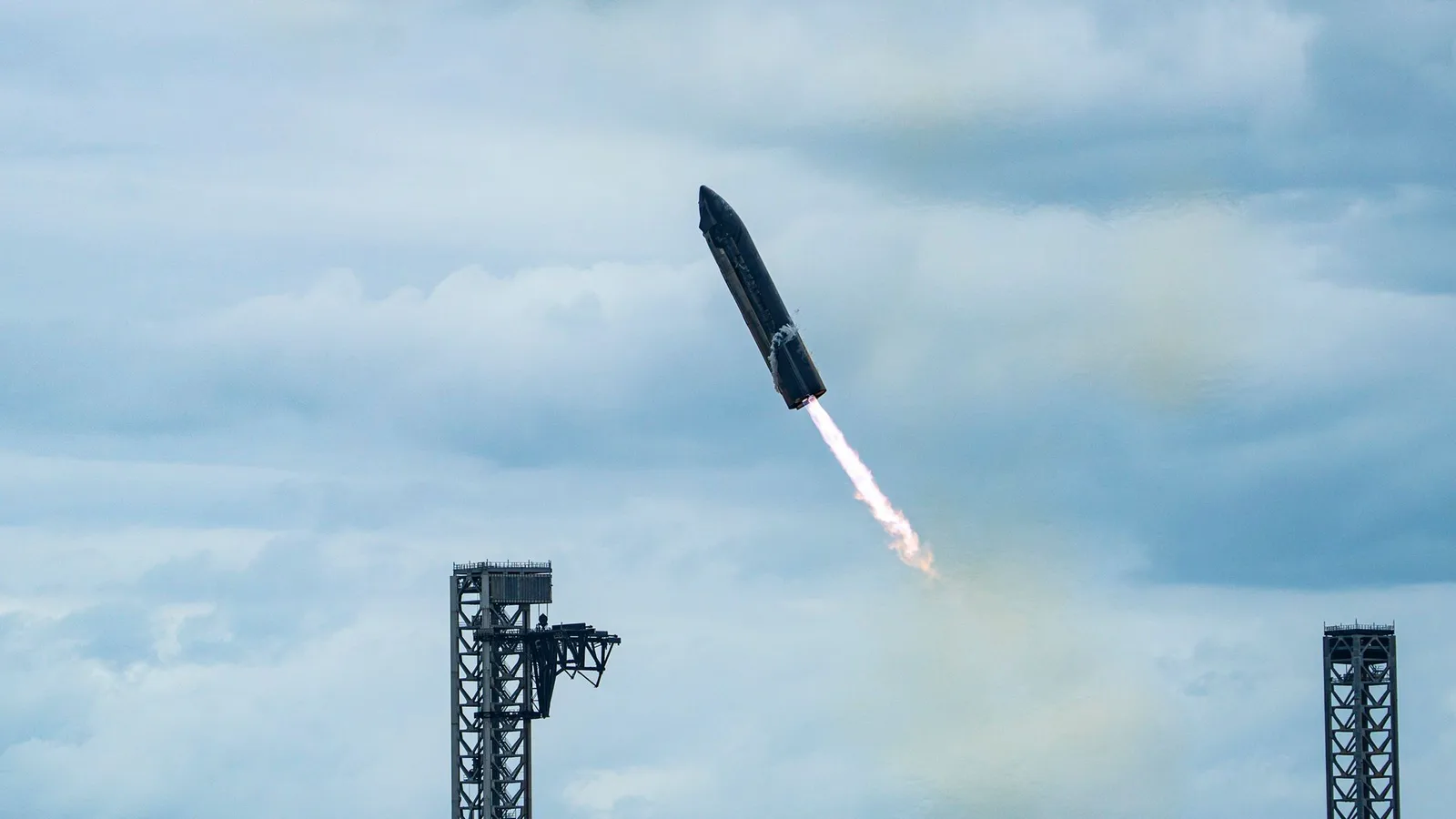
So basically: SpaceX just caught the top half of Starship with its launch tower after it came all the way back from orbit. The ship, called Ship 42, launched Friday evening, spent about 22.5 hours in space, then flew home on Saturday and settled into the tower’s giant arms at 4:20 p.m. Eastern. Nobody has ever caught a rocket’s upper stage like that before.
Why this one is different
SpaceX has caught the Super Heavy booster before, on three earlier flights. That’s the big bottom stage. It goes up, separates a few minutes later, and comes right back to the pad.
The ship is a much harder target. It goes all the way to orbit, then has to survive the heat of coming back through the atmosphere and still be steady enough to steer itself into the tower. That’s why people have been calling it the holy grail.
SpaceX’s Dan Huot said it pretty well on the webcast: “We caught a Starship, and now everything changes.”
How the flight went
Friday night: Starship lifted off from Pad 2 at Starbase in South Texas on all 33 Raptor engines. The ship separated, kept climbing, and then did something only one other Starship has ever done. It relit an engine and pushed itself into a real orbit.
Once it was up there, it let go of 26 Starlink V3 satellites. SpaceX says it made contact with every single one, and they’re already raising their orbits. Flight 14 back in September dropped off 26 more, so that’s 52 of the new V3 satellites up so far. Some of them even took pictures of Ship 42’s heat shield so the team could check it before trying to bring it home.
Saturday: After monitoring the ship for more than 20 hours, the team fired one Raptor engine to slow it down and drop it out of orbit. It came back over the Gulf, swung around, punched through the clouds, flipped upright with three engines, and the tower’s arms closed around it. SpaceX’s timeline has the whole landing burn lasting only about 18 seconds.
And because it’s SpaceX, they played “Baby Come Back” on the stream while it happened.
The booster didn’t make it
This wasn’t a perfect flight. The plan was to catch both stages for the first time. The booster cut its turnaround burn short because it was low on fuel, and SpaceX says the root cause is still being looked at. Its computer called off the tower catch on its own and steered it to a backup spot out in the Gulf. It did its landing burn over the water, and then its self destruct system was triggered when the engines shut off.
So the booster is gone. But the booster catch is the part SpaceX had already proven three times. The ship catch is the new part.
Why it matters
The whole point of Starship is to be fully reusable, like an airplane. Land it, check it, fuel it, fly it again. Right now even Falcon 9 throws away its upper stage every launch. If SpaceX can catch both halves of Starship regularly, the cost of getting stuff to space could drop a lot.
That matters for a few big things:
- Starlink. One Starship can carry up to 60 of the V3 satellites, according to SpaceX.
- NASA’s Moon plans. A version of Starship is supposed to land astronauts on the Moon.
- Mars. Elon Musk’s long term goal is still sending Starships there.
None of that works if you build a brand new ship every flight.
What’s next
SpaceX hasn’t put a date on Flight 16 yet. Space.com expects the company to try catching both stages again on the next one, which makes sense since the booster side already has a track record. The big thing to watch is how fast Ship 42 can be inspected and, maybe one day, flown again.
My take
I’ve watched a lot of these test flights, and this is the one I’ll remember. Catching the booster was wild the first time. Catching the ship after it went around the Earth and came back through all that heat is a whole other level. The booster loss is a real problem SpaceX needs to fix, but it doesn’t take away from what happened Saturday. A rocket came back from orbit and parked itself in a tower. If they can make that routine, space gets a lot cheaper for everybody.
So basically — pass it on.
Daily Updates
Get new stories in your inbox
Near-future tech when it moves. Robots, space, EVs, AI. No spam.