Sila Signed a Deal Worth Possibly Over $1 Billion to Put Its Silicon Anode in Panasonic's U.S. Battery Cells
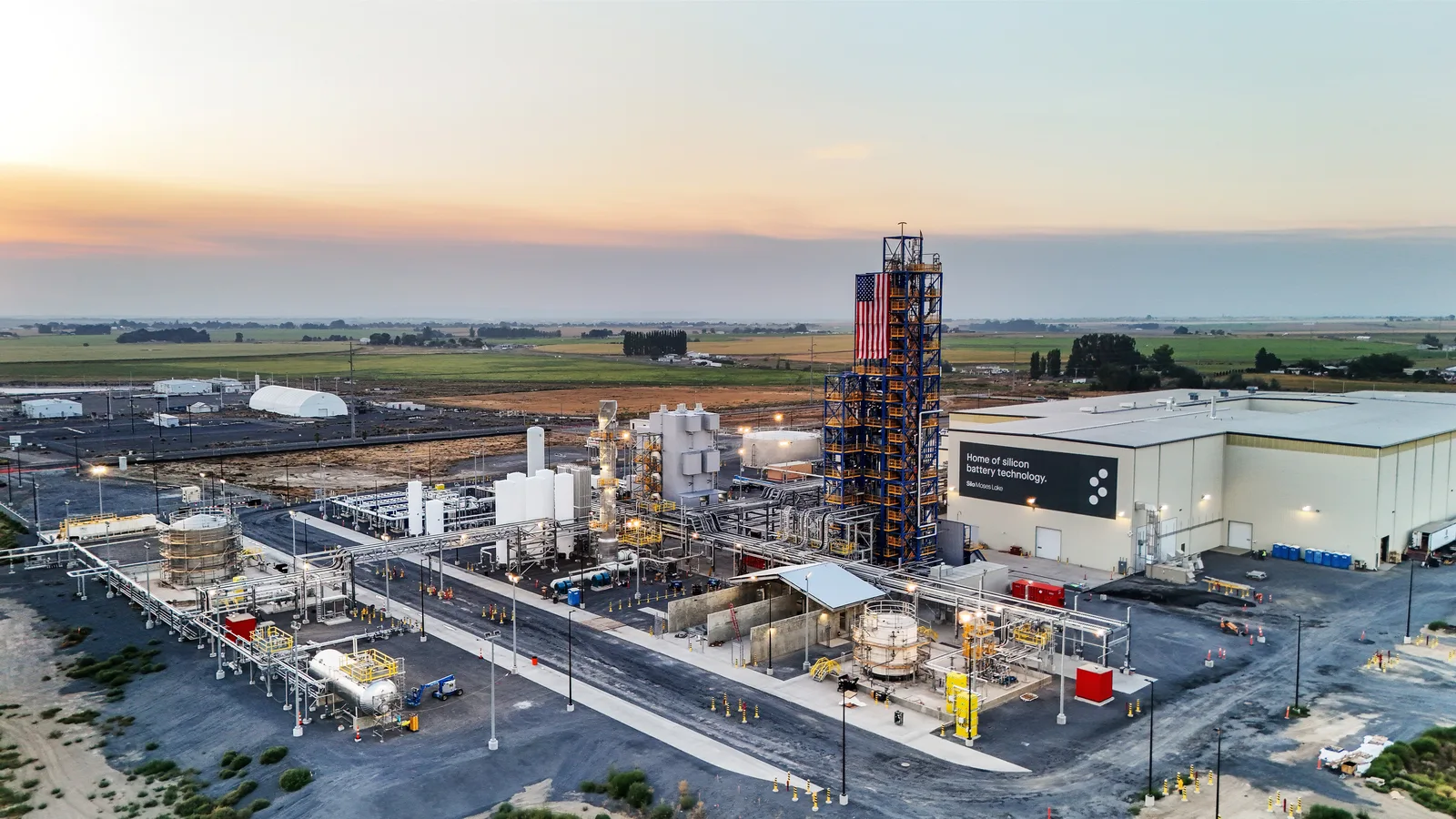
Sila will supply Panasonic Energy with its Titan Silicon anode material from its plant in Moses Lake, Washington. Sila says the material packs about 20 percent more energy than graphite, but there's no start date, no volume and no named car yet.
So basically: Sila, a California battery materials company, signed a multi-year deal to supply Panasonic, the company that makes a lot of Tesla’s battery cells, with a material called Titan Silicon. It goes in the anode, the side of the battery that stores energy when you charge. Sila says it holds about 20 percent more energy than the graphite used in almost every EV today, and it says the deal could be worth more than $1 billion over time. It all gets made at Sila’s plant in Moses Lake, Washington.
What an anode does
Every lithium ion battery has two sides. When you plug in, lithium moves into the anode and sits there. When you drive, it flows back out and powers the car.
Right now, nearly every EV anode is made of graphite, which is basically a form of carbon.
Silicon can hold way more lithium than graphite for its weight. More lithium in the same space means more range from the same size pack, or the same range from a smaller, lighter, cheaper one.
The catch with silicon
Silicon swells a lot as it charges and shrinks back down as it drains. Do that hundreds of times and it can crack and wear the battery out early. That’s why most cells on the road only mix in a little bit of it.
Sila’s pitch is a specially engineered silicon carbon particle built to handle that swelling, so it can replace a lot more of the graphite. In past claims reported by Learn My EV, Sila has said it could mean up to 100 extra miles for some EVs and a 10 to 80 percent charge in about 20 minutes. Those numbers haven’t been independently checked for this deal.
What was announced
Sila announced it on November 18. Here’s what we know:
- Sila supplies Panasonic Energy Corporation of North America from Moses Lake.
- The material goes into Panasonic cells built at its U.S. factories.
- Sila says there’s “potential for over $1 billion of offtake over time.”
- The two will also work together on patents and tech.
- Sila expects about 500 more manufacturing and construction jobs at Moses Lake to keep up.
Sila’s CEO Gene Berdichevsky called it “a major commercial milestone.” Panasonic’s North America CEO Yasuaki Takamoto said Sila’s progress at Moses Lake “from breaking ground to production” has been “exceptional.”
What wasn’t announced
This is where you have to slow down a little:
- No start date for production cells
- No volumes or dollar terms
- No named car or automaker
- Supply only starts after the material passes Panasonic’s qualification tests
That $1 billion figure is Sila’s own estimate of what Panasonic could buy over time. It isn’t a guaranteed order.
Where this could end up
Panasonic runs two big U.S. EV battery plants. One in Nevada, next to Tesla’s Gigafactory, supplies Tesla only, according to Learn My EV. The newer one in De Soto, Kansas, started mass production in July 2025 and serves multiple customers.
So the Tesla connection is real but indirect. Nobody has said Sila material is going into any Tesla.
The bigger picture
China processes more than 90 percent of the world’s graphite, according to the U.S. Energy Information Administration as cited by Learn My EV. That gives it a lot of leverage over everyone else’s batteries.
A U.S. made material that can replace some of that graphite matters for more than range. That’s part of why the Department of Defense offered Sila a $1.4 billion loan commitment to expand Moses Lake earlier this year.
Moses Lake is still small for now. Its first phase makes enough anode material for about 2 GWh of cells a year, which Learn My EV figures is roughly 25,000 EVs worth.
My take
Battery news is usually boring until it suddenly isn’t. This is one of those quiet deals that could matter a lot in a few years. Twenty percent more energy without redesigning the whole battery is a big deal if it holds up. But I’m not getting excited until there’s a date and a car attached to it. Right now it’s a promise from Sila and a test from Panasonic. If the material passes and starts showing up in real cells, that’s when this becomes a range upgrade you can actually buy.
So basically — pass it on.
Daily Updates
Get new stories in your inbox
Near-future tech when it moves. Robots, space, EVs, AI. No spam.