Sierra Space Wants to Park Cargo in Orbit and Drop It Anywhere on Earth in 90 Minutes
Sierra Space dropped its 10-ton Ghost reentry vehicle from 68,500 feet over Utah with a radio and a bottle of whiskey inside. Both came back fine, and it landed within 100 meters of its target.
So basically: Sierra Space is building a cargo pod that sits in orbit for up to five years, then gets called down and lands anywhere on Earth within 90 minutes. This weekend’s news was its first real test in two years. They dropped a 10-ton test version from a balloon at 68,500 feet over Utah with a radio and a bottle of whiskey inside. Both survived, and it landed within 100 meters of the target.
What Ghost is
Ghost is a reentry vehicle. Think of it like a storage locker in space. You launch it full of supplies, park it in low Earth orbit, and leave it there. When somebody on the ground needs what’s inside, you send the signal. Thrusters slow it down, it falls back through the atmosphere, and a steerable parachute guides it to a spot on the map.
Sierra Space says one Ghost can carry 5 to 10 tons. That’s not a tank. But it’s a lot of water, medical gear, radios, drones, or spare parts.
How the test worked
The drops happened at the Dugway Proving Ground in Utah as part of an exercise run by U.S. Space Command called Apollo Nexus. Sierra Space did two balloon drops, one from 35,000 feet and one from 68,500 feet. That’s more than twice as high as an airliner cruises.
Here’s the sequence:
- The vehicle falls with a deployable heat shield built to handle about 2,000°F during a real reentry.
- After it slows down, it jettisons the shield.
- A steerable parafoil pops out and flies it to the landing zone on its own.
It came down within 100 meters of where it was aimed. Inside were a software defined radio and the whiskey. The whiskey wasn’t just a joke. It proved liquids and sensitive electronics can ride through the trip without breaking.
”We were able to safely demonstrate that and prove that we could come through all of those environments and then be recoverable in a certain period of time by the team on the ground,” Sierra Space senior vice president Erik Daehler told Aviation Week.
Why 90 minutes
Something in low Earth orbit circles the planet about every 90 minutes. So if you’ve got a pod up there, it’s never more than one lap away from passing over the spot you need. That’s where the “anywhere in 90 minutes” number comes from.
Compare that to a cargo plane. A plane needs a runway or a safe drop zone, a crew, fuel, and permission to fly over every country on the way. A pod from space just needs a clear patch of ground.
What’s still missing
A balloon drop is the easy part. Ghost has not been to space yet. Next up, Sierra Space says, are suborbital and then orbital flight tests, including a real deorbit burn and a full speed reentry.
There’s also cost. Every pound you park in orbit has to be launched first, and you have to guess what people will need years ahead of time. Critics are already saying it’s an expensive way to ship a radio. Launch prices keep falling, though, and that’s the bet Sierra Space is making.
Who is Sierra Space
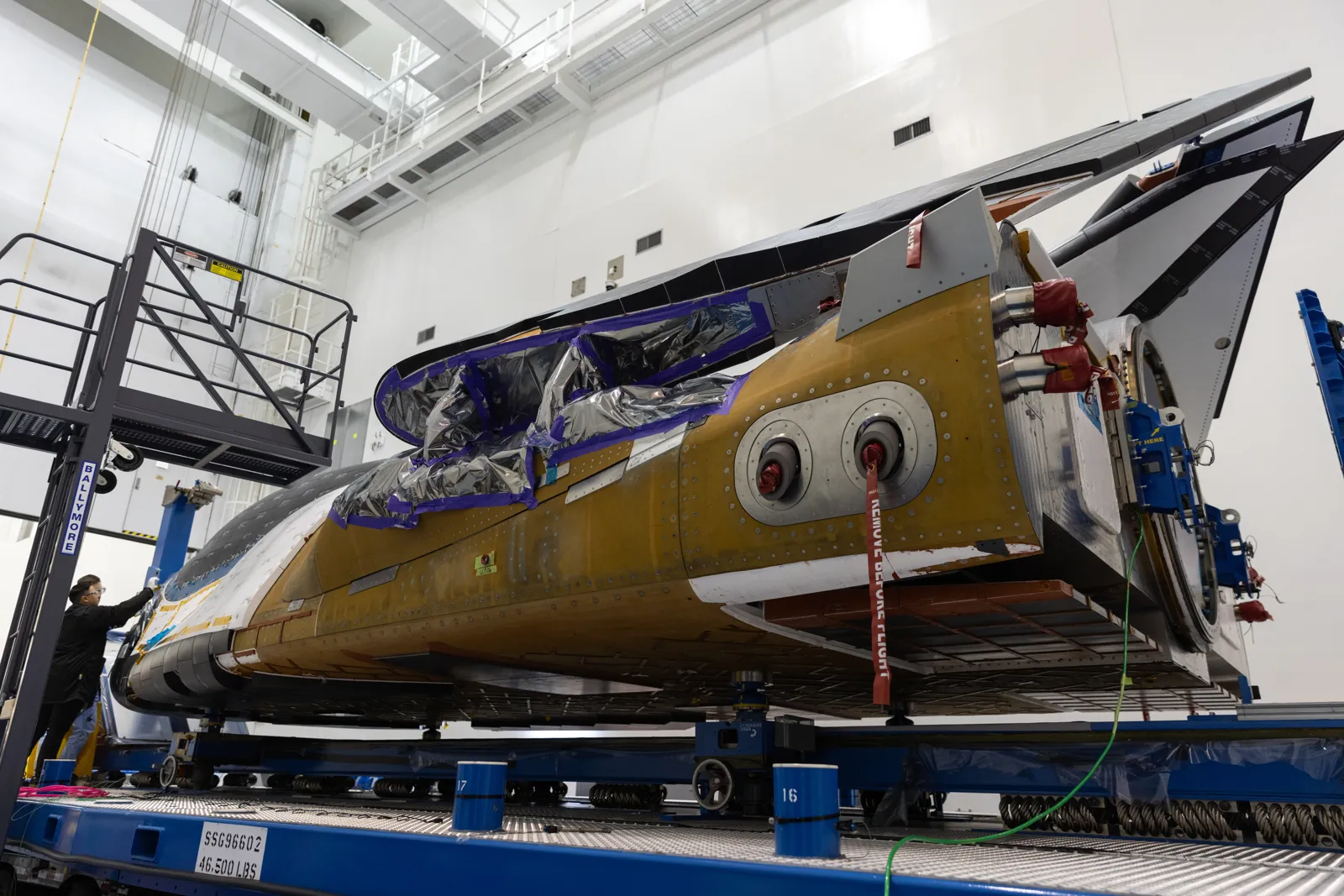
You may know them from Dream Chaser, the mini spaceplane built to fly cargo to the International Space Station. Ghost comes out of the company’s defense side, but the core skill is the same one: bringing stuff back from space in one piece.
My take
This is the kind of story that sounds like science fiction until you see it land in the dirt in Utah. The military wants it first, sure. But flip it around. Picture a hurricane takes out every road and airport on an island. A pod full of water filters and satellite phones drops out of the sky an hour and a half later. That’s the version I want to see. The test was the easy part, and space will be the real exam. But a 10-ton pod hitting a 100 meter circle from 68,500 feet is a real start.
So basically — pass it on.
Daily Updates
Get new stories in your inbox
Near-future tech when it moves. Robots, space, EVs, AI. No spam.