Pakistan's Zeeshan Ali Just Became the First Foreign Astronaut on China's Space Station
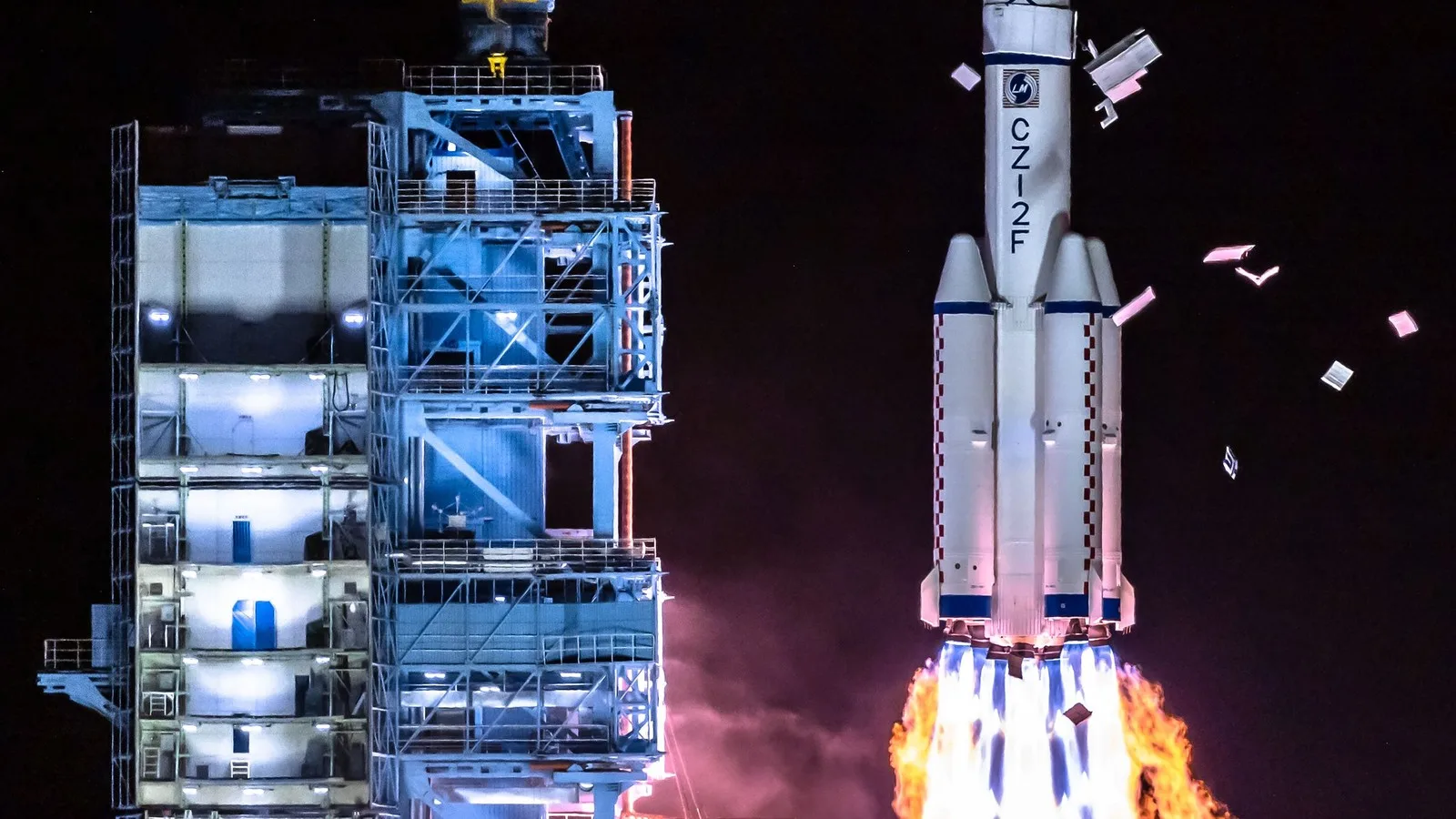
China's Shenzhou-24 launched Nov. 25 with Pakistani pilot Muhammad Zeeshan Ali aboard. He's the first non-Chinese astronaut to board Tiangong, and six people are now living on the station.
So basically: China just put its first foreign astronaut on its space station. Muhammad Zeeshan Ali, a 40-year-old pilot from Pakistan, launched on Shenzhou-24 on Wednesday, Nov. 25, and floated into the Tiangong station a few hours later. He’s also the first person from Pakistan to ever go to space.
How the launch went
The Long March 2F rocket lifted off from the Jiuquan Satellite Launch Center in northwest China at 8:18 a.m. Beijing time on Nov. 25. Back home that was 7:18 p.m. Eastern on Tuesday night. About 10 minutes later the capsule separated and reached orbit, and China’s space agency called it “a complete success.”
The capsule docked to the front port of Tiangong’s Tianhe core module at 11:56 a.m. Beijing time, about 3.5 hours after launch. The hatch opened at 2:35 p.m. and the crew went aboard.
The crew:
- Tang Hongbo, commander. This is his third trip to space after Shenzhou-12 and Shenzhou-17
- Wu Yi, flight engineer
- Muhammad Zeeshan Ali, payload specialist from Pakistan
China says this is the first time in its human spaceflight program that Chinese and foreign astronauts have flown together.
Six people on board
The Shenzhou-23 crew was already living on Tiangong, so the station now has six people on it. That’s a full house for a station China built to hold three long term.
The handoff is a little unusual this time:
- Ali stays for a short visit, reported to be about a week
- He then rides home on the Shenzhou-23 capsule with two of that crew, Zhang Zhiyuan and Li Jiaying (Lai Ka-ying), a Hong Kong police superintendent who became Hong Kong’s first astronaut in May
- Tang and Wu stay about six months
- Shenzhou-23 astronaut Zhu Yangzhu, who has already been up there six months, stays behind to finish a year-long stay
What they’re doing up there
China lined up more than 90 experiments and tests for this mission. Those cover things like space biology, materials, fluids, combustion and space medicine.
Four of them are joint China and Pakistan projects in biotech and materials. Ali’s own experiment is on photosynthetic cyanobacteria, which are tiny organisms that make oxygen from sunlight. That kind of research matters for anyone hoping to grow food or make breathable air on long missions far from Earth, where you can’t just ship up fresh supplies every few months.
The bigger picture
So far China has flown 31 of its own astronauts and now one foreign one. This was the 41st launch of China’s human spaceflight program and the 680th flight of the Long March rocket family.
The timing isn’t an accident. The International Space Station is expected to be retired around 2030, and China is openly pitching Tiangong as the place other countries can send people once that happens. Pakistan going first is a big deal for Pakistan, and it’s a big message from China.
My take
I think this matters more than it looks. For 25 years, if you were from a smaller country and wanted to fly to a space station, you went through the ISS and the U.S. or Russia. Once the ISS is gone, Tiangong might be the only station flying for a while, at least until the commercial stations are ready.
So a Pakistani pilot floating into Tiangong is China showing everybody the door is open, and doing it with a full crew swap going on at the same time. I’d bet we see more countries take that deal. That puts some real pressure on the private American stations to get flying on time, because a lot of countries will go wherever they can actually get a seat.
So basically — pass it on.
Daily Updates
Get new stories in your inbox
Near-future tech when it moves. Robots, space, EVs, AI. No spam.