Russia Just Delivered a Two Armed Robot to the Space Station to Do Spacewalk Work
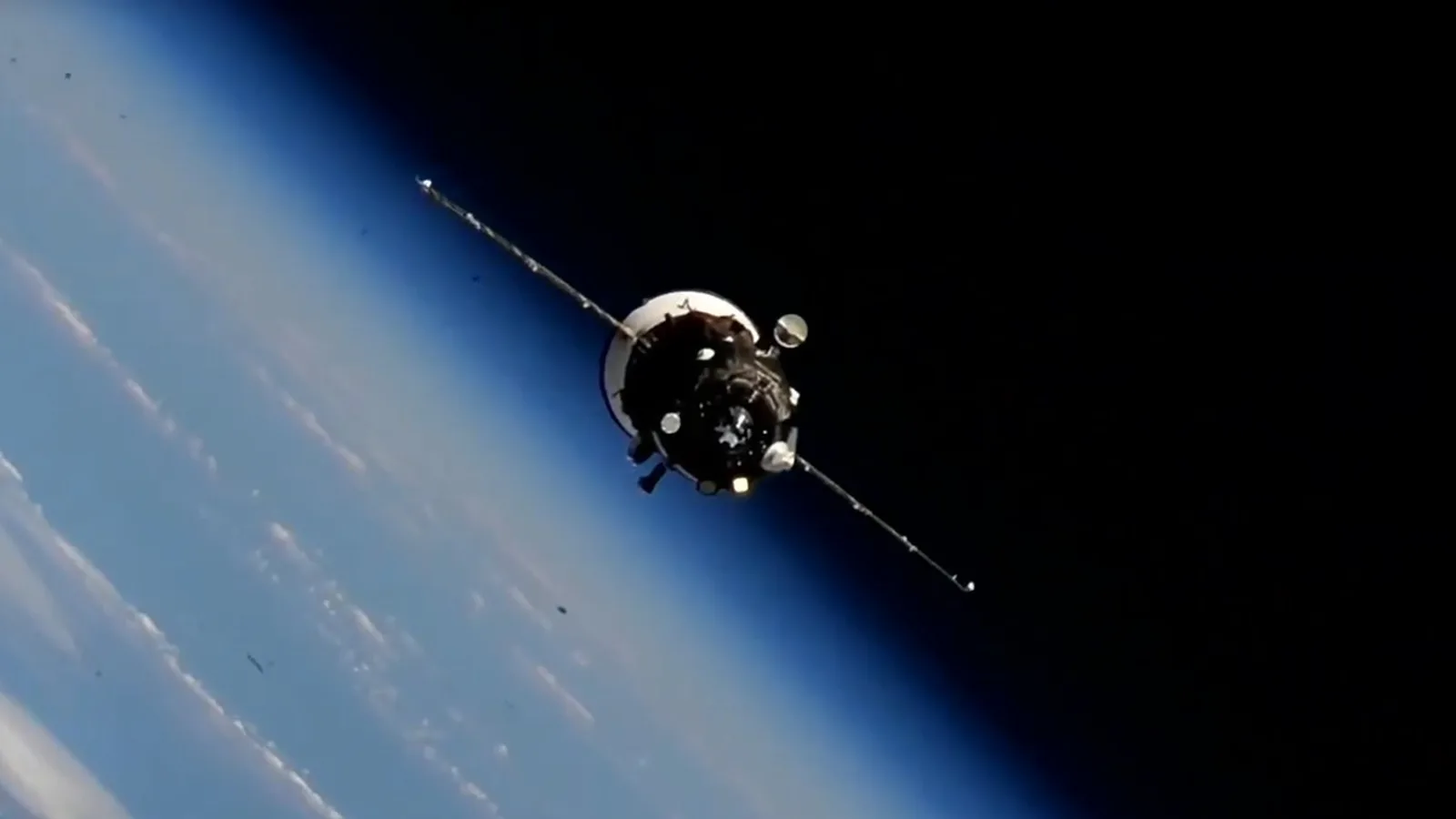
Progress MS-36 docked to the ISS on Nov. 26, 2026, carrying the control system for Teledroid, a torso robot with two arms and 30 degrees of freedom. Cosmonauts will drive it by copying their own movements in an exoskeleton, and it will eventually work outside the station.
So basically: A Russian cargo ship just docked at the International Space Station with the main parts of a robot called Teledroid. It’s a torso with two arms, built to do some of the risky work cosmonauts do on spacewalks. A cosmonaut will be able to wear an exoskeleton and have the robot copy their movements, and the robot can also handle some jobs on its own. The ship, Progress MS-36, docked on Thursday, Nov. 26 at 7:08 a.m. EST.
What Teledroid is
Teledroid was built by Android Technics, the same Russian company behind FEDOR, the humanoid robot that rode to the station in 2019. This one is a different idea. It doesn’t have legs. It’s an upper body built to bolt onto the station and work with its hands.
Here’s what came up on this flight:
- A torso robot with 30 degrees of freedom, which means 30 separate joints or axes it can move
- Two arms made to use the same standard tools cosmonauts use
- Outside cameras and the gear to hook it into the station
It’s built to survive vacuum, radiation and the huge temperature swings outside the station. The parts are modular, so the crew can swap and repair pieces right there instead of sending the whole thing home.
According to TASS, an earlier cargo ship already carried up some of the equipment for the experiment. This flight brought the main control system.
How they’ll test it
The plan has three stages:
- Cosmonauts practice driving a virtual model of the robot
- The robot gets tested inside a sealed module of the station
- It goes outside, where a special work table and an outside camera will be set up
On that outside table, Teledroid will practice real spacewalk chores like plugging in an electrical connector, working a carabiner, using hand tools and handling a tether. The crew will run it from inside the station, then test how well it works on its own.
The project’s chief designer, Yevgeny Dudorov, told TASS the mission includes about 40 sessions, with up to 20 in the simulator and up to 20 with the real robot inside and outside the modules. He said the same tech could later be used on a Russian space station, the Moon and other worlds.
What else was on the ship
Progress MS-36 launched from Baikonur in Kazakhstan on Nov. 24 and carried about 2.4 tons of supplies:
- 750 kg of propellant
- 420 kg of drinking water
- 261 kg of food, including fresh produce
- 51 kg of oxygen
TASS said the ship is also carrying New Year presents for the crew.
This flight is also the first time three Russian cargo ships have been docked at the station at the same time. And because of a long running air leak in a tunnel on the Russian Zvezda module, which stays sealed now, this ship will be unloaded at one port and later moved to another to fire its engines and boost the station.
Why a robot for spacewalks
Spacewalks are some of the most dangerous work astronauts do. They take hours to prepare for, the suits are hard to work in, and every one carries risk. A lot of the jobs are simple but tiring, like plugging and unplugging connectors, moving hardware and checking equipment.
A robot that can do those chores, with a human guiding it from inside where it’s safe, means fewer hours outside for the crew. And on the Moon or Mars, where help is a long way off, that matters even more.
My take
I think this is a smarter approach than FEDOR was. FEDOR was a full humanoid that sat in a seat, did a few demos and went home. Teledroid skips the legs and focuses on the one thing that’s actually useful out there: hands that can work with real tools.
The exoskeleton part is what gets me. A cosmonaut moves their arm inside the station, and a robot outside in a vacuum does the same thing. If the outside tests go well, this is the kind of robot that ends up on every future station and Moon base. It’s not flashy, but it’s useful.
So basically — pass it on.
Daily Updates
Get new stories in your inbox
Near-future tech when it moves. Robots, space, EVs, AI. No spam.