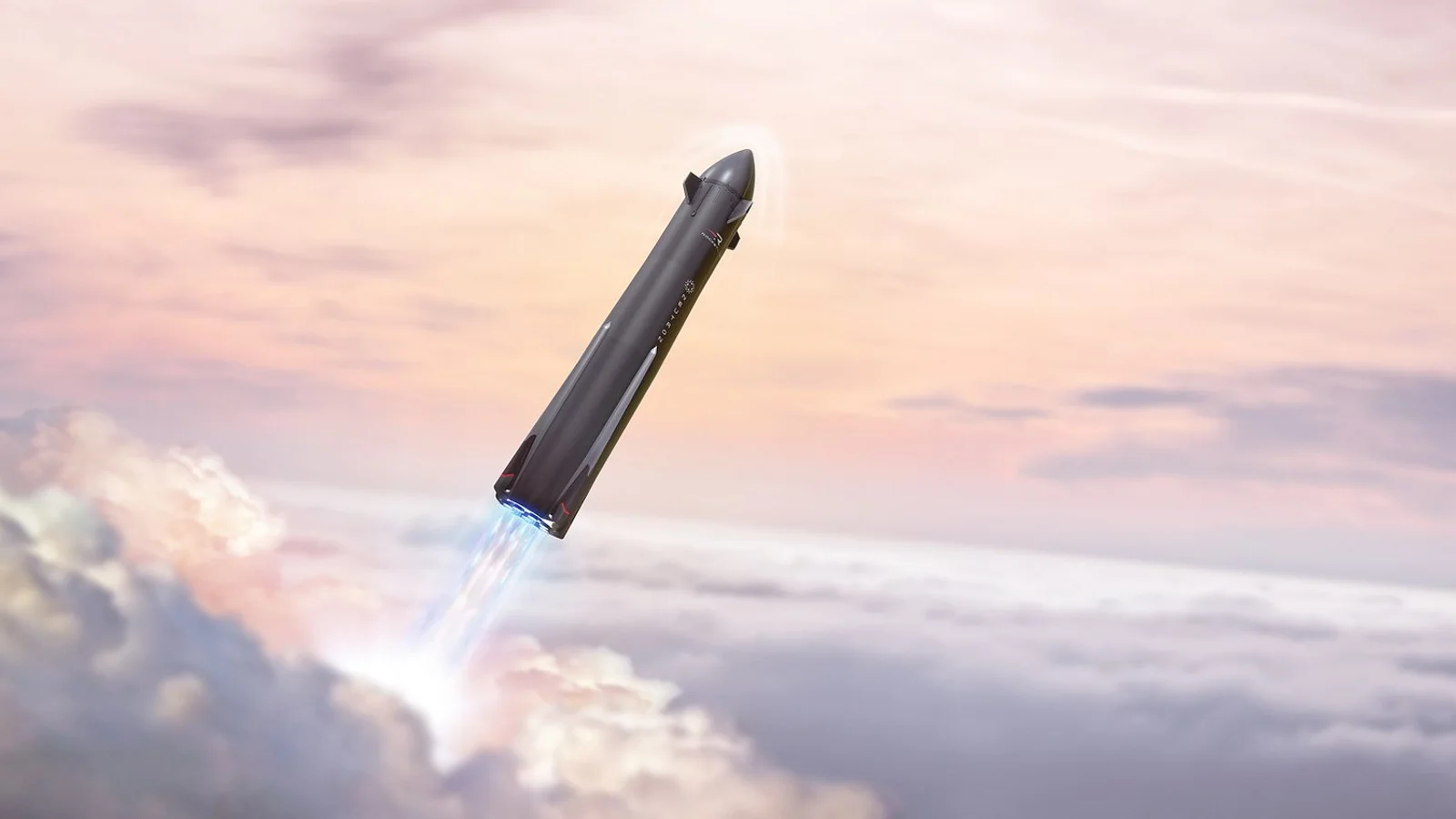
Rocket Lab's Neutron Won't Fly Until 2027 Due to Air Bubbles in a Tank Dome
Rocket Lab found voids in the carbon composite dome of Neutron's first stage tank, pushing the first launch from Wallops Island, Virginia into 2027. A new launch date comes after more testing in early 2027.
So basically: Rocket Lab’s big new rocket, Neutron, is not launching this year. On Oct. 14 the company said the first flight is now a 2027 thing. The reason is tiny air pockets, called voids, found inside the carbon fiber dome at the top of the first stage fuel tank. Neutron was announced in 2021 with a first flight planned for 2024.
What actually went wrong
Neutron is made mostly of carbon composite, not metal. That makes it light and strong, but it is a lot harder to build.
You lay carbon fiber layers in a mold, then heat it so they bond. Normally big aerospace parts get cooked in a giant pressure oven called an autoclave. Neutron’s first stage is too big for that. CEO Peter Beck called it the “largest pressurized structure ever made out of carbon composite.” So Rocket Lab had to invent its own way of curing these huge pieces outside an oven.
During inspection, they found voids between the carbon layers in a newly made forward dome. That is the rounded cap at the end of the propellant tank.
Beck said the voids “don’t necessarily mean that the dome would fail in flight.” But Rocket Lab only moves forward when it thinks the parts have enough safety margin. This one did not.
A fix that caused a new problem
Here is the interesting part. This problem came from fixing an earlier problem.
Back in January, a Neutron tank burst during a pressure test. Rocket Lab blamed a defect at a key joint. That tank was built by an outside contractor laying the carbon by hand, because Rocket Lab’s own automated fiber placement machine was not running yet.
After that, Rocket Lab got rid of some joints and made certain sections of the tank thicker to make it stronger.
”Those thicker sections are where the voids formed,” Beck said.
Stronger turned out to be harder to cook right.
They say it’s solved
Rocket Lab changed its process again. An aft dome, the one at the other end of the tank, was made with the new method and passed inspection.
”We’ve solved the problem,” Beck said.
Now they have to build a brand new forward dome. Beck laid out the steps on the company’s earnings call:
- Build the forward dome on the automated fiber machine. That is already underway.
- Inspect it with ultrasound and other checks to make sure there are no voids.
- Put the whole first stage together, then run pressure tests with water and then super cold tests.
He expects the first two steps done before the first quarter of 2027 and the third wrapped up during that quarter. Only then will Rocket Lab give a real launch date.
”I’d rather show you real-time progress than give you a date that I might have to walk back,” Beck said.
Why people care
Neutron is a big step up from Electron, Rocket Lab’s small rocket. Electron is about 4 feet wide. Neutron is about 23 feet wide at its widest and can carry roughly 29,000 pounds to low Earth orbit. Nine methane burning Archimedes engines power the booster, and the booster is meant to land on a platform at sea and fly again.
The launch site is Wallops Island, on Virginia’s Eastern Shore.
The timing hurts. Satellite companies want more rides to space. Ars Technica reports SpaceX plans to retire Falcon 9 from commercial service in the next few years as it moves to Starship. Rocket Lab wants to grab the customers whose satellites don’t fit Starship. But Relativity, Stoke and Firefly are all chasing that same market with their own medium rockets.
My take
I’m not mad about this one. A delay sucks, but finding air bubbles in a tank on the ground beats finding out the hard way over the ocean. Beck has said from the start he wants Neutron to make orbit on the first try, not just clear the pad and call it a win.
What bugs me is the pattern. 2024 became 2025, then 2026, and now 2027 with no date at all. I’ll believe the timeline when that first stage passes its pressure tests. Until then, Electron, with 97 flights and 56 straight successes, is carrying the company.
So basically — pass it on.
Daily Updates
Get new stories in your inbox
Near-future tech when it moves. Robots, space, EVs, AI. No spam.