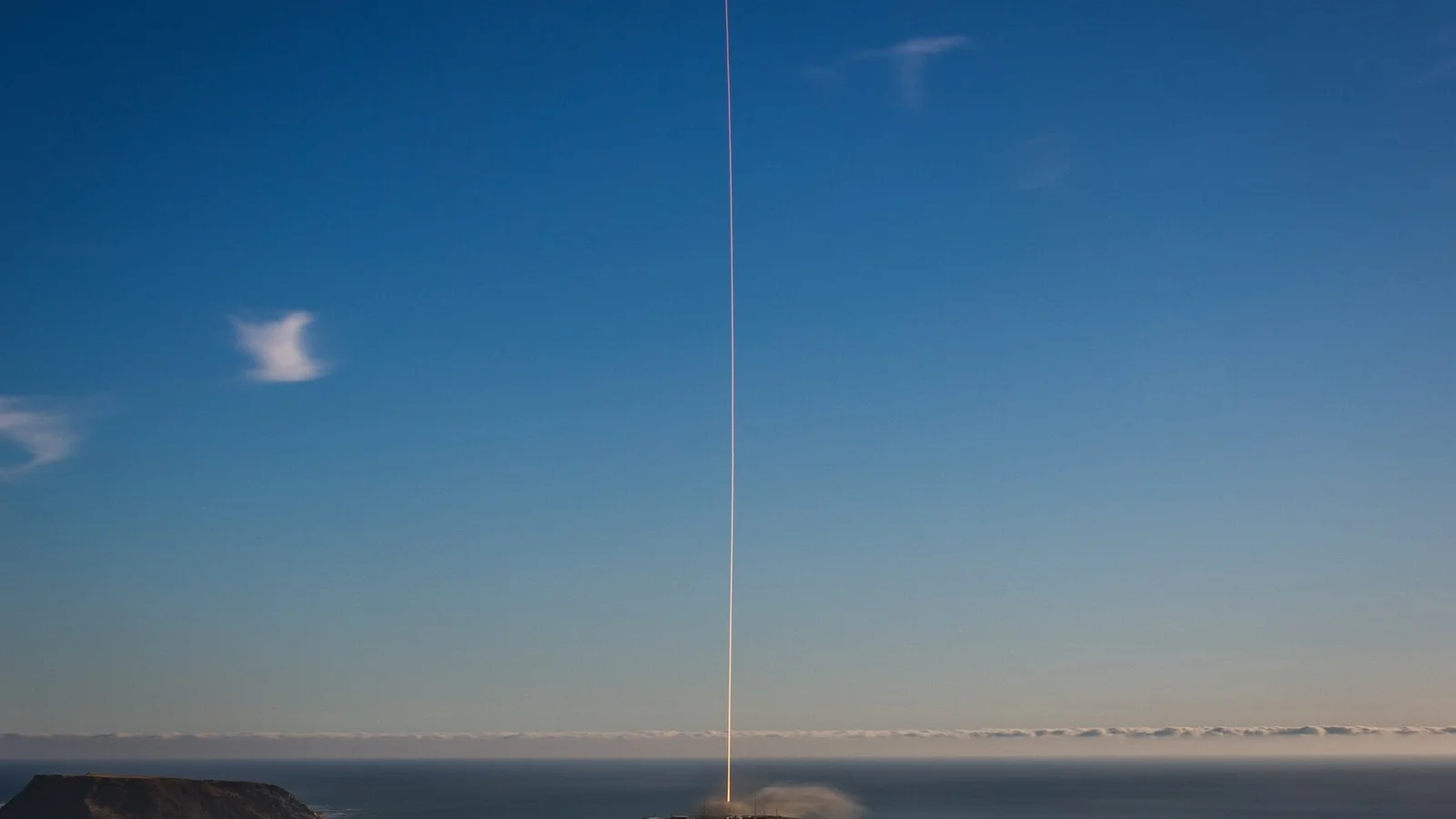
Rocket Lab Just Hit 100 Electron Launches, Faster Than Any Commercial Rocket Ever
Rocket Lab's Electron flew its 100th mission from New Zealand, putting a Japanese radar satellite in orbit and setting the record for the fastest commercially developed rocket to reach 100 launches.
So basically: Rocket Lab just launched its little Electron rocket for the 100th time. No commercially built rocket has ever gotten to 100 launches faster. And the company says the next 100 are already booked.
The launch itself
The mission was called “The Mountain God Rises.” It lifted off from Rocket Lab’s Launch Complex 1 in New Zealand at 6:30 p.m. local time on November 14. Back here on the East Coast, that was 12:30 a.m. Saturday morning, so most of us slept right through history.
On board was one satellite called YAMATSUMI-II. It belongs to a Japanese company called iQPS, short for the Institute for Q-shu Pioneers of Space. Electron’s small upper stage, which Rocket Lab calls the kick stage, dropped it off about 575 kilometers up, or roughly 357 miles.
The satellite uses radar to take pictures of Earth. Radar is the cool part. A normal camera satellite can’t see through clouds and goes blind at night. A radar satellite doesn’t care. It can image the ground in a storm at midnight.
iQPS is basically a regular customer now
This was Rocket Lab’s 11th launch for iQPS since 2023, and all 11 worked. iQPS is building a group of about three dozen radar satellites, and it has already booked seven more dedicated Electron launches through 2030.
That’s the kind of thing that keeps a launch company alive. One customer coming back over and over because the rocket keeps doing its job.
Why 100 is a big deal
Electron first flew in 2017. Getting to 100 launches in under a decade is rare. Rocket Lab CEO Peter Beck put it pretty plainly: “Few rockets reach 100 launches in their total operational lifetime.”
He’s right. Plenty of rockets in history never got anywhere close to 100 flights before they were retired.
And remember what Electron is. It’s tiny next to a Falcon 9. It stands about 59 feet tall and carries a few hundred kilograms to orbit. It was built for small satellites that used to have to hitch a ride on somebody else’s big rocket and wait for that rocket’s schedule.
A few things that made Electron different:
- It was the world’s first orbital rocket with a body made of carbon composite instead of metal
- Its Rutherford engines are 3D printed
- It launches from two places, New Zealand and Wallops Island, Virginia
- Rocket Lab has flown missions back to back from both hemispheres
Rocket Lab says Electron has deployed hundreds of satellites since 2017, for companies, scientists and national security agencies.
It’s not just a rocket company anymore
This part surprises people. Rocket Lab says its satellites and spacecraft parts have flown on more than 1,700 missions, including trips to the Moon and Mars. So when you hear Rocket Lab, it isn’t only Electron. They build the stuff that rides on rockets too.
The next big thing is Neutron, a much bigger reusable rocket meant to compete in the medium launch market. Neutron has had its own delays, and its first launch has slipped into 2027. But Rocket Lab says Electron’s steady flying is laying the groundwork for it. Same team, same factories, same launch experience.
What comes next
Beck says the next 100 Electrons are already booked, so they’re “only accelerating from here.” If that holds, the second 100 should come a lot faster than the first, since it took years just to get the early flights going.
There was also a crazy busy weekend in rockets around this. SpaceX had Starship Flight 15 up in orbit, and ULA had Vulcan lined up to launch Amazon Leo satellites the same day. Electron’s 100th kind of slipped in quietly at half past midnight. That’s very on brand for it.
My take
Electron doesn’t get the headlines Starship gets, but this is the rocket that proved a small company could launch over and over without blowing its budget. 100 flights is real proof, not a promise. What I’m watching now is Neutron. If Rocket Lab can do with a big reusable rocket what it did with this little one, SpaceX finally has a real neighbor in the launch business.
So basically — pass it on.
Daily Updates
Get new stories in your inbox
Near-future tech when it moves. Robots, space, EVs, AI. No spam.