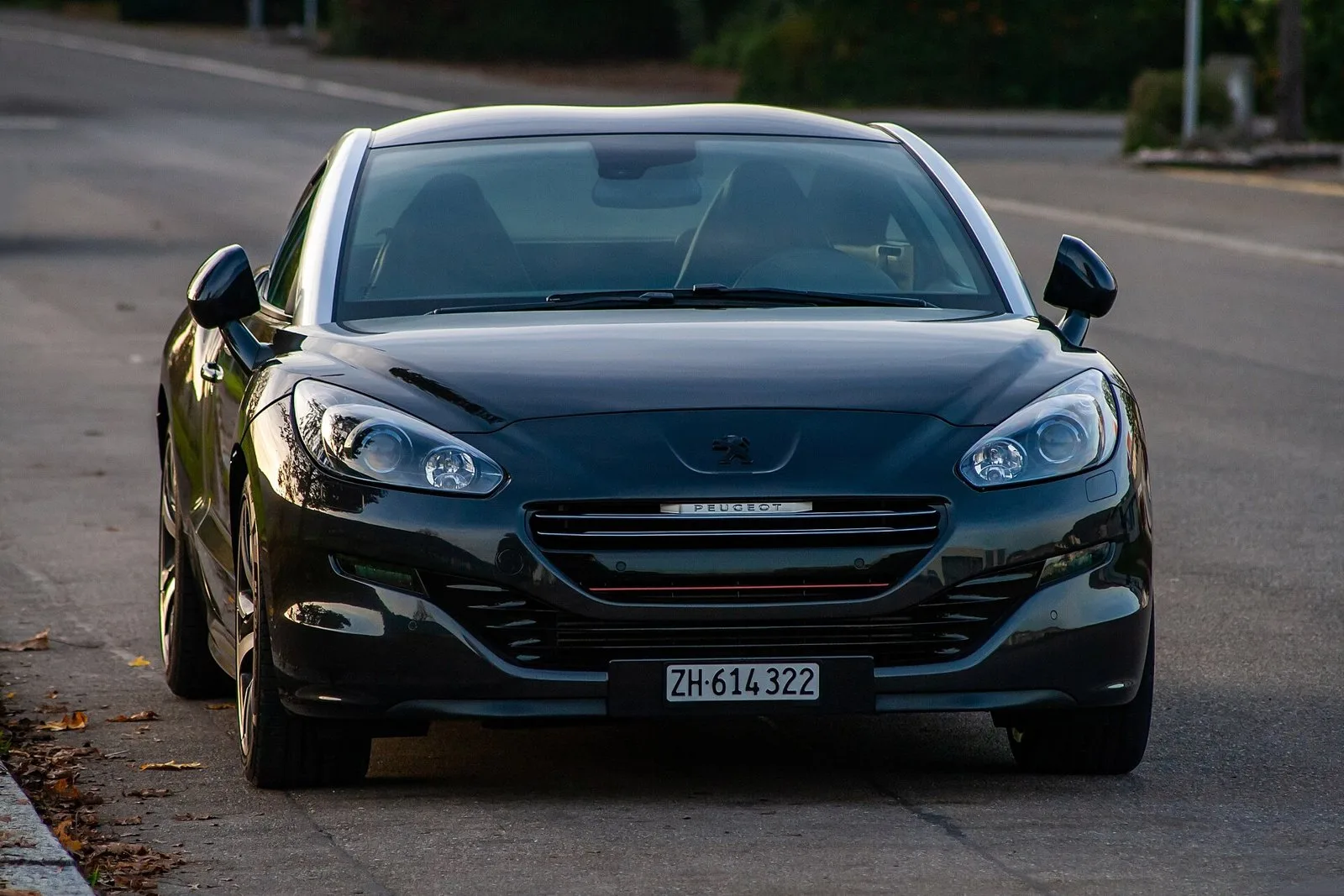
Peugeot Brought Back the RCZ as an EV That Charges in 10 Minutes
Peugeot's RCZ Vision concept uses a solid state battery built with Factorial Energy. It claims 10 to 80% in 10 minutes, 500 hp and about 600 km of range. It's not confirmed for production.
So basically: Peugeot showed a new concept at the Paris Motor Show called the RCZ Vision. It’s an electric coupe with a solid state battery made with Factorial Energy, and Peugeot says it charges from 10 to 80% in 10 minutes. That’s basically a gas station stop. Catch is it’s a concept and Peugeot hasn’t said it’s building it.
The RCZ is back (kind of)
If you don’t remember, the original RCZ was a little two door coupe Peugeot sold from about 2009 to 2015. It was a weird, cool looking car and they sold close to 68,000 of them.
The new one keeps the name but it’s a totally different thing. It’s longer, it seats four, and it’s all electric.
The numbers
Here’s what Peugeot is claiming:
- 10 to 80% charge in 10 minutes
- 1,000 volt system
- 500 hp
- Up to 600 km of range (about 373 miles) on WLTP
- Battery only 110 mm thick, about 4.3 inches
- Uses about 11.5 kWh per 100 km, which Peugeot says still has to be confirmed
The thin battery is why the car can sit so low. Normal EV batteries are thick so the car ends up tall. This one’s flat enough to make an actual low sports car.
Who is Factorial
Factorial Energy is a US battery startup that’s been working on solid state for years. Stellantis, which owns Peugeot, has been working with them for a while.
Solid state is the battery everyone’s been waiting for. It should hold more energy in less space and charge faster and be safer than the batteries in EVs right now. The problem is nobody’s really making them in big numbers yet.
The fine print
This is where you gotta slow down a bit.
When Stellantis tested Factorial’s cells in 2025, they charged from 15 to over 90% in 18 minutes. Now Peugeot is saying 10 minutes for 10 to 80%. That’s a different range, but it’s still a bigger promise than what’s been shown in public testing so far.
Factorial’s cells are just now going into a test fleet of Dodge Charger Daytonas this year. That’s testing, not selling.
And Peugeot’s design boss said whether the RCZ gets built depends on demand. If it does get made, some reports say it would probably launch with regular lithium ion batteries first, not solid state.
Why 1,000 volts matters
Most EVs today run on 400 volts. Some newer ones like the Hyundai Ioniq 5 and Porsche Taycan run on 800. Higher voltage means you can push more power into the battery without everything getting too hot. That’s a big part of how you get to 10 minute charging.
The catch is the charger has to keep up too. Most fast chargers out there can’t do anything close to that yet. So even if the car can take it, you’d need the right charger to actually see 10 minutes.
What’s actually coming
Not everything here is fantasy. The car sits on Stellantis’ new STLA One platform, and the next Peugeot E-208 uses that in 2027. The weird square steering wheel they call Hypersquare is confirmed for the next E-208 too. So some of this is coming to cars you can buy, just not the battery yet.
My take
10 minute charging is the thing that gets a lot of people to switch. Most people who say no to EVs say it’s the charging. If it’s 10 minutes, that excuse is pretty much gone.
But it’s a concept. I’ve seen “solid state is almost here” headlines for like 10 years. I’ll get excited when there’s one in a car I can actually buy with a price on it. Still, it’s cool seeing a big car company put real numbers on it.
Would 10 minute charging get you to go electric?
So basically — pass it on.
Daily Updates
Get new stories in your inbox
Near-future tech when it moves. Robots, space, EVs, AI. No spam.