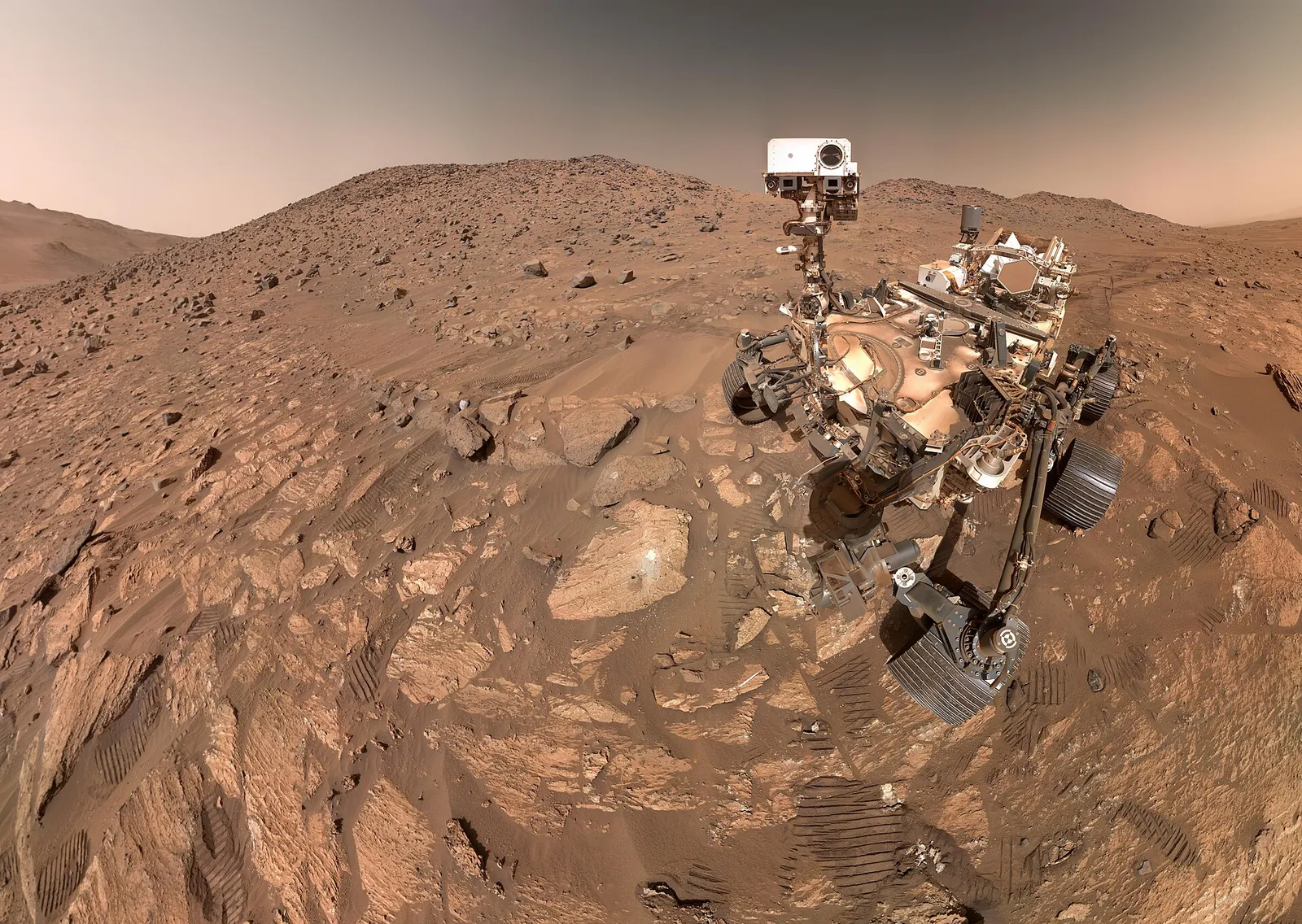
NASA's Perseverance Just Drove Farther Than Any Rover Ever Has
On Oct. 11, Perseverance's odometer hit 45.22 km, passing Opportunity's 45.16 km record. It did it in less than half the time, mostly by driving itself.
So basically: NASA’s Perseverance rover now holds the record for the farthest anyone or anything has driven on another world. On Oct. 11 its odometer read 45.22 km. The old record was Opportunity’s 45.16 km, and that one stood since 2018.
The wild part is how fast it got there. Opportunity needed about 14 years on Mars to rack up its miles. Perseverance did it in roughly six years and eight months.
The record book
People forget how many rovers we’ve actually sent out. Since 1970 there have been nine robotic ones, four on the Moon and five on Mars.
Some of them barely moved. NASA’s little Sojourner and China’s Yutu and Yutu 2 Moon rovers stayed within about 100 meters of where they landed.
The Soviets set the bar early. Lunokhod 1 drove more than 10 km on the Moon. Lunokhod 2 went 39 km in 1973, and that held for decades.
Then Opportunity passed it in 2014, ten years into its mission on Mars. It kept going until its batteries died in 2018 and finished at 45.16 km. Its twin Spirit stopped years earlier at 7.7 km.
Curiosity is still out there too, now in its 15th year in Gale Crater. But it has spent a lot of that time climbing Mount Sharp, which is slow going.
So Perseverance took the crown on Oct. 10 and kept rolling.
It mostly drove itself
This is the part that matters most.
Old school Mars driving works like this. The team on Earth looks at photos from the rover. They pick a safe path. Then the next day they send up step by step moves, and the rover follows them exactly.
Perseverance has a system called AutoNav. It looks at its own camera images while it’s moving and picks the safest route to wherever it’s headed. It doesn’t have to stop and wait for Earth to think for it.
NASA says that lets it keep its top speed while it works around rocks, and cover up to 412 meters in one Martian day.
Curiosity has had the same kind of system since 2013. The difference is the ground. Perseverance has been on flatter terrain west of Jezero Crater, where it can actually stretch its legs.
Mark Maimone, deputy team chief for robotic operations on the rover, put it like this in NASA’s release:
“The rover that broke this record did so by making its own decisions about the path. Given the autonomy to just go, Perseverance is a better driver than the one that landed, and we’re not done.”
He also said the newer software teaches it to “steer less and roll more” and to check its position against maps from orbit in the middle of a drive.
What’s holding it back now
Sunlight, honestly.
Glare in the navigation cameras is a problem. When the rover is driving toward the Sun, the team parks it by mid afternoon. Maimone said if they can teach it to see past that glare, every rover after it gets a longer workday.
That’s a pretty normal problem to have. Same thing happens to you driving west at 6 p.m.
It wasn’t even supposed to go this far
The original plan only called for Perseverance to drive about 20 km over its mission. It’s more than double that now.
Steven Lee, project manager for Curiosity and Perseverance at NASA’s Jet Propulsion Laboratory, said all its mobility systems are still fully working. He said long life tests on the ground look good, and they expect it to keep adding to the record “for many years to come.”
So 45 km is not the final number. It’s just where the line got crossed.
My take
I like this one because it’s not a launch or a big promise. It’s a robot that’s been quietly grinding on another planet for almost seven years and just beat a record that stood for eight years.
And it did it by getting smarter, not by getting new hardware. Same rover that landed in 2021. Better software. That’s the stuff that will matter for future rovers on Mars and the Moon, where you can’t wait a full day for Earth to tell you where to step.
Opportunity was supposed to last 90 days and went almost 15 years. Perseverance was supposed to drive 20 km and it’s at 45 and climbing. NASA rovers just keep doing this.
So basically — pass it on.
Daily Updates
Get new stories in your inbox
Near-future tech when it moves. Robots, space, EVs, AI. No spam.