For the First Time, a Tunnel Boring Machine Dug Under the Panama Canal. It Went 65 Meters Deep
On Oct. 26, 2026, a 13.46 meter Herrenknecht tunnel boring machine broke through at Albrook, finishing a 4.5 km tunnel for Panama Metro Line 3 that passes under the Panama Canal at a depth of about 65 meters. It's the first time a TBM has tunneled under the canal.
So basically: Panama just finished digging a train tunnel under the Panama Canal, one of the busiest shipping lanes on the planet. A giant tunnel boring machine chewed through 4.5 kilometers of rock, went as deep as about 65 meters, and broke through on the other side on Monday, Oct. 26, 2026. It’s the first time ever a tunnel boring machine has gone under the canal.
The machine’s maker, Herrenknecht from Germany, announced it on Nov. 4.
How big is this thing
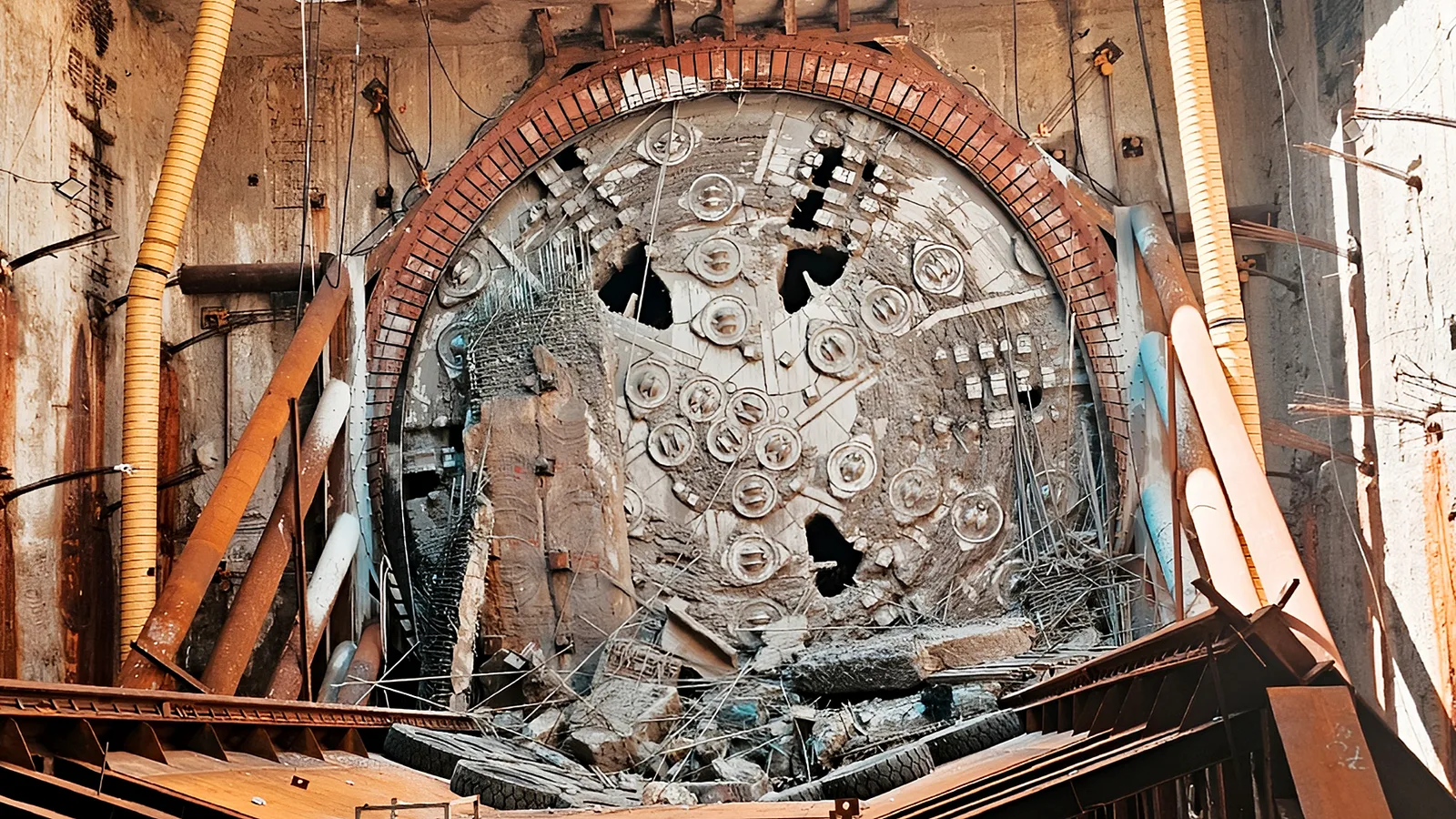
The machine is nicknamed Panamá, and it’s a type called a Mixshield. Here’s what it’s working with:
- 13.46 meters across, which is about 44 feet. That’s about as tall as a four story building
- A cutterhead drive with 5,600 kilowatts of power
- About 26,600 kilonewton meters of torque
The photo up top is the actual breakthrough. That big round face with all the circular cutters is the front of the machine pushing out of the rock into the target shaft. It’s beat up and covered in debris, which is exactly what you’d expect after two years underground.
The numbers on the dig
Tunneling started in September 2024 and ran until the breakthrough in late October 2026. Along the way, according to the HPH construction consortium:
- The machine dug out roughly 700,000 cubic meters of rock and dirt
- Crews installed 2,295 concrete rings to line the tunnel
- Each ring is made of nine curved concrete pieces
- At its best, the crew moved about 300 meters a month
The deepest point was under the canal itself, around 65 meters below sea level. That’s about 213 feet. Down there you’ve got water pushing in from above and the ground is a mix of sandstone, clay, basalt and a bunch of other rock types. Herrenknecht’s project sheet lists about nine different kinds.
Why it’s so hard to tunnel under water
Tunneling under rivers and canals is one of the hardest jobs in construction. The ground can change without warning, and groundwater is pushing in with a lot of pressure. If something goes wrong, the tunnel can flood.
One trick Herrenknecht pointed to is that the cutting tools on the front of the wheel can be swapped out from behind, inside the machine, under normal air pressure. That means workers don’t have to go out into a pressurized chamber up front to change worn cutters. That’s a big safety deal when you’re sitting under a canal full of ships.
What the tunnel is for
This is part of Panama Metro Line 3. It connects the western suburbs across the canal to Panama City, ending at Albrook, where it links up with Line 1.
Right now, people coming from the west side mostly depend on a crowded bridge to get into the city. Herrenknecht says the new line will serve about 250,000 commuters. Panama’s president, José Raúl Mulino, called it a “remarkable feat of engineering.”
The consortium says Line 3 is about 82 percent done, with passenger service targeted for 2028. The builders are a joint venture of Hyundai Engineering & Construction, POSCO Engineering & Construction and Hyundai Engineering, all from South Korea.
Where Herrenknecht has dug before
This company has a long list of underwater jobs. Its machines have gone under the Elbe River in Hamburg, the Yangtze River, the Port of Miami, the Bosporus and the Suez Canal. In Hong Kong, one of its machines set a world record at 17.63 meters across.
Herrenknecht’s founder also mentioned the company is helping with studies for a possible railway tunnel under the Strait of Gibraltar, nearly 40 kilometers long and up to 500 meters below sea level. He was careful to say it’s not a done deal.
My take
I love stories like this because the Panama Canal is already one of the biggest engineering projects in history, and now somebody went underneath it. Ships are passing overhead while a 44 foot wide drill grinds through rock for two years straight. The real win is for regular people, though. A quarter million commuters stuck on one jammed bridge are going to get a train instead. That’s the kind of infrastructure that actually changes daily life.
So basically — pass it on.
Daily Updates
Get new stories in your inbox
Near-future tech when it moves. Robots, space, EVs, AI. No spam.