Uber's Lucid Robotaxis Are Now Driving Bay Area Streets With Nobody Behind the Wheel
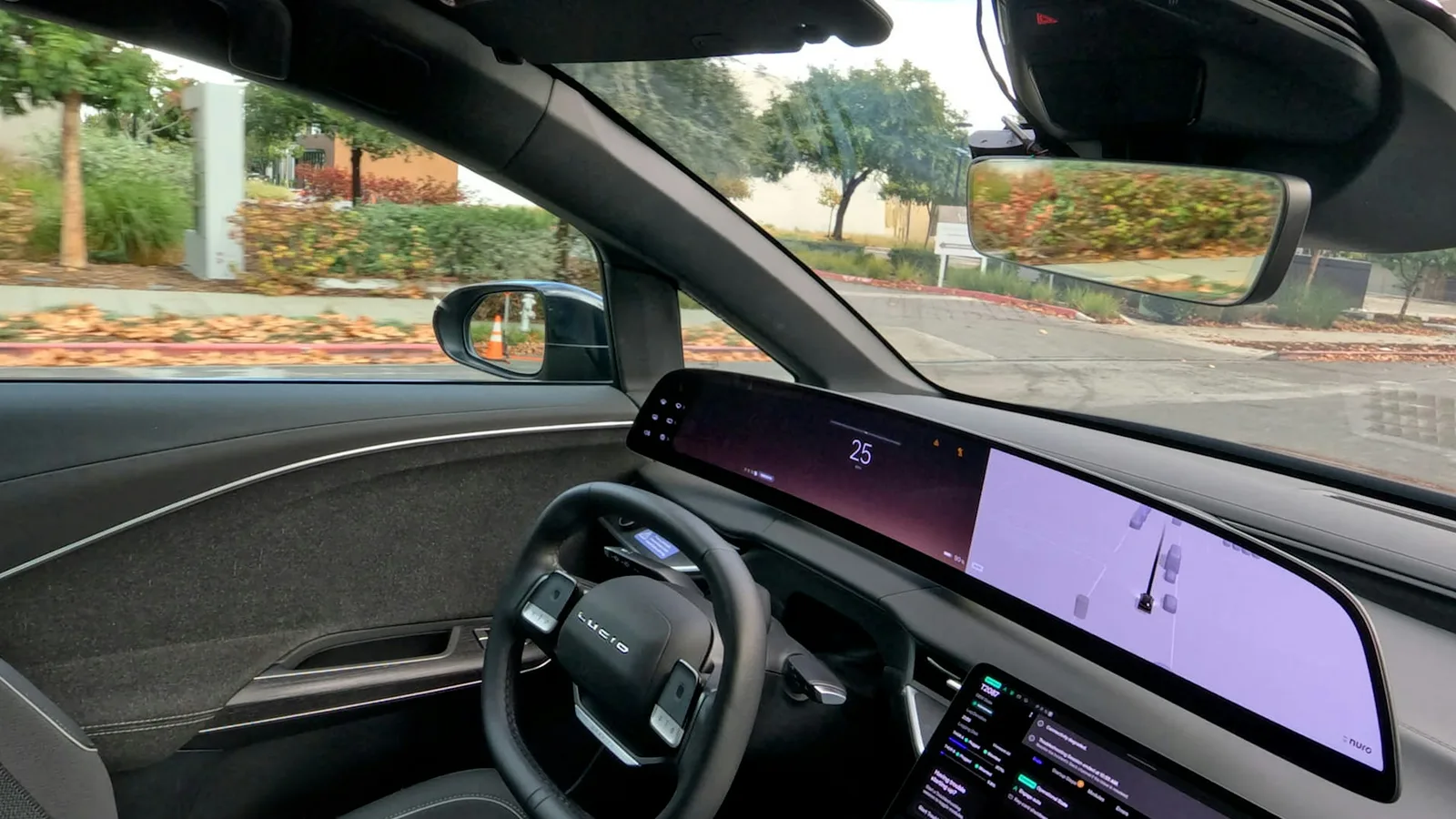
Nuro, Lucid and Uber pulled the safety drivers out of their Lucid Gravity robotaxis on Nov. 24 and started driverless testing in Palo Alto, Mountain View, Los Altos and Sunnyvale. Uber employees get rides soon, and the public launch is now planned for the first quarter of 2027.
So basically: The robotaxi that Uber, Lucid and Nuro have been working on is now driving around the Bay Area with nobody in the driver’s seat. On Nov. 24, Nuro pulled the safety drivers out of its Lucid Gravity SUVs and started driverless testing in four cities: Palo Alto, Mountain View, Los Altos and Sunnyvale. Uber employees will get rides soon. Regular people should be able to call one in the Uber app in the first quarter of 2027.
Who does what
There are three companies in this, and each has a job:
- Lucid builds the car, a modified version of its Gravity electric SUV
- Nuro makes the self driving system, called the Nuro Driver
- Uber owns the cars, runs the fleet with partners and puts the rides in its app
The robotaxis have high resolution cameras, solid state lidar and radar. The cars were shown off at CES in January.
How they got here
Uber first announced this plan in July 2025. Nuro has been testing the Gravity robotaxis on public roads in the Bay Area and Houston since December 2025, but always with a safety driver behind the wheel.
The California DMV gave Nuro a driverless testing permit for the Gravity back in May. It still took more than six months to actually pull the driver. Before doing it, Nuro says it ran tests with no operator at its closed course in Las Vegas, including pedestrian encounters and other drivers ignoring right of way, plus a lot of simulation.
Lucid has delivered more than 100 Gravity robotaxis for the program, and TechCrunch reports the fleet is growing now that Lucid has started building production versions at its Arizona factory.
A small club
Electrek points out that only six companies are allowed to test with no driver on California roads: AutoMo, Nuro, Tensor, Waymo, WeRide and Zoox. Tesla isn’t one of them. Its robotaxi company in California only has a permit to test with a driver.
Waymo is still way ahead here. It already runs paid driverless rides across much of the Bay Area, including the same Peninsula and South Bay cities where Nuro just started.
Driving without a person in the car isn’t new for Nuro, though. It’s been running little driverless delivery pods in California since 2020. This is just the first time it’s done it with a car built to carry people.
The date slipped a little
The original plan was to launch in a major U.S. city sometime in 2026. That’s now the first quarter of 2027. Nuro’s COO Andrew Chapin told Axios the delay is about polishing the product and finishing permits, and called it “a little bit of a push to the right.”
The ambition went the other direction. Uber’s commitment grew from 20,000 cars to at least 35,000 Lucid vehicles with the Nuro Driver. It starts with the Gravity and later moves to Lucid’s upcoming midsize models. Houston is planned as the second city in mid 2027.
My take
This is the step that actually matters. Testing with a safety driver is one thing, but taking the person out means the company trusts its own system enough to bet its name on it. I like that they did it slowly, with the closed course testing first. The 35,000 car number is huge, and it gives Uber a real answer to Waymo and Tesla instead of just being the app other companies’ robotaxis show up in. The Bay Area is already crowded with Waymos, so Nuro has to be really good to stand out. Early 2027 is close, and I want to see how fast it actually opens up to normal riders.
So basically — pass it on.
Daily Updates
Get new stories in your inbox
Near-future tech when it moves. Robots, space, EVs, AI. No spam.