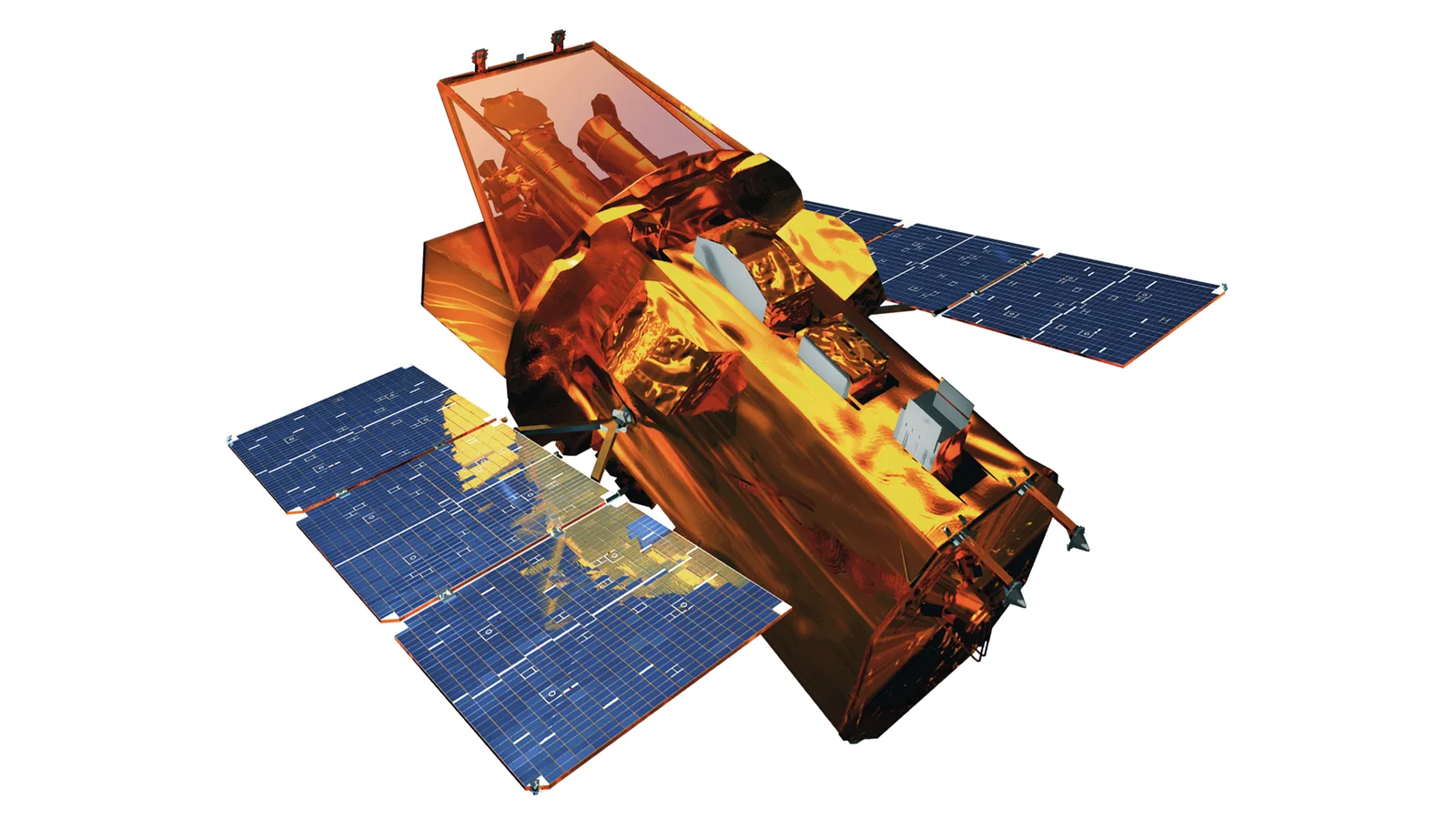
NASA's Swift Telescope Is Falling Back to Earth After a Robot Rescue Didn't Work
NASA ended the Swift observatory's mission on Oct. 23, 2026, after a commercial spacecraft built to grab it and push it higher had problems and never made the boost. Swift was built to last two years and ran for almost 22. Re-entry is predicted around Nov. 2.
So basically: NASA’s Swift space telescope is done. It’s sinking back toward Earth, and the plan to save it, a small private spacecraft that was supposed to grab it with robot arms and push it higher, never pulled it off. NASA officially ended the mission on Oct. 23, and Swift is expected to burn up in the atmosphere in the next few days or weeks.
What Swift was
Swift launched in November 2004. Its job was to catch gamma ray bursts, which are the most powerful explosions in the universe. These things flash and fade fast, so Swift was built to spot one, swing itself around on its own, and point its other telescopes at it before the glow faded.
It was supposed to last two years. It ran for almost 22.
In that time it caught more than 2,000 gamma ray bursts, studied more than 1,400 exploding stars, watched stars get torn apart by black holes, and checked out comets and asteroids too. Swift data shows up in about 7,000 published science papers. That’s a lot of work for a satellite with a two year warranty.
Why it’s falling
Everything in low orbit is dragging through a super thin layer of air. Normally that drag is tiny. But the Sun has been extra active, and when the Sun gets busy, the upper atmosphere puffs up. More air means more drag.
Swift has no engine to climb back up. In June 2025 it was flying about 452 kilometers (281 miles) up. By Oct. 20 it was down to 275 kilometers (171 miles), and at that point it couldn’t hold steady anymore. It dropped into safe mode, and the team at Penn State that flies it sent the command that basically shut it down.
The rescue that almost happened
This is the part I can’t stop thinking about. In September 2025 NASA paid an Arizona company called Katalyst Space Technologies about $30 million to try something nobody had ever done. Build a spacecraft about the size of a refrigerator, fly it up to Swift, grab it with three robotic arms, and boost it to a higher orbit. Swift was never designed to be grabbed by anything.
They had to build it in a little over nine months. The spacecraft, called LINK, launched this summer. About three weeks in, it had trouble with its thrusters and the wheels that keep it pointed the right way, and it started spinning faster than it should. It still got within about 8 to 9 miles of Swift and took pictures of it. But it never got to grab on. LINK fell back to Earth on Sept. 25.
While they waited on the rescue, the Swift team even flew the telescope in a weird way on purpose, turning it to cut drag instead of pointing at science targets. That bought them months. Once the rescue was off, they turned the science back on and got hundreds more observations before the end.
When it comes down
Swift is now losing more than 3 kilometers of height a day. The latest long range prediction from Space-Track, the U.S. military’s satellite tracking site, puts re-entry around Nov. 2, but that date keeps moving with the weather in space. Because of the angle of its orbit, it can only come down somewhere between about 20.5 degrees north and south of the equator. NASA hasn’t said if any pieces are expected to make it to the ground.
My take
Two years turned into 22, and that’s the part that should make the headline. But the rescue attempt is what I’ll remember. A private company had nine months to build a robot that could catch a 20 year old satellite that was never made to be caught, and it got within a few miles. It didn’t work this time. But NASA said it learned a lot about servicing old satellites, and I believe it. Someday a mission like LINK is going to save a telescope like this. It just wasn’t Swift’s turn. So if you see a bright streak in the sky near the tropics around early November, that might be Swift saying goodbye.
So basically — pass it on.
Daily Updates
Get new stories in your inbox
Near-future tech when it moves. Robots, space, EVs, AI. No spam.