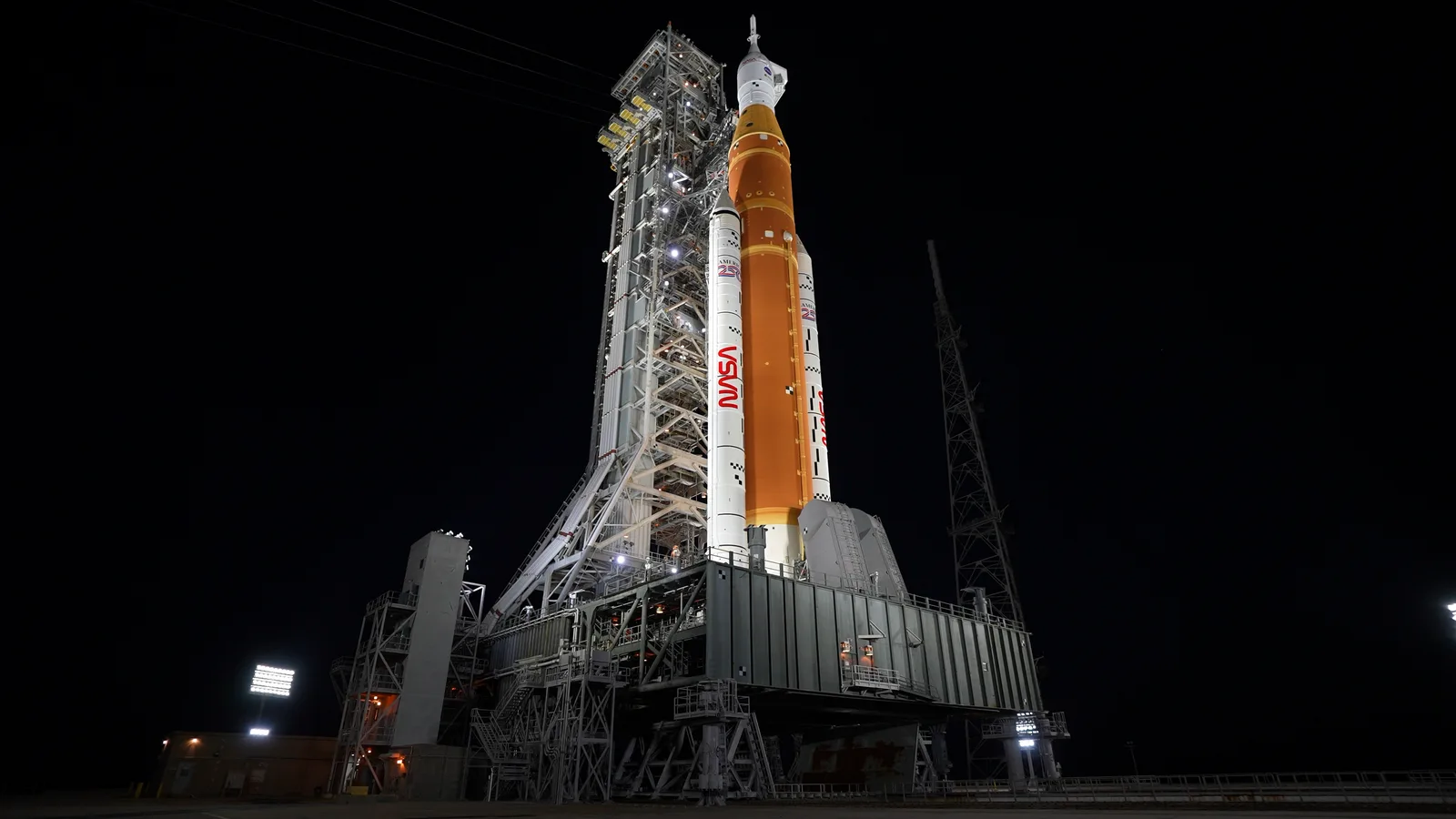
NASA Is Replacing the Part That Leaked Hydrogen on Artemis I and II Before Artemis III Flies
The quick disconnect fittings that fuel NASA's SLS Moon rocket caused hydrogen leaks and weeks of delays on both Artemis I and Artemis II. NASA is now testing a new pipe within a pipe design with two seals instead of one, and plans to have it on the Artemis III rocket for pad tests in the first half of 2027.
So basically: NASA is putting a new fitting on its SLS Moon rocket to stop the liquid hydrogen leaks that held up both Artemis I and Artemis II. The old part had one seal. The new one has two, set up like a pipe inside a pipe. NASA has already started testing it, more testing is coming at Stennis Space Center in Mississippi, and the plan is to have it on the Artemis III rocket for pad tests in Florida in the first half of 2027.
Where the leaks were coming from
SLS gets fueled on the pad through big lines that run from the mobile launch platform into the bottom of the rocket’s core stage. Those connections sit in what NASA calls the tail service mast umbilicals. At liftoff, they have to pull away from the rocket fast, so the fittings on the end are called quick disconnects.
NASA’s engineers traced the hydrogen leaks from both the Artemis I and Artemis II campaigns back to those quick disconnects. Both times, the leaks were part of why the launch slipped by several weeks.
Liquid hydrogen is about the hardest fuel there is to hold onto. It has to be kept at around minus 423 degrees Fahrenheit, and hydrogen molecules are the smallest molecules there are, so they’ll find any tiny gap in a seal.
What happened on Artemis II
During fueling tests for Artemis II in February, NASA cut its wet dress rehearsal short. That’s the full practice countdown where the rocket actually gets loaded with fuel. Technicians found a liquid hydrogen leak at the tail service mast umbilical, a spot that had already seen high concentrations of hydrogen earlier in the countdown.
At a press conference on March 30, SLS program manager John Honeycutt said the problem may have been “Teflon creep.” In plain terms, the seal had been sitting in that fitting for 10 months and could have slowly lost its shape. NASA swapped in a new seal after the first rehearsal, and after the second rehearsal another NASA official said the leaking dropped way down. Artemis II then launched on April 1.
So the fix worked. But it was a fresh seal in the same old design, not a better design.
How the new fitting is different
Terry Prickett, NASA’s chief engineer for the SLS core stage, walked Aerospace America through it. The old quick disconnect used a single seal. For it to seal right, the connection had to be centered perfectly, with a spring loaded bellows pressing everything together. “Any misalignment could cause you problems,” he said.
The new design is “a pipe within a pipe,” with two seals instead of one. The two seals are also different diameters, which is why NASA calls it a step seal design. If one seal isn’t perfect, there’s a second one behind it. Prickett said that gives them redundancy built right into the part.
There’s another smart detail. The new hardware is two new pieces that bolt in where the old ones went. If something goes wrong with the new design, NASA can put the old one back.
What happens next
Testing on the new interface has already started. The next round happens at Stennis, and Prickett said it should start soon, though he didn’t have an exact date. After that, the hardware gets installed on the Artemis III core stage and solid rocket boosters for testing at Launch Complex 39B in Florida during the first half of 2027. NASA is aiming to launch Artemis III in mid 2027.
My take
I like this story because it isn’t flashy. Nobody is making a movie about a fuel fitting. But hydrogen leaks have been the most annoying problem SLS has had, and they cost weeks every time they show up. Going from one seal to two, with a backup built into the part itself, is exactly the kind of boring fix that keeps a launch date from sliding. The fact that it bolts right in, and they can swap the old part back if they need to, tells me NASA is being careful not to create a new problem while fixing the old one. If Artemis III fuels up next year without a leak, this little part deserves some of the credit.
So basically — pass it on.
Daily Updates
Get new stories in your inbox
Near-future tech when it moves. Robots, space, EVs, AI. No spam.