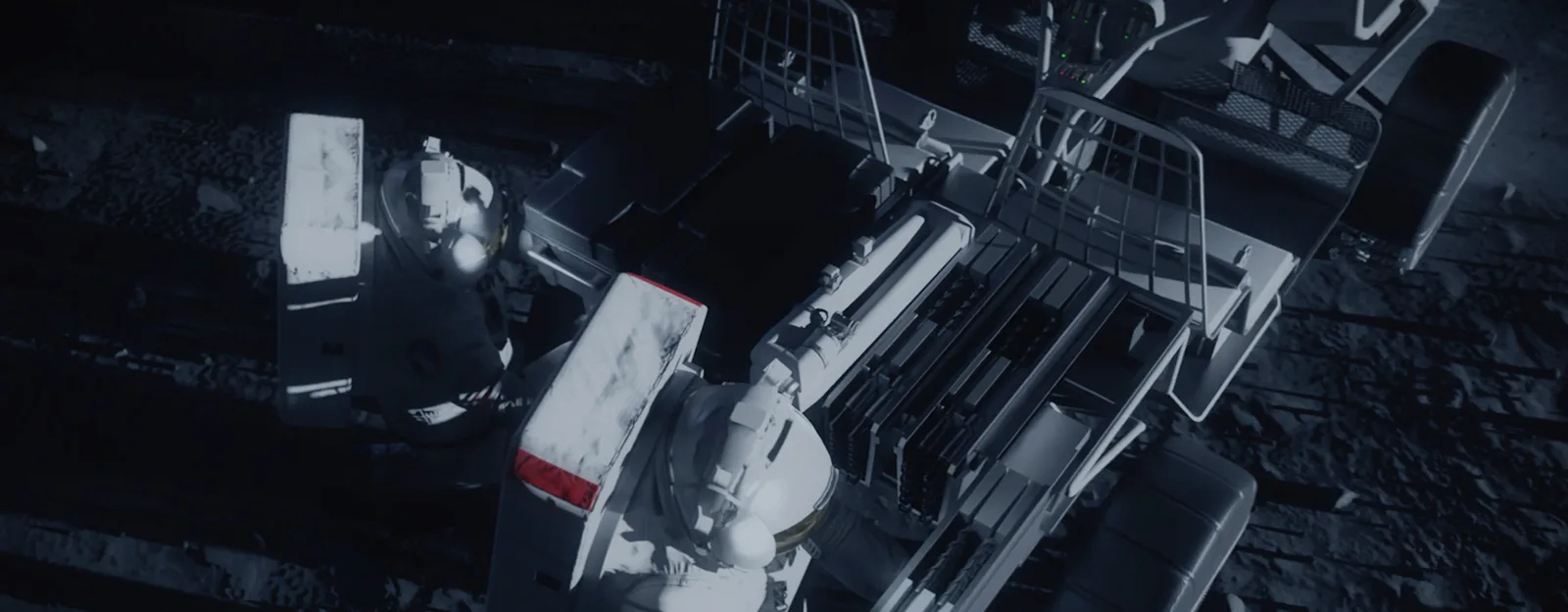
NASA's First Moon Base Rovers Will Be Driven From Earth Before Any Astronaut Sits in Them
NASA's Oct. 20 Moon Base update: the crewed rovers from Astrolab and Lunar Outpost land by 2028 and get remote driven from Earth up to 3.7 miles a day. VIPER is fully built and heads to the South Pole in 2027.
So basically: NASA’s first Moon rovers built to carry astronauts are going to spend their first months on the Moon with nobody in them. They’ll land at the lunar South Pole by 2028 and get driven remotely from Earth, up to 3.7 miles a day, mapping the ground before any crew shows up. NASA gave an update on the whole rover lineup on Tuesday, Oct. 20.
There are two crewed rovers in the works, plus a robot rover called VIPER that’s already fully built and waiting to ship.
Why drive them empty first
NASA calls the crewed ones lunar terrain vehicles, or LTVs. Two companies are building them. Astrolab, a California rover startup, is building one called CLV-1. Lunar Outpost, a Colorado space robotics company, is building one called Pegasus.
Blue Origin has the job of flying them to the Moon by 2028, ahead of the crewed Artemis landings.
Once they’re down, people back on Earth will drive them around like giant remote control trucks. The point is to make detailed maps of the South Pole so NASA knows exactly where to send astronauts later. They’ll also test how the rovers handle driving in and out of craters that never see sunlight. Those spots can hit minus 334 degrees Fahrenheit.
That’s the part I didn’t expect. The rover basically scouts the neighborhood before anybody moves in.
What they can do once astronauts arrive
When crews do show up, they’ll drive the rovers themselves. Each LTV is built to support up to three moonwalks per Artemis mission, haul up to 176 pounds of rocks and tools, and go about 6 miles on one battery charge.
That doesn’t sound like much compared to a car. But on the Moon, walking a mile in a spacesuit is exhausting, so 6 miles is a big deal.
Where each rover is at
Astrolab’s CLV-1 is based on the company’s bigger FLEX rover design. NASA astronauts already climbed into a mockup at Axiom Space wearing practice Moon suits to test the seats and screens. Before CLV-1 goes up, Astrolab is sending a smaller robot rover called FLIP on a lander launching in late 2026. It carries the same kind of tires, batteries, radios and cameras, so it’s like a test run.
Lunar Outpost’s Pegasus is a lighter version of its earlier Eagle design. The company just delivered a third mockup to Johnson Space Center, and astronauts in pressurized suits tried it out. Lunar Outpost already had a small robot rover working at the Moon’s South Pole in 2025, and a second one launches in early 2027.
In the next few weeks, both companies are taking their wheels to NASA’s Glenn Research Center in Cleveland to drive on fake Moon dirt. Neither one uses normal rubber tires. Astrolab uses flexible airless wheels, and Pegasus rolls on spring mesh tires.
Both companies are on track to hand NASA the real flight hardware at the end of 2027.
VIPER is done and waiting
The other rover in the update is VIPER, which is short for Volatiles Investigating Polar Exploration Rover. It’s a robot that’s going hunting for water ice in craters at the South Pole in 2027.
VIPER is fully built and sitting at Johnson Space Center in Houston for final testing. Next it goes to Kennedy Space Center in Florida. A Blue Origin Blue Moon lander will carry it down, and then it’ll drive more than 18 miles over its mission.
Water ice matters because it can be turned into drinking water, air, and even rocket fuel. If astronauts can get that on the Moon, they don’t have to haul it all from Earth.
My take
I like that NASA is doing this in steps. Robots go first, then empty rovers driven from Earth, then people. It’s slower, but it’s the smart way to do it when one mistake up there could be really bad. And I’ll admit the idea of someone sitting in a control room in Houston driving a rover around a crater on the Moon sounds like a pretty great job. The tires alone are cool. No rubber, because rubber doesn’t hold up up there. Spring mesh and airless wheels on actual Moon dirt is something I want to see video of.
So basically — pass it on.
Daily Updates
Get new stories in your inbox
Near-future tech when it moves. Robots, space, EVs, AI. No spam.