NASA Says Its Moon Base Is Ahead of Schedule, With the First Piece Launching in December
At a White House science summit on Oct. 8, NASA Administrator Jared Isaacman said the first Moon Base element launches in December, years ahead of the 2030 policy goal, with near-monthly robotic missions starting in early 2027. NASA also signed a space nuclear pact with the Energy Department.
So basically: NASA says the first piece of its permanent Moon Base will launch in December. That is years ahead of the official goal of 2030. After that, NASA wants to send robotic missions to the Moon almost every month, starting early next year.
What was said
NASA Administrator Jared Isaacman gave the update on Thursday, Oct. 8, at a White House science summit in Washington.
According to Payload, which covered the event, he told the head of the White House science office that NASA will beat the 2030 target.
Here is the new plan:
- The first Moon Base element launches in December
- Near-monthly uncrewed robotic missions to the lunar surface start in early 2027
- NASA is building a public website so anyone can watch the base go up in real time
”We’re leaving no doubts this time,” Isaacman said. “It’s all in HD.”
He also said that by the time astronauts arrive, rovers and hardware will already be waiting for them.
What “Moon Base” actually means
Do not picture a big glass dome. At least not yet.
NASA’s Moon Base is a long buildout near the lunar south pole. The early pieces are robots and equipment, not buildings:
- Landers that prove they can touch down safely
- Rovers and instruments that map the ground and look for water ice
- Tests for power, communications, and dealing with lunar dust
Later phases add power systems, cargo deliveries, and eventually places for people to live and work.
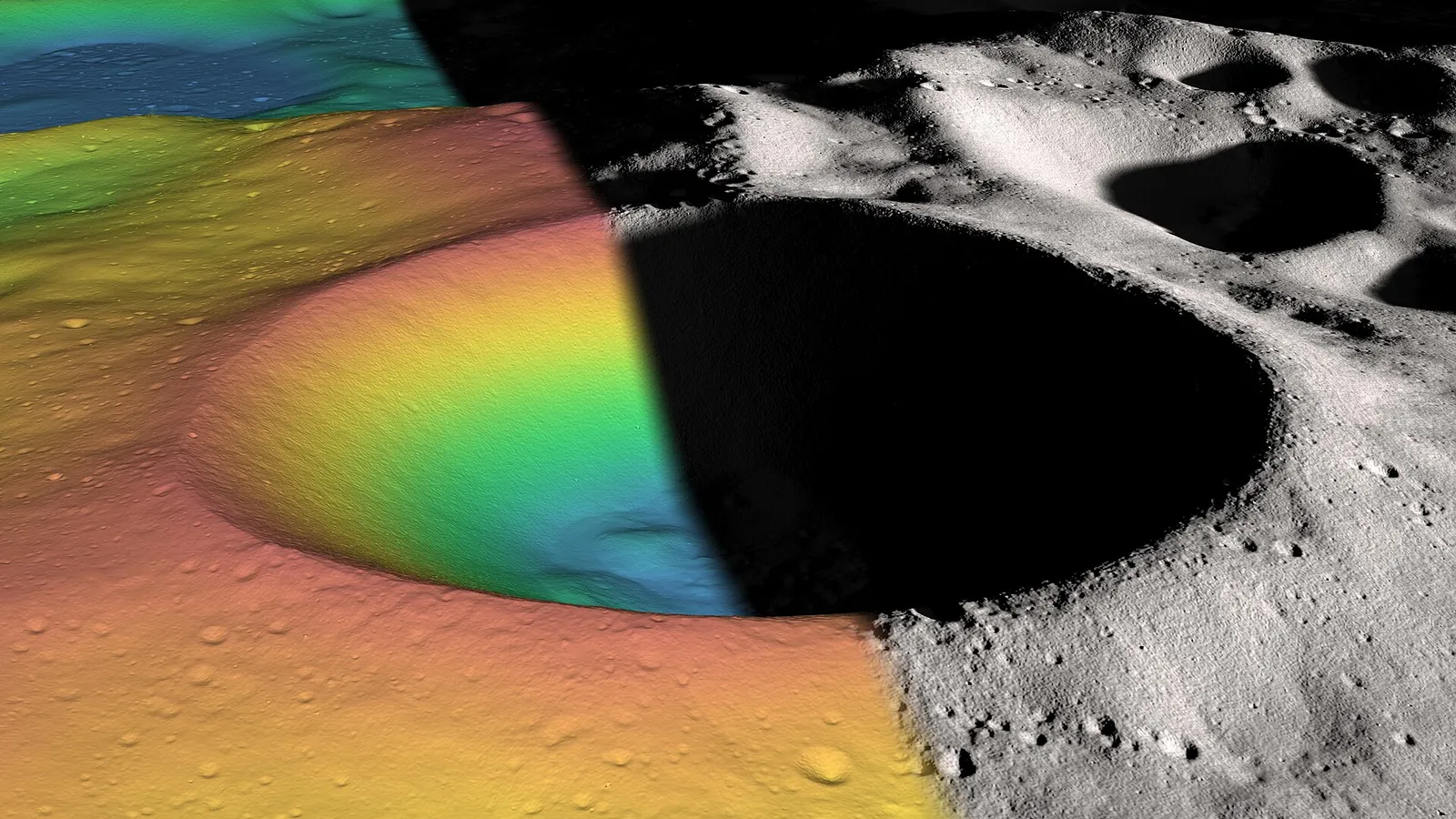
The south pole matters because some craters there stay in shadow forever. Scientists think they hold water ice. Water means drinking water, air, and even rocket fuel.
Which mission flies first
This part is still fuzzy.
Back in May, NASA announced its first three Moon Base missions. The first, Moon Base I, uses Blue Origin’s Blue Moon Mark 1 lander, named Endurance. It is aimed at a spot called the Shackleton Connecting Ridge.
It will carry two NASA payloads:
- A stereo camera system that watches how the lander’s engine blast kicks up the lunar surface
- A laser retroreflector, a small mirror array that bounces lasers back to Earth for precise measurements
At the time, Moon Base I was set for no earlier than fall 2026. NASA said Moon Base II and III would also launch before the end of 2026.
So a December launch fits that window. But neither NASA nor Payload has said exactly which mission is the one launching in December.
The nuclear piece
At the same event, NASA and the Department of Energy signed an agreement to work together on nuclear power and propulsion in space.
Two projects stand out:
- Space Reactor 1 Freedom: a nuclear electric spacecraft set to launch toward Mars no earlier than 2028
- Lunar Reactor 1: a fission reactor to power the Moon Base, with a launch-ready system due by 2030
Why nuclear? A night at the lunar south pole can last a long time, and some spots never see the Sun. Solar panels alone will not keep a base running.
Payload notes the agreement mostly formalizes plans that already existed, and it came with no new funding numbers.
How this fits with Artemis
NASA is still aiming to land astronauts near the south pole in 2028.
Every robotic mission before then is basically a scouting run. It tests landing systems, maps the area, and lowers the risk for the crewed landings.
That is also why NASA wants so many missions so fast. More flights means more data and more practice before people are on board.
My take
This is the most concrete the Moon Base has sounded so far. A real month, December, instead of “sometime this decade.”
But I want to see the launch date pinned to a specific mission. Right now “the first element” is doing a lot of work in that sentence. Space schedules also love to slip, especially for brand new landers.
If NASA really does start flying robots to the Moon every month in 2027, that is a huge change. Watch December closely. It will tell us whether this is a new pace or just a new press release.
So basically — pass it on.
Daily Updates
Get new stories in your inbox
Near-future tech when it moves. Robots, space, EVs, AI. No spam.