NASA Is Paying Companies to Build Electric Rocket Engines That Run on Krypton
NASA's new AMPERE Challenge offers $500,000, split between two U.S. companies, to build mid-power Hall effect thrusters. Winners get free licenses to NASA's krypton thruster tech and free testing at Glenn Research Center. Registration is open until Jan. 27, 2027.
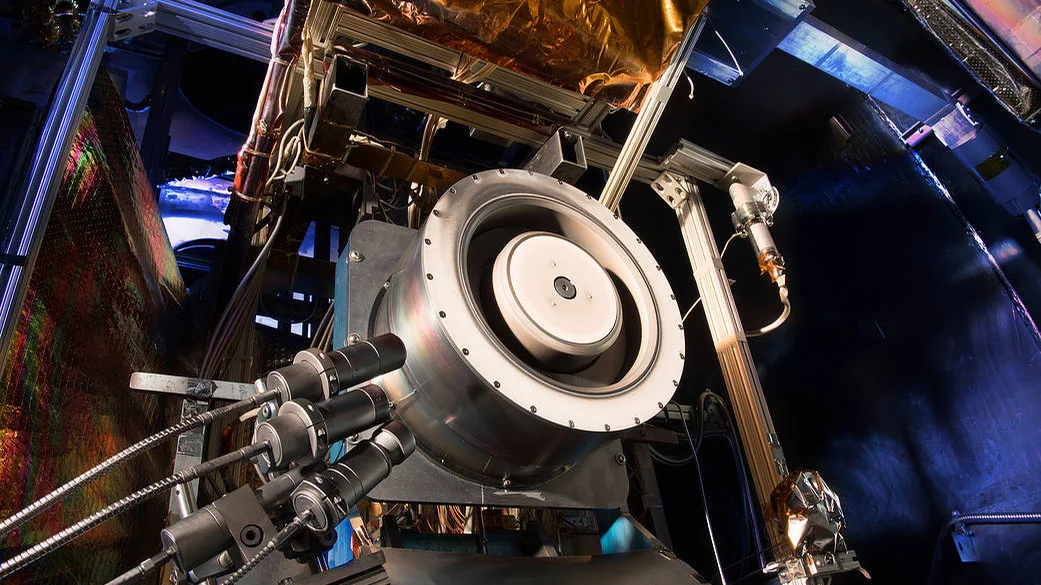
So basically: NASA just opened a contest for U.S. companies to build a better electric rocket engine. It’s called the AMPERE Challenge, and it’s putting up $500,000, split between two winners. The engines are called Hall effect thrusters, and NASA will let the winners use its own designs that run on krypton gas, plus test their prototypes for free.
Wait, electric rockets?
Yep. The rockets you see launching off a pad burn fuel and blast out fire. That’s how you get off the ground. But once a spacecraft is up in space, there’s a much more efficient way to get around.
A Hall effect thruster uses electricity, usually from solar panels, to build an electric field. That field grabs gas atoms that have been given an electric charge and flings them out the back at crazy high speed. The push is tiny. You couldn’t lift a sheet of paper on Earth with it. But in space there’s no air to slow you down, so if you keep pushing for weeks or months, you end up going really fast.
The big win is fuel. NASA says this kind of solar electric propulsion uses about 10 times less propellant than a regular chemical rocket doing the same job. Less fuel means a smaller, cheaper spacecraft, or more room for science gear.
These things are already flying. NASA’s Psyche probe is using Hall thrusters right now to cruise out to a metal asteroid, and lots of satellites use them to hold their orbits.
What NASA wants
This contest is for mid-power thrusters, the size in between little satellite thrusters and the really big ones NASA builds for heavy missions. NASA thinks that middle size could be the backbone for a lot of future NASA and commercial missions, and it wants U.S. companies building them.
It runs in three phases:
- Phase 1: Each team sends in a concept design, a plan to manufacture it and what they think it’ll cost and how well it’ll work
- Phase 2: NASA may pick two teams to build prototypes and work with NASA engineers. They get free licenses to NASA’s krypton Hall thruster tech
- Phase 3: The prototypes get tested at NASA’s Glenn Research Center in Cleveland, at no cost to the teams
Each of the two winners can get up to $250,000.
Why krypton
A lot of Hall thrusters, like the ones on Psyche, run on xenon. It works great, but it’s rare and expensive. Krypton is a lot cheaper and easier to get, which matters if you want to build and fuel these engines in big numbers. NASA has already been working on krypton thrusters, and now it’s handing that work to companies.
The money is small, the help is the prize
Honestly, $250,000 isn’t much for building a rocket engine. The real prize is the stuff that’s hard to buy. NASA’s experts, its technology and its test chambers. Testing a thruster means firing it inside a giant vacuum chamber that acts like space, and there aren’t many of those around.
”This challenge approach seeks to remove key barriers and facilitate commercialization by providing access to NASA subject matter expertise, state-of-the-art technologies, and world-class facilities at no cost to challenge winners,” said Dr. Jason Frieman, one of the project leads at NASA Glenn.
It’s the first contest in NASA’s new Tech Maturation Prize series. NASA is holding a virtual industry day for interested companies on Thursday, November 19, and registration stays open until January 27, 2027, at 5 p.m. Eastern.
My take
This is the kind of space news that doesn’t get much attention, but it’s a big deal for where everything is headed. Getting to orbit is getting cheap thanks to reusable rockets. Moving around once you’re up there is the next problem, and electric thrusters are the answer for a lot of it. NASA handing its krypton designs to companies for free is a smart move. It’s cheaper than building them all itself, and it means more U.S. companies can sell these engines. I’d keep an eye on who signs up.
So basically — pass it on.
Daily Updates
Get new stories in your inbox
Near-future tech when it moves. Robots, space, EVs, AI. No spam.