Japan's MMX Launches Oct. 19 to Bring Home the First Sample From a Moon of Mars
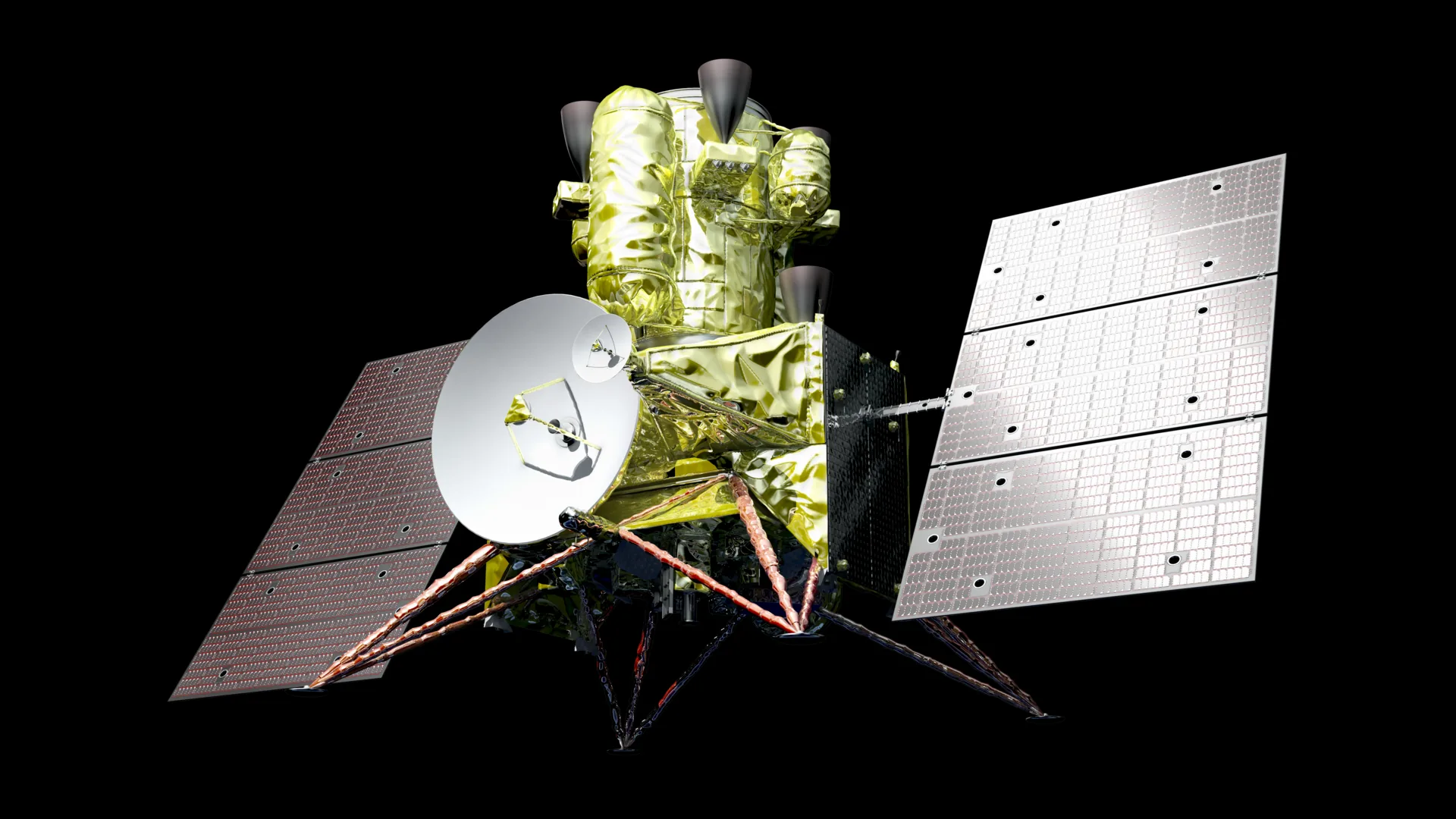
JAXA's Martian Moons eXploration spacecraft is set to launch on an H3 rocket at 3:41 p.m. ET on Oct. 19. The plan: drop a rover on Phobos, land twice, and bring more than 10 grams of it back to Earth in 2031.
So basically: Japan is about to launch MMX, a spacecraft that will land on Phobos, one of the two moons of Mars, grab a sample, and bring it back to Earth. If it works, it’s the first sample ever returned from the Mars system.
When
Launch is set for 4:41:03 a.m. Japan time on Oct. 20. That’s 3:41 p.m. ET on Monday, Oct. 19.
It flies on H3 flight No. 10 from the Yoshinobu launch complex at Tanegashima Space Center. JAXA has backup dates through Nov. 7.
The rocket is the H3-24L, the most powerful version: two main engines, four solid boosters and a long fairing. It’s 63 meters tall.
The rocket’s recent history
H3 lost a navigation satellite last December. The structure that holds the satellite on top of the rocket had a hidden flaw from manufacturing, where layers inside it had peeled apart, and it broke in flight. JAXA traced the cause and flew H3 again on June 12 on a test flight that went as planned.
JAXA said later flights would switch to a bolted version of that part.
The spacecraft
MMX weighs about 4,480 kg at launch and was built by Mitsubishi Electric. It’s three modules stacked together: one to get to Mars, one to explore and land, and one to come home.
It carries 11 science instruments. NASA, the French and German space agencies, and ESA are partners. NASA supplied MEGANE, a gamma ray and neutron spectrometer. France and Germany built a small rover called IDEFIX.
The plan
- Just under a year to reach Mars, arriving in Japan’s fiscal 2027.
- About three years around Phobos, studying it from a special orbit that circles the moon.
- IDEFIX goes down first and becomes the first rover on Phobos. It weighs 25 kg on Earth but would weigh about 15 grams on Phobos, per ESA.
- Two landings by the main spacecraft, each lasting several hours, using a corer and a pneumatic sampler.
- A flyby of Deimos, the other moon.
- Departure in fiscal 2030 and a capsule landing in Australia in fiscal 2031.
The goal is more than 10 grams of Phobos, including material from at least 2 cm down. For scale, Hayabusa2 aimed for 0.1 grams from asteroid Ryugu and brought home 5.4 grams.
Why Phobos
Phobos is about 23 km across. Deimos is about 12 km. Nobody knows for sure where they came from.
One idea is that they’re asteroids Mars captured. The other is that they formed from debris after something huge slammed into young Mars. A sample can tell those apart.
Phobos is also probably dusted with material blasted off Mars over billions of years. So a scoop of Phobos may carry tiny bits of Mars too.
My take
This is one of the biggest launches of the fall and it’s flying under most people’s radar. Japan has already brought back samples from two asteroids, and Hayabusa2 beat its own target by a mile. MMX takes that skill to Mars and makes the first round trip to the Mars system. The part to watch first is the rocket. H3 only returned to flight in June, and this is its biggest version carrying a flagship mission. If it gets off the ground clean, the hard part becomes Phobos, and landing on small, low gravity worlds is exactly what Japan is good at.
So basically — pass it on.
Daily Updates
Get new stories in your inbox
Near-future tech when it moves. Robots, space, EVs, AI. No spam.