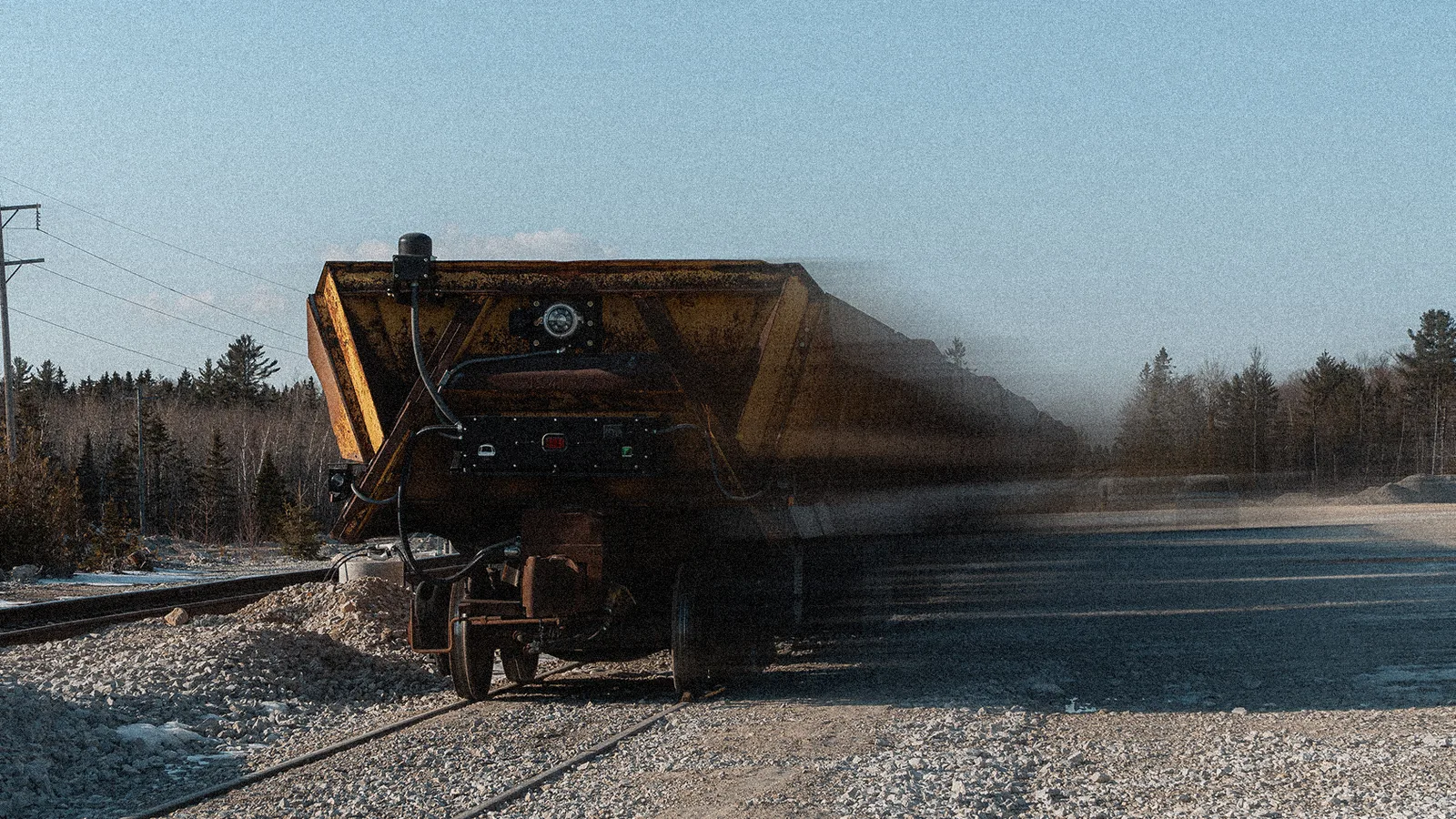
Self Driving Railcars That Don't Need a Locomotive Are Headed to a Texas Plant
Intramotev's TugVolt kits turn ordinary freight railcars into battery powered, self driving cars that move without a locomotive. Short line operator Watco is expanding them from an Illinois terminal to an industrial site in Seadrift, Texas, where they'll shuffle railcars around the plant.
So basically: A St. Louis company called Intramotev makes kits that turn a normal freight railcar into a battery powered, self driving railcar. No locomotive needed. Now Watco, a company that runs a bunch of small railroads, is bringing them to an industrial site in Seadrift, Texas, where they’ll move railcars around inside the plant. It’s Watco’s second site after a terminal in Illinois, where the cars are already hauling real freight.
What TugVolt actually is
Intramotev’s tech is called TugVolt. It’s a retrofit kit, which means you bolt it onto a railcar you already have instead of buying a whole new one. The kit gives the car its own batteries, motors and sensors, so it can move by itself.
That matters because moving even one railcar normally means bringing in a locomotive and a crew. Intramotev says TugVolt cars can switch yards, plants and terminals without tying up a locomotive, run shuttles between sites, and even add extra power spread out along long trains.
The company calls itself the first in the world to put autonomous freight railcars into commercial service.
What they’ll do in Texas
Seadrift is on the Gulf Coast near Victoria, about 60 miles northeast of Corpus Christi. At the industrial site there, the TugVolt units will handle switching. That’s the railroad word for moving cars around a yard or plant to line them up for loading and unloading. It’s slow, repetitive work, and it’s a perfect fit for a car that can move itself.
This builds on a deal Watco and Intramotev signed in 2025 for Watco’s Wood River Transload Terminal in Illinois. TugVolt is already in revenue service there, meaning it’s moving freight that customers pay for. In this case it’s soda ash.
Watco is a big name in short lines. It runs more than 45 small railroads across more than 7,100 miles of track in North America and Australia.
”Our deployment at Wood River showed us that TugVolt can deliver safe, reliable car handling and fit into our existing operations,” said Aaron Jensen, a senior vice president at Watco. “Bringing it to Seadrift is the next step.”
How much they’ve moved so far
TugVolt cars are also running in Missouri, Michigan and Austria. Intramotev’s website now lists 678,160 tons moved, 9,328 carloads and 12,508 miles traveled.
This year has been busy for them:
- March: a deal with R.J. Corman to use TugVolt in Kentucky
- April: a deal with ÖBB, Austria’s national railway, its first use outside the U.S.
- June: U.S. Army Reserve soldiers trained on a TugVolt and used it to move Defense Department railcars between spurs without a locomotive
- October: the Federal Railroad Administration picked the City of Columbia, Missouri, for a $16.2 million grant to put TugVolt on its Columbia Terminal Railroad
That Missouri project is the one to watch. Intramotev says two TugVolt cars should start running there in early to mid 2027, kicking off a three year program that goes from remote controlled switching all the way to autonomous mainline runs.
My take
This is one of those ideas that makes you wonder why it took so long. A locomotive is a huge, expensive machine, and using it to nudge one car a short distance across a plant is kind of overkill. A car that can move itself fixes that. I like that they’re starting small, inside plants and terminals where trains move slowly and nobody else is on the track. If they can prove it there, the Missouri mainline test is where this gets really interesting. Self driving cars get all the attention, but self driving freight could quietly show up first.
So basically — pass it on.
Daily Updates
Get new stories in your inbox
Near-future tech when it moves. Robots, space, EVs, AI. No spam.