India's First Bullet Train Line Just Turned On Its Power for the First Time
The overhead wires on the 50 km Surat to Bilimora section of the Mumbai to Ahmedabad bullet train went live on Nov. 20, 2026. India's railway minister says trial runs with a homegrown 280 km/h train are due by May 2027.
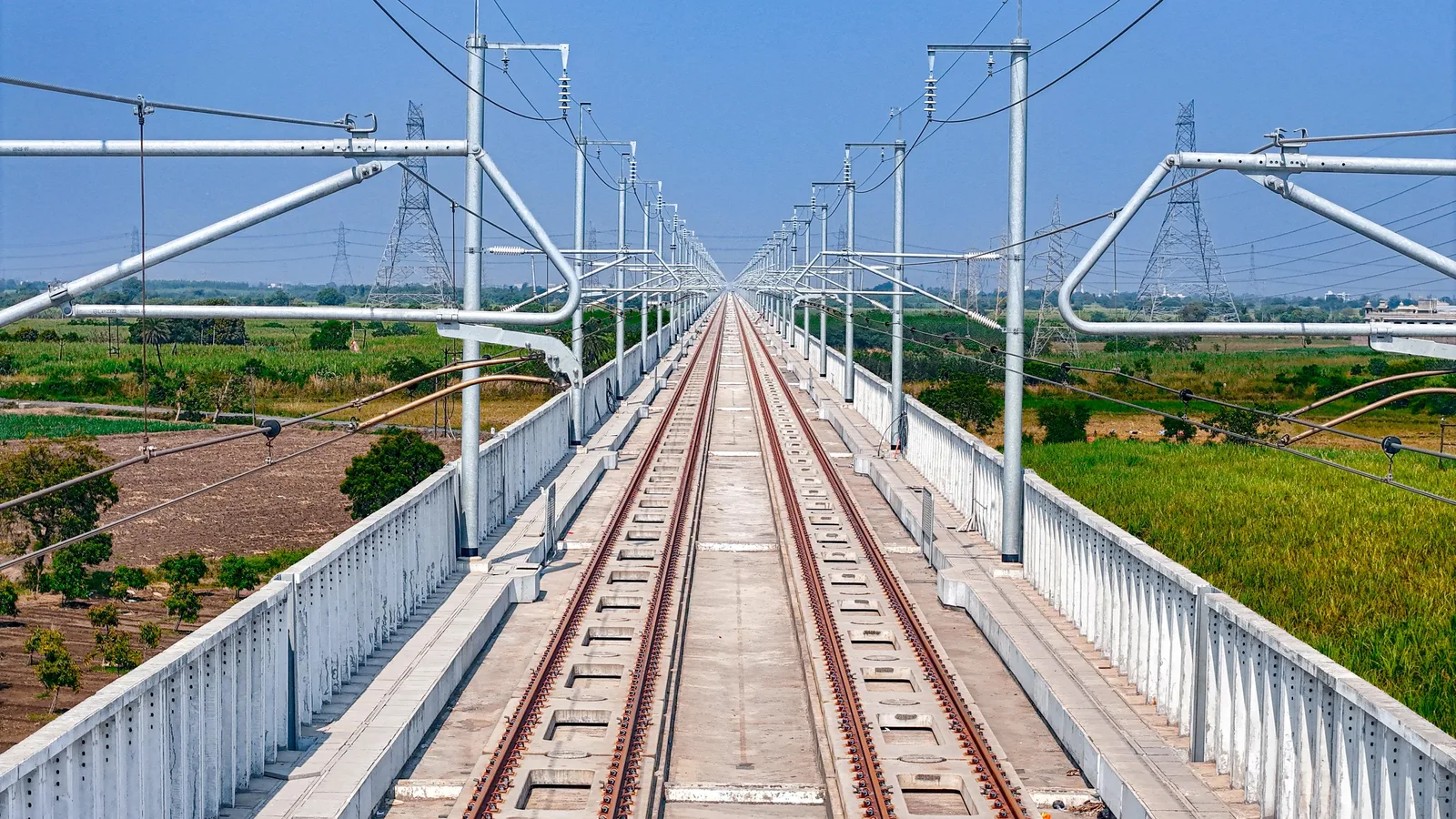
So basically: India’s first bullet train line just got its power turned on. On Nov. 20, the overhead electric wires on the Surat to Bilimora section of the Mumbai to Ahmedabad high speed line went live for the first time. That stretch is about 50 km, roughly 31 miles, and it’s the first part of the line that will see test trains. India’s railway minister says trial runs should start by May 2027.
What got switched on
High speed trains like this run on electricity from wires hanging above the track. That system is called the overhead equipment, or OHE. Until now, the Surat to Bilimora section had the track and the wires, but no power flowing through them.
The government’s press office said the section has both directions of track, and it all sits on an elevated concrete line above the ground. They’re turning the power on in smaller pieces at a time, with technical teams watching each step.
The line uses a 2 x 25 kV overhead system, which is the kind of setup used on high speed lines around the world. Once it’s live, it stays live. The government put out a safety warning telling people near the line not to touch or go near the overhead wires.
Where the power comes from
The whole line is 508 km long, about 316 miles, and it’ll have 14 traction substations along the way. Those take power from the national grid and feed it to the wires.
The first one is at Bilimora, in Gujarat’s Navsari district. It gets its power from a 220 kV grid substation run by the Gujarat state power company. Everything gets watched from one central control center.
What’s on this 50 km stretch
The Surat to Bilimora section isn’t just a straight shot. According to the government:
- It crosses four rivers on bridges
- It has a steel bridge over National Highway 53
- It has about 94,000 noise barriers along the viaduct to keep the sound down for people living nearby
The train is homegrown
This part surprised me. India originally planned to run Japanese Shinkansen trains on this line. Now the first trains will be Indian.
The first trainset is called the B28, and it’s being built by BEML at its plant in Bengaluru. It’s designed for 280 km/h, about 174 mph, but will run at 250 km/h, about 155 mph, at first. The railway ministry told the Indian Express it faced “certain challenges in obtaining the rolling stock from Japan,” so it decided to build its own. An earlier Indian Express report, citing India’s foreign ministry, said Japan’s next generation E10 Shinkansen is expected around 2030.
India is also working on a faster train, the B35, built for 350 km/h. Railway Minister Ashwini Vaishnaw said that one is targeted for 2035.
The timeline
Vaishnaw laid out the plan on Monday, as reported by Business Today:
- End of this fiscal year (March 2027): Electrification and signaling finished
- By May 2027: Trial runs with the B28
- Around mid 2027: First commercial service on the opening stretch, once it gets safety clearance
- End of 2029: The full Mumbai to Ahmedabad line open
The Indian Express reported the railways is aiming to launch the first bullet train on Aug. 15, 2027, India’s Independence Day. Sections will open one at a time as each gets cleared.
We covered this line back in October when crews finished the big Sabarmati River bridge in Ahmedabad.
My take
Turning on the power doesn’t sound like much, but it’s the moment a construction project starts becoming a railroad. Before this, it was concrete and steel. Now it’s live wire, and the next step is putting an actual train on it. The thing I’ll be watching is that B28. Building your own bullet train instead of buying one is a big swing for a country running its first high speed line. If it hits that May 2027 trial on time, India goes from zero bullet trains to running one it built itself.
So basically — pass it on.
Daily Updates
Get new stories in your inbox
Near-future tech when it moves. Robots, space, EVs, AI. No spam.