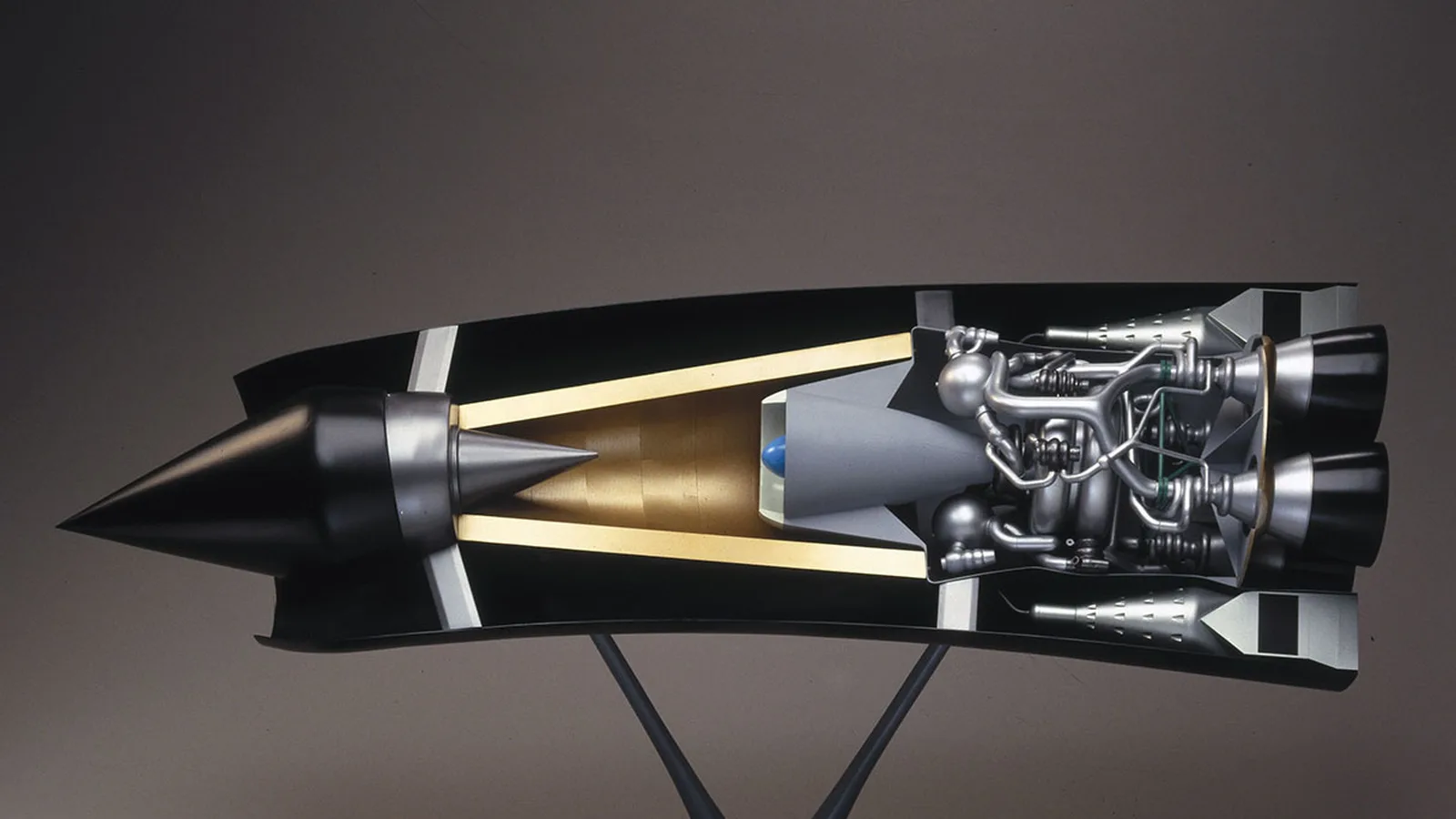
Britain's SABRE Hypersonic Engine Patents Now Belong to Honeywell, After Selling for About 884,000 Pounds
Patent records show Honeywell Aerospace now owns the patents behind SABRE, the air-breathing rocket engine Reaction Engines spent decades building for the Skylon spaceplane. The British government had put about 60 million pounds into the company.
So basically: The patents behind SABRE, the British engine that was supposed to fly a plane straight into orbit, now belong to Honeywell Aerospace, the American aerospace giant. U.S. patent records list Honeywell Aerospace US LLC as the owner, with the transfer recorded on July 28, 2026. People only noticed this week. The price for the whole bundle of the collapsed company’s intellectual property was about 884,000 pounds.
What SABRE was
Reaction Engines was a company in Oxfordshire, England, that spent decades on one big idea. Normal rockets carry tanks of oxygen to burn their fuel. That oxygen is heavy. SABRE was designed to breathe air like a jet engine on the way up, then switch to rocket mode once the air got too thin.
The plan was to put it on Skylon, an unmanned spaceplane that would take off from a runway, fly to orbit in one piece, drop off satellites and land back on a runway. No stages falling off, no boosters to recover.
The idea goes back to the 1980s, when Alan Bond, one of the company’s founders, worked on a British spaceplane project called HOTOL with BAE and Rolls-Royce.
The part that actually worked
The hard problem with breathing air at high speed is heat. Air coming into an engine at five times the speed of sound gets incredibly hot, hot enough to wreck the engine.
Reaction Engines’ answer was a precooler, a heat exchanger made of thousands of very thin metal tubes with cold helium running through them. In October 2019, it tested the precooler in Colorado on air at more than 1,000 degrees Celsius, which matches Mach 5 conditions. It cooled that air in less than one twentieth of a second.
One of the patents now owned by Honeywell even describes another use for this tech: a jet that could carry 300 passengers from Brussels to Sydney in about 4.6 hours while cruising around Mach 5.
How it fell apart
Building a full engine costs far more than testing a cooler. Reaction Engines went into administration in October 2024 owing more than 160 million pounds. About 170 of its 208 workers were laid off right away.
A lot of that money came from taxpayers. The UK Space Agency put in about 60 million pounds, and the European Space Agency, DARPA, BAE Systems, Rolls-Royce and Boeing all backed it at some point.
The accounting firm PwC ran the sale. In mid-2026 it said the intellectual property had been sold for 884,000 pounds to a buyer it didn’t name, which happened to be almost exactly what the company’s own directors said the IP was worth. Now the patent records fill in the name.
Why Honeywell makes sense
Honeywell wasn’t a random buyer. Before it collapsed, Reaction Engines was supplying heat exchanger systems to a Honeywell-led group working on a hydrogen fuel cell powertrain for airplanes under a European clean aviation project. Industry watchers figured the cooling tech was the real prize, since it’s useful for things like hydrogen aircraft, jet engines and electric planes, not just spaceplanes. Honeywell hasn’t said publicly what it plans to do with it.
My take
This one stings a little even for me, and I’m not British. A country puts tens of millions into an idea, the idea actually works in testing, and the whole patent bundle goes for under a million pounds. That’s less than a nice house in London.
On the other hand, the money was already gone the day the company folded. Patents sitting in a box don’t help anybody. If Honeywell puts the precooler into real aircraft, at least the work gets used. I just don’t expect to see Skylon anytime soon.
So basically — pass it on.
Daily Updates
Get new stories in your inbox
Near-future tech when it moves. Robots, space, EVs, AI. No spam.