An Electric Plane Just Climbed to 17,200 Feet on Solid State Batteries and Only Used 36% of Its Charge
Helios Horizon, a nonprofit flying a modified Pipistrel Taurus motor glider, took its solid state battery airplane to 17,200 feet over North Dakota and claims three world records for electric planes under 500 kilograms. Next up is a try for 40,000 feet in early 2027 with even better batteries.
So basically: A small electric plane running on solid state batteries just flew to 17,200 feet over Grand Forks, North Dakota, and it only used 36% of its battery to do it. The group behind it, a nonprofit called Helios Horizon, says the flight beat three world records for electric planes under 500 kilograms. Next, they want to swap in even better batteries and take it to 40,000 feet in early 2027, higher than a normal airliner cruises.
The plane and the pilot
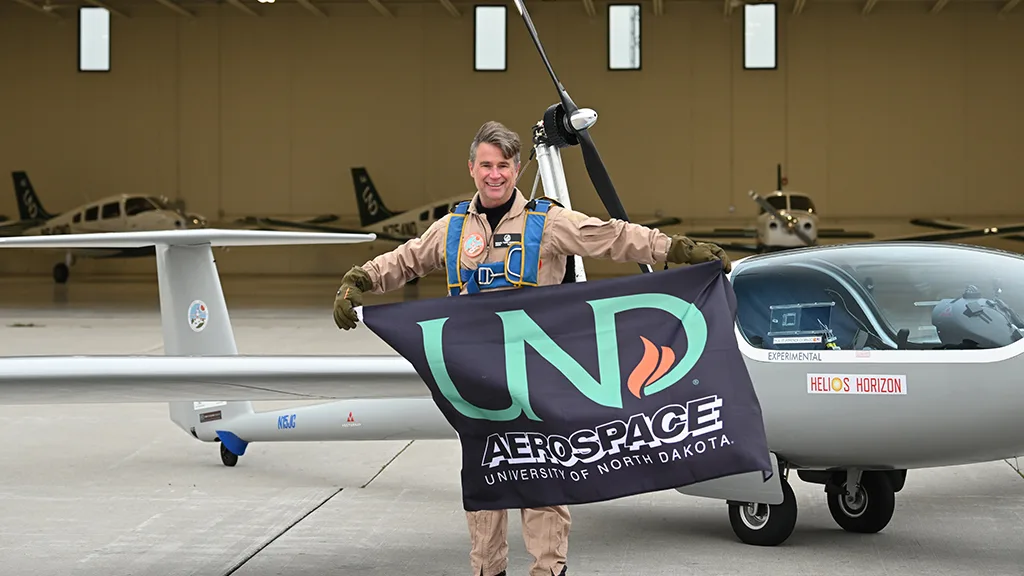
Helios Horizon didn’t build a plane from scratch. It took a Pipistrel Taurus, a light two seat motor glider with long, skinny wings, and modified it to run on solid state batteries. Gliders are great for this because those long wings make them really efficient in thin air.
The pilot is Miguel Iturmendi, the group’s founder and chief test pilot. His résumé is kind of wild. He’s flown for Solar Impulse 2, the solar plane that went around the world, plus HondaJet and several NASA programs. He was also a test pilot on the Perlan 2 glider, where he reached 66,000 feet in an aircraft with no engine at all.
The record flight
The big flight happened on Oct. 29. It was the first of three flights the team made in Grand Forks through Nov. 9. Low clouds and rain kept the plane on the ground most other days.
An observer from the National Aeronautic Association watched the flight, and the team is claiming three records for electric planes under 500 kilograms:
- Highest altitude
- Highest altitude in level flight
- Fastest climb to 3,000 meters, about 9,800 feet, which took 27 minutes
The records still have to be checked and made official by the World Air Sports Federation. Iturmendi already holds the official versions of the first two, set in Nevada in 2023 at 16,270 feet and 15,948 feet.
Why the batteries are the whole story
Weight is what has kept electric planes from flying high. Batteries are heavy, and you have to carry all that weight the whole way up.
The plane actually reached 24,000 feet back in 2024 on regular lithium ion batteries, but there was no official observer and it was flying heavier. Those batteries held about 245 watt hours per kilogram. The new solid state cells hold about 410. That means the same amount of energy weighs a lot less.
Solid state batteries swap out the flammable liquid inside a normal lithium ion battery for a solid material. That makes them less likely to overheat and catch fire, and lets them pack in more energy for their weight. Helios Horizon hasn’t said who makes its cells or what chemistry they use because of nondisclosure agreements.
The University of North Dakota’s aerospace school helped with the flights. The plane carried an experimental gas analyzer from a UND atmospheric scientist, and Iturmendi used the school’s hypobaric chamber, which simulates thin high altitude air, to test a pressure suit and life support gear for the higher flights coming next.
What’s next
The plan is to install batteries with 25% more energy density and go for 40,000 feet in early 2027. After that, Iturmendi wants to build Helios Horizon 2, a pressurized plane meant to carry a pilot and two passengers up to 80,000 feet. He says it could fit on a trailer and charge on regular AC power.
”I can fly much higher, much longer and at a much lower cost using electrification than I could with an internal combustion engine on the same airframe,” Iturmendi said.
My take
This is the kind of battery news I actually trust, because it’s not a lab chart. It’s a real plane, a real pilot and an official observer. Going from 245 to 410 watt hours per kilogram is a huge jump, and using only about a third of the battery to climb over 17,000 feet shows it. I’m not holding my breath on 80,000 foot tourist flights. But if solid state cells keep improving like this, they’ll matter way beyond gliders, from air taxis to EVs. The 40,000 foot attempt next year is the one I’m watching.
So basically — pass it on.
Daily Updates
Get new stories in your inbox
Near-future tech when it moves. Robots, space, EVs, AI. No spam.